
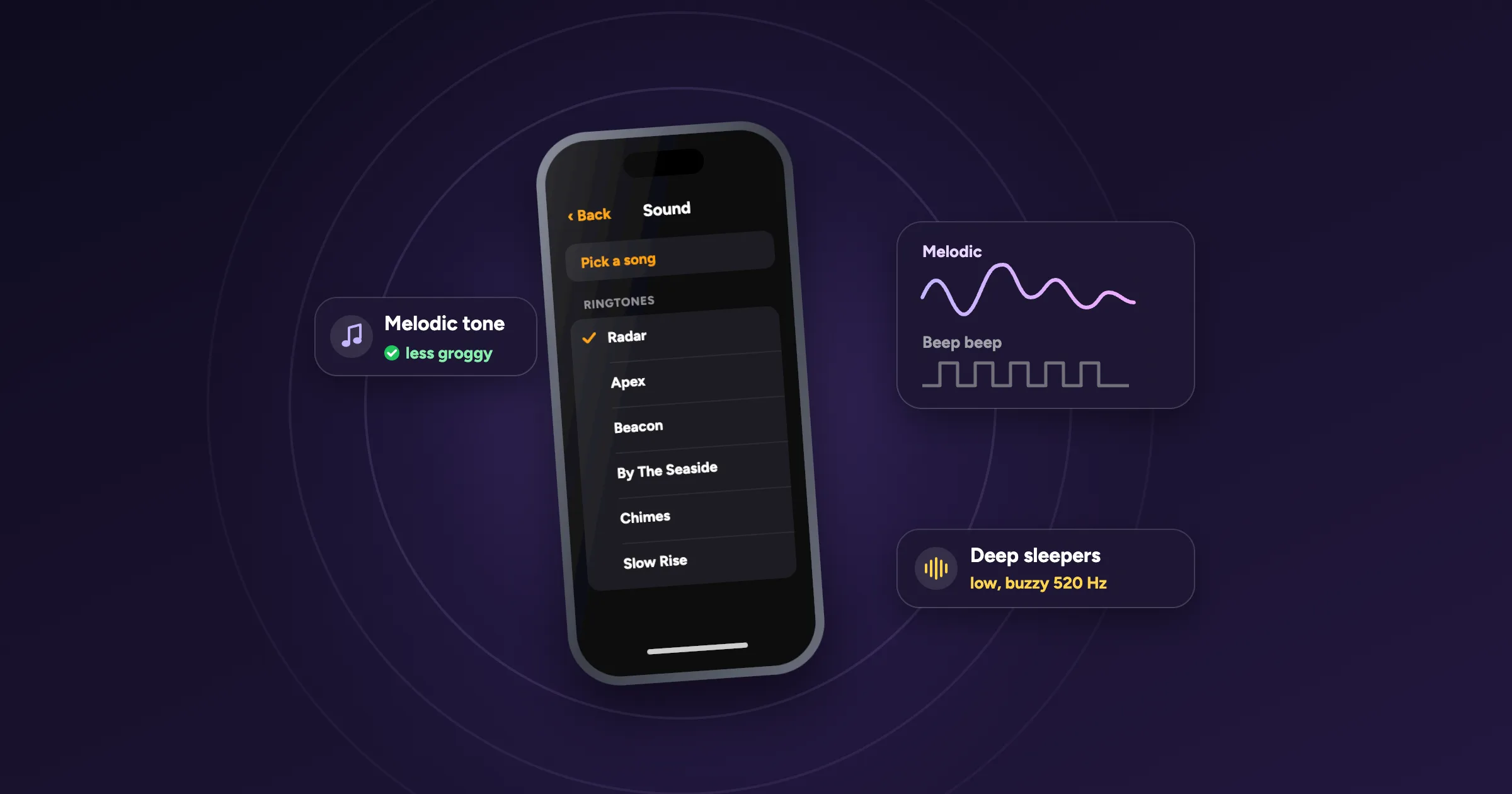
The best alarm sound for most people is a melodic tone or song you like, one you don’t hear during the day, loud enough to wake you. The research is early but points the same way:
- people who wake to melodic sounds report less morning grogginess than people who wake to a flat beep,
- if you sleep through alarms, a low-pitched, buzzy sound wakes deep sleepers better than a high beep,
- a sound that starts gently and builds avoids the jolt, as long as it ends up loud,
- keep the alarm sound for the alarm only, and change it once you stop reacting to it.
On this page
What does the research say about alarm sounds?
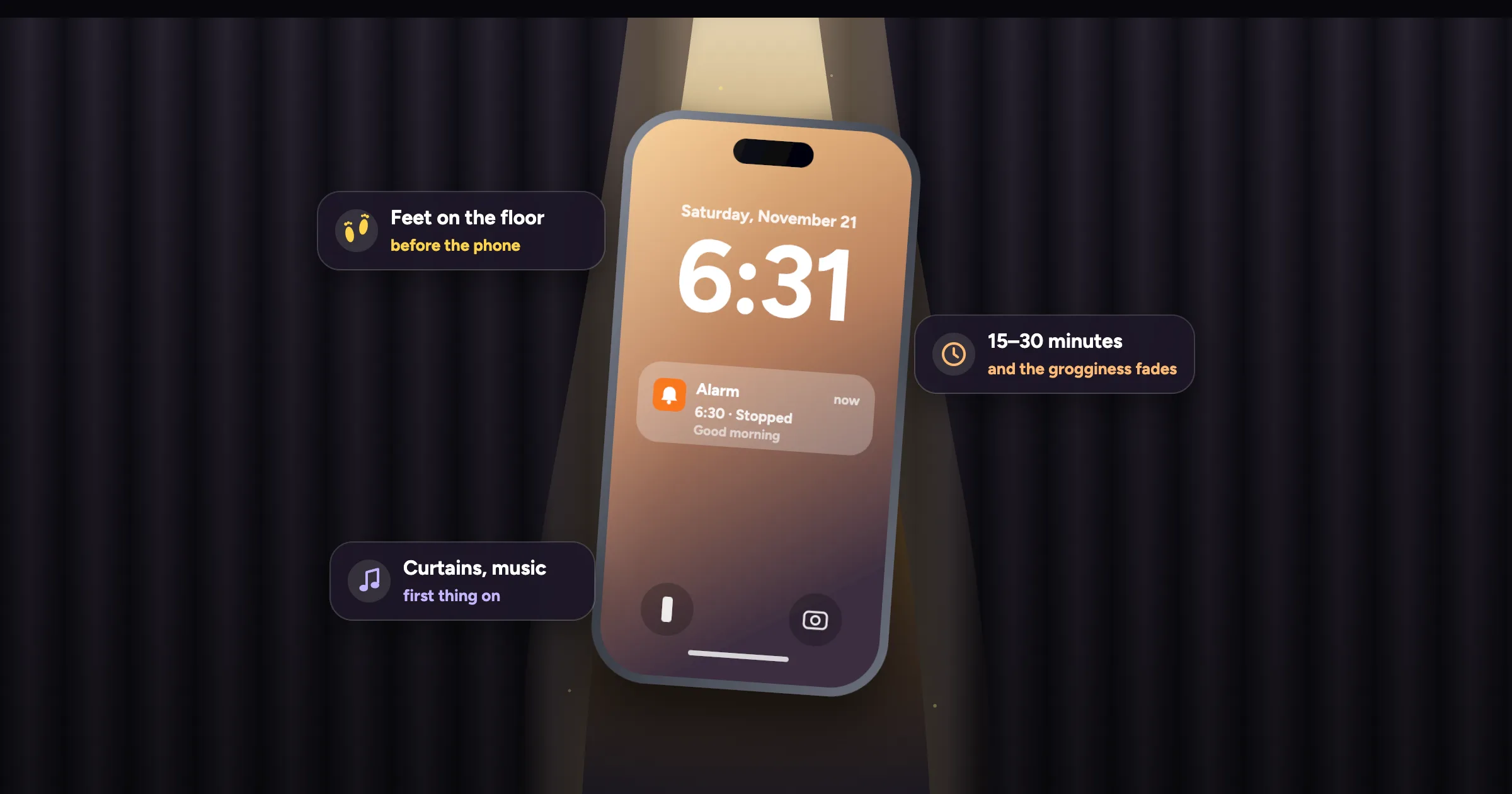
Most of what we know comes from a group at RMIT University in Melbourne, who looked at alarm sounds and sleep inertia, the groggy, slow state right after waking that usually lifts within 15 to 30 minutes but can last an hour or more. Their work is small and early, but it’s the best there is:
- The 2020 survey. They asked people what sound they woke up to and how groggy they felt. Among the 50 people who used a sound to wake up, the type of sound alone (alarm tone, song, radio) made no clear difference. How melodic it was did: people who rated their sound as melodic were more often among those who weren’t groggy at all, while those who called it neither melodic nor unmelodic, the way standard beeping tones tend to be rated, were more often groggy. It was a survey with self-reported grogginess, so it shows a link, not proof.
- The reaction test. In a follow-up experiment, a melodic sound played after waking cut lapses and false starts on an attention test compared with a control sound. A purely rhythmic sound didn’t help.
- The review. Looking across 12 studies of sound and waking, the same group found positive results for music and melodic alarms in everyday, non-emergency waking, especially popular music. For abrupt waking in emergencies, the evidence was too thin for firm conclusions.
The idea behind it: a melody holds your attention and gives your brain something to follow while it boots up, where a flat beep only says “urgent”. Nobody has proven that yet in a large trial, but it costs nothing to try.
Which alarm sound should you use?
There’s no single best sound for everyone. It depends on how you sleep and what goes wrong in your mornings:
| Sound | Good for | The catch |
|---|---|---|
| Melodic tone or song you like | Most people, especially if mornings feel foggy | Too soft or too familiar and you sleep through it |
| Plain beep or buzz | Hard to ignore, sounds urgent | Linked with more grogginess in the RMIT survey |
| Low-pitched, rough tone | Heavy sleepers who don’t hear alarms | Can feel harsh if you wake easily anyway |
| Gentle sounds, nature, soft songs | Light sleepers, waking up gently | Often too quiet to wake you from deep sleep |
| Gradually rising volume | Avoiding a sudden jolt | Make sure it reaches full volume |
What alarm sound wakes heavy sleepers?
If your problem isn’t grogginess but not hearing the alarm at all, pitch matters more than melody. Psychologist Dorothy Bruck’s team tested which sounds wake sleeping people, originally to design better smoke alarms. In deep sleep, low-pitched square waves at 400 and 520 Hz, which sound like a deep, rough buzz, woke young adults at significantly lower volumes than the other signals they tried. In adults with hearing loss, the 520 Hz sound woke 92% of them at 75 dB, compared with 56% for the standard high-pitched 3100 Hz smoke alarm beep.
Phones don’t label their tones by pitch, so go by ear: pick something deep and buzzy over something bright and tinkly. Volume matters as much as the sound itself; our guides to iPhone alarm volume and Android alarm volume cover the settings, and alarms for heavy sleepers goes through every other option, from vibration to missions.
Should your alarm be gentle or loud?
Being woken suddenly gives your body a jolt. In a small Japanese study of afternoon naps, people who woke up on their own had blood pressure that rose gradually before waking, while being woken by force brought sharp jumps in heart rate and blood pressure. A University of Virginia pilot study of 32 adults linked waking to an alarm after only five hours of sleep with a larger morning rise in blood pressure than waking naturally, though the difference was small. Both studies were small, and neither shows that a loud alarm harms a healthy person.
The practical middle ground is a sound that starts softly and builds. Google Clock has a Gradually increase volume option in its settings, and many songs build on their own. The one rule: by the end it has to be loud enough to wake you on your worst morning. A gentle alarm you sleep through is the worst of both.
How do you change your alarm sound?
Each alarm keeps its own sound, so change it on the alarm you actually use:
- iPhone: open Clock › Alarms, tap the alarm, then tap Sound. Pick a ringtone, a song from your library, or only a vibration. If it says None, the alarm only vibrates. On iOS 27 the alarm also has its own volume: in Settings › Sounds & Haptics, under Alarms and Timers, turn off Match Ringtone Volume and drag the slider up.
- Samsung Galaxy: open Clock › Alarm, tap the alarm, tap Alarm sound, then Ringtone, pick a sound and tap Save. Spotify and Bixby options are on the same screen.
- Google Pixel: open Clock › Alarm, tap the alarm’s sound and pick a device sound, your own audio file (Add new) or a song from a supported music app. The alarm volume and Gradually increase volume are in Clock › ⋮ › Settings.
Picking a song? Choose one with a clear melody that starts strong, and check the first ten seconds: a long quiet intro is ten more seconds of sleep.
How to pick yours tonight
- Pick something melodic you like, a tone or a song with a tune you can follow, not a flat repeating beep.
- Make it alarm-only. Don’t use your ringtone or a song you play all day. A sound with no other meaning stays a signal.
- Heavy sleeper? Go low and rough. Deep and buzzy beats bright and tinkly when the goal is to be heard.
- Test it at bedtime volume, from where you sleep, with the phone where it will be overnight.
- Change it when you stop noticing it, or when you catch yourself turning it off without really waking up.
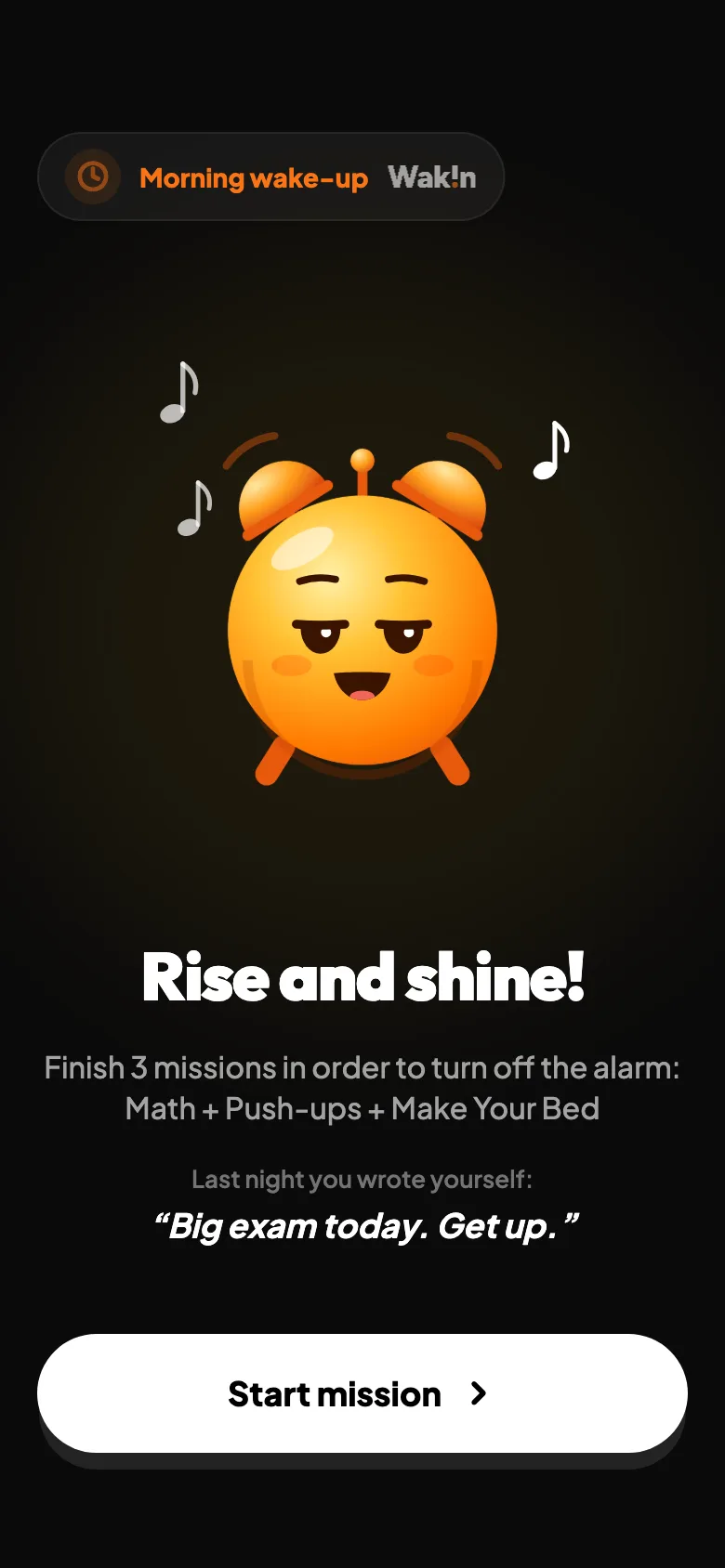
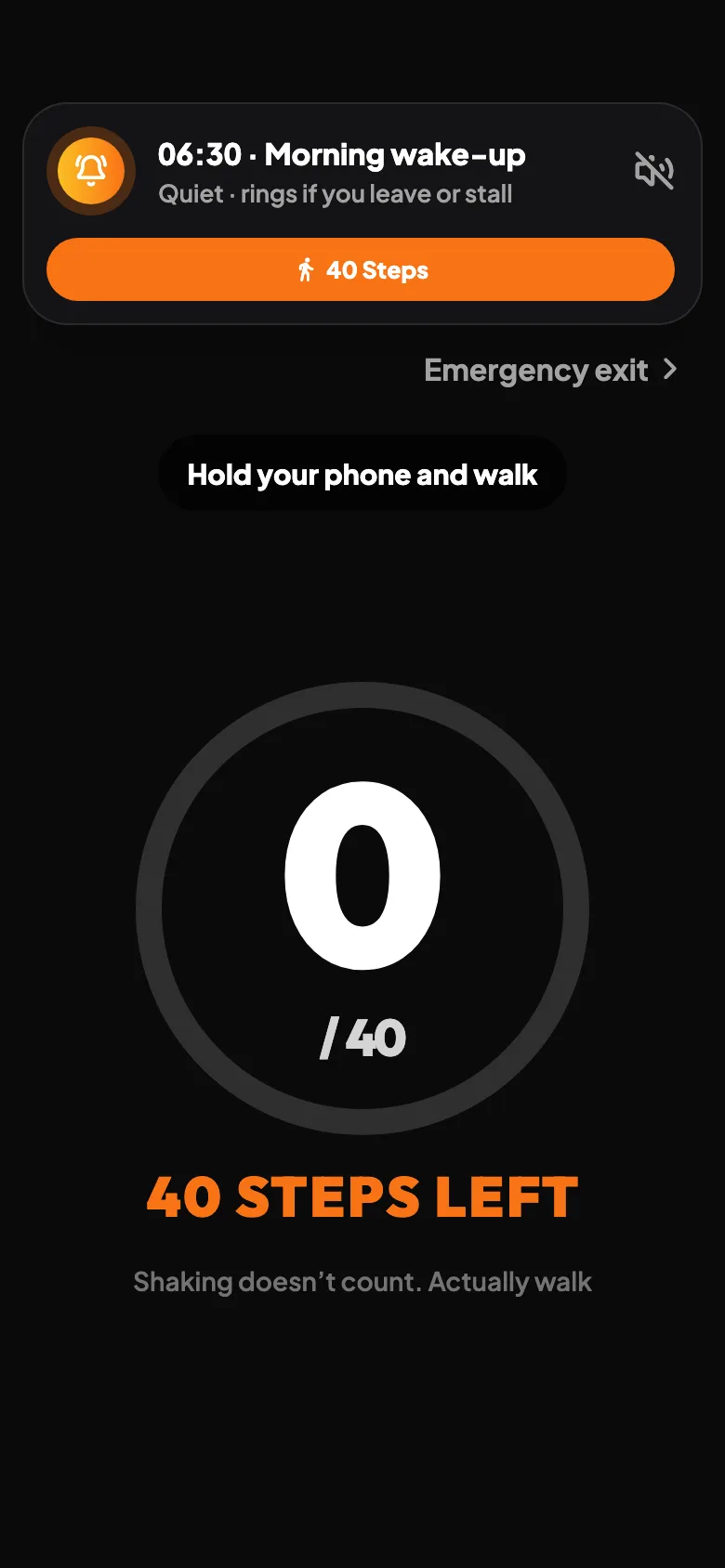
Wakin lets you pick a loud alarm sound or use your own, and the alarm keeps ringing until you finish a mission, so even the perfect song can’t be switched off half asleep. If a groggy first minute is your problem, a mission that gets you moving does more than any sound.
Frequently asked questions
What is the best alarm sound to wake up to?
For most people, a melodic tone or song you like that you don’t hear during the day. In a 2020 survey by researchers at RMIT University, people who woke to sounds they rated as melodic reported less morning grogginess than people whose alarm was neither melodic nor unmelodic, like a plain beep. If you tend to sleep through alarms, a low-pitched, buzzy sound wakes deep sleepers more reliably than a high-pitched beep.
Is it better to wake up to music or an alarm tone?
Music did well in the research so far. A 2020 review of 12 studies found positive results for music and melodic alarms when waking up in non-emergency situations, especially popular music. The evidence is still early and mostly small studies, so pick a song with a clear melody and a strong start, not the slow track you fall asleep to.
What alarm sound wakes up heavy sleepers?
A low-pitched, rough sound. In sleep lab tests by Dorothy Bruck’s team, a 520 Hz square wave, which sounds like a low buzz, woke people from deep sleep at lower volumes than higher-pitched signals. In people with hearing loss it woke 92% at 75 dB, against 56% for a standard high-pitched smoke alarm beep. Look for a deep, buzzy alarm tone rather than a chime.
Are loud, jarring alarms bad for you?
There’s no proof that one loud alarm harms a healthy person, but being woken suddenly does give your body a jolt. A small University of Virginia pilot study linked waking to an alarm after a short night with a bigger morning rise in blood pressure than waking on your own. A sound that starts gently and builds is a reasonable middle ground, as long as it ends up loud enough to wake you.
How do I change my alarm sound on iPhone?
Open Clock › Alarms, tap the alarm, then tap Sound. You can pick a ringtone, a song from your music library or only a vibration. Each alarm keeps its own sound. On iOS 27 you can also set the alarm volume on its own in Settings › Sounds & Haptics, under Alarms and Timers.
How do I change my alarm sound on Samsung or Pixel?
Samsung: open Clock › Alarm, tap the alarm, tap Alarm sound, then Ringtone, pick a sound and tap Save. Pixel: open Clock › Alarm, tap the alarm’s sound and pick a device sound, your own audio file or a song from a supported music app. Google Clock’s settings also have a Gradually increase volume option.
Should I change my alarm sound regularly?
If you’ve stopped reacting to it, yes. A tone you hear every morning can become background noise, especially if you also use it as your ringtone. Keep the alarm sound for the alarm only, and switch to a different one when you notice you’re sleeping through it or turning it off without waking up properly.
Sources
- McFarlane, Garcia, Verhagen & Dyer (2020): Alarm tones, music and their elements, analysis of reported waking sounds to counteract sleep inertia. PLOS ONEjournals.plos.org
- McFarlane, Garcia, Verhagen & Dyer (2020): Auditory countermeasures for sleep inertia, exploring the effect of melody and rhythm in an ecological context. Clocks & Sleeppmc.ncbi.nlm.nih.gov
- McFarlane, Garcia, Verhagen & Dyer (2020): Alarm tones, voice warnings, and musical treatments, a systematic review of auditory countermeasures for sleep inertia. Clocks & Sleeppmc.ncbi.nlm.nih.gov
- Bruck, Ball, Thomas & Rouillard (2009): How does the pitch and pattern of a signal affect auditory arousal thresholds? Journal of Sleep Researchdoi.org
- Bruck & Thomas (2009): Smoke alarms for sleeping adults who are hard-of-hearing, comparison of auditory, visual, and tactile signals. Ear and Hearingdoi.org
- Kaida, Ogawa, Hayashi & Hori (2005): Self-awakening prevents acute rise in blood pressure and heart rate at the time of awakening in elderly people. Industrial Healthjstage.jst.go.jp
- Waking up to your phone alarm? It could be putting you at risk (University of Virginia)news.virginia.edu
- Hilditch & McHill (2019): Sleep inertia, current insights. Nature and Science of Sleeppmc.ncbi.nlm.nih.gov
- Set an alarm in Clock on iPhone (Apple)support.apple.com
- How to set and change alarms on your iPhone (Apple)support.apple.com
- Set and manage alarms on your Samsung Galaxy (Samsung)samsung.com
- Set, cancel, or snooze alarms on your Android device (Google)support.google.com
- Clock Help (Google)support.google.com
More guides
How to Get Out of Bed in the Morning When You Don’t Want To
Awake but can’t get out of bed? Why the first minutes feel so heavy, an 8-step plan for the first 10 minutes, and when it’s more than a bad morning.
Read the guide →
What Is a Mission Alarm? The Alarm That Won’t Stop Until You’re Up
A mission alarm won’t stop until you finish a task: math, a photo, a barcode or push-ups. Which missions really get you out of bed, and how hard to set them.
Read the guide →
Will My Alarm Go Off If My Phone Is Off, Dead or in Airplane Mode?
Not if it’s off or dead (with two rare exceptions). Yes in airplane mode, Low Power Mode and offline. 10 situations on iPhone and Android, and 5 traps.
Read the guide →
What Time Should I Go to Bed? Sleep Cycle Calculator
Enter your wake-up time and get bedtimes for 4, 5 or 6 sleep cycles. Plus how much sleep you need by age, and why 90-minute cycles are only an average.
Read the guide →
The Best Alarm for Heavy Sleepers: What Actually Wakes You Up
Sleep through every alarm? What research says about sound, vibration, light and mission alarms, how to set up your phone, and which alarm type fits you.
Read the guide →
How to Wake Up Early, Even If You’re a Night Owl: A 3-Week Plan
Night owl who wants your mornings back? The 3-week plan behind a trial that moved sleep 2 hours earlier: 15-minute steps, morning light and one weekend rule.
Read the guide →
Android Alarm Too Quiet? How to Turn Up the Alarm Volume on Samsung, Xiaomi and Pixel
Android alarm too quiet or silent? Where the alarm volume is on Samsung, Xiaomi and Pixel, why it keeps going down, and how to change the alarm sound.
Read the guide →
Is Hitting Snooze Bad for You? What 4 Studies Actually Found
Does hitting snooze make you more tired? What four studies actually found, why you keep doing it, when it’s fine, and how to stop, plus how to turn snooze off.
Read the guide →
Why Can’t I Wake Up to My Alarm? 7 Reasons You Sleep Through It
Sleeping through your alarm, or turning it off without remembering? The 7 real reasons, from sleep inertia to your body clock, and the fixes that work.
Read the guide →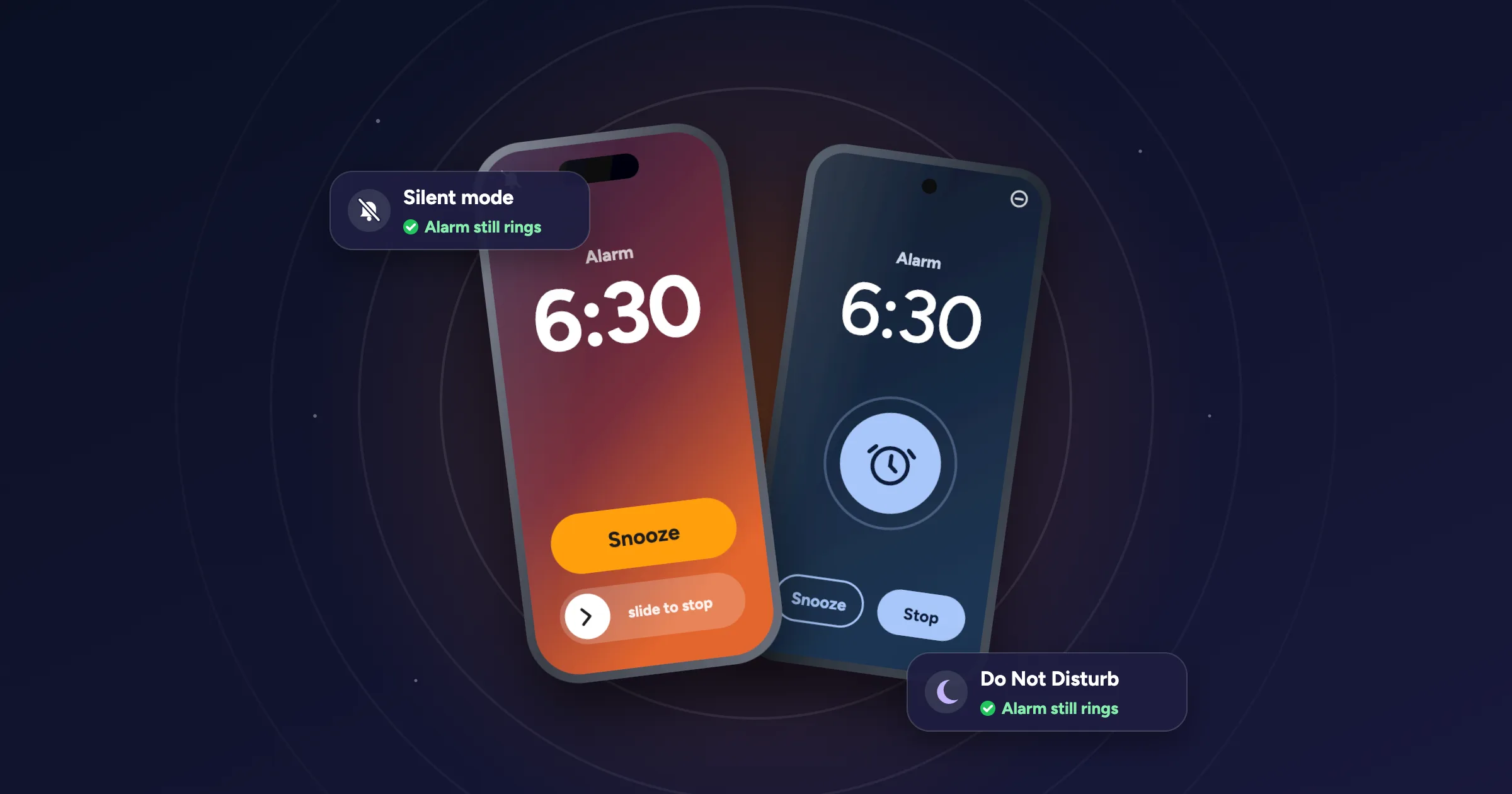
Will My Alarm Ring on Silent, Vibrate or Do Not Disturb? iPhone and Android
Usually yes, on iPhone and Android. But 6 things can still silence it, from a hidden Samsung setting to your Apple Watch.
Read the guide →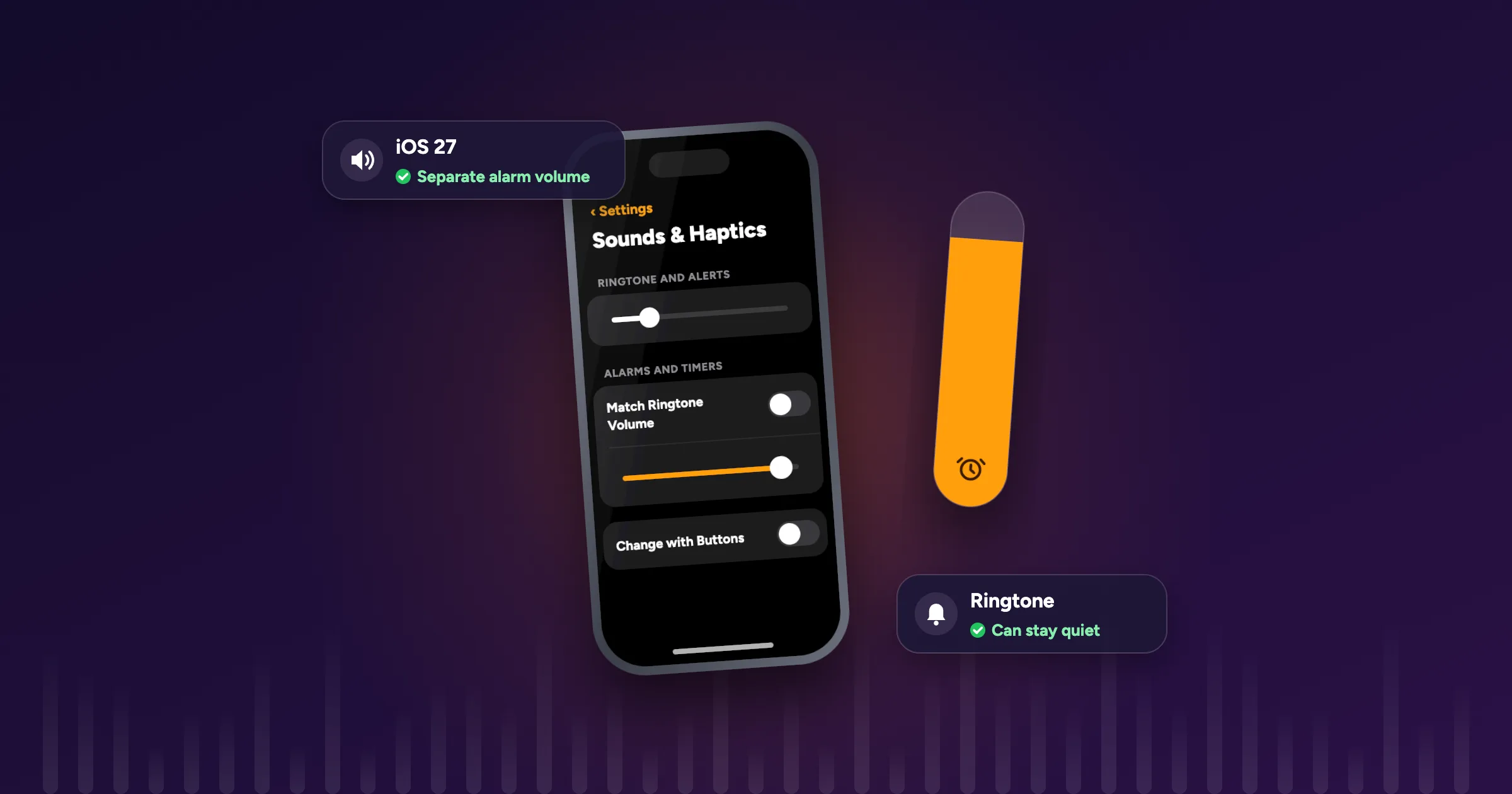
iPhone Alarm Too Quiet? How to Change the Alarm Volume on iOS 27 and iOS 26
Make your iPhone alarm louder: the new separate alarm volume in iOS 27, the right slider on iOS 26, the sleep alarm’s own volume and 6 more fixes.
Read the guide →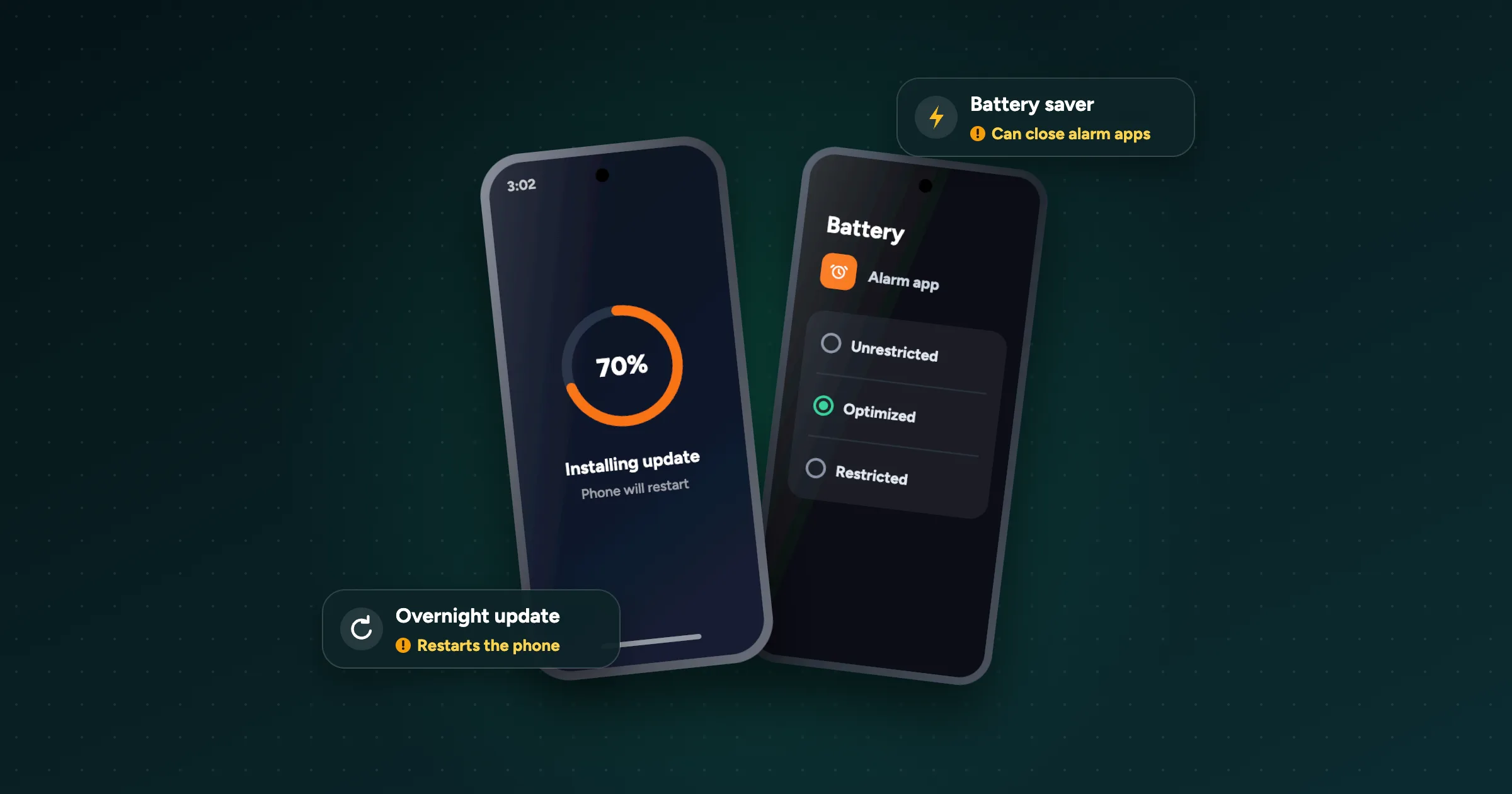
Android Alarm Not Going Off? 9 Fixes for Samsung, Pixel, Xiaomi and More
Android alarm didn’t ring, rang late or only showed a notification? 9 fixes with the exact settings for Samsung, Pixel, Xiaomi, TECNO, OPPO and vivo.
Read the guide →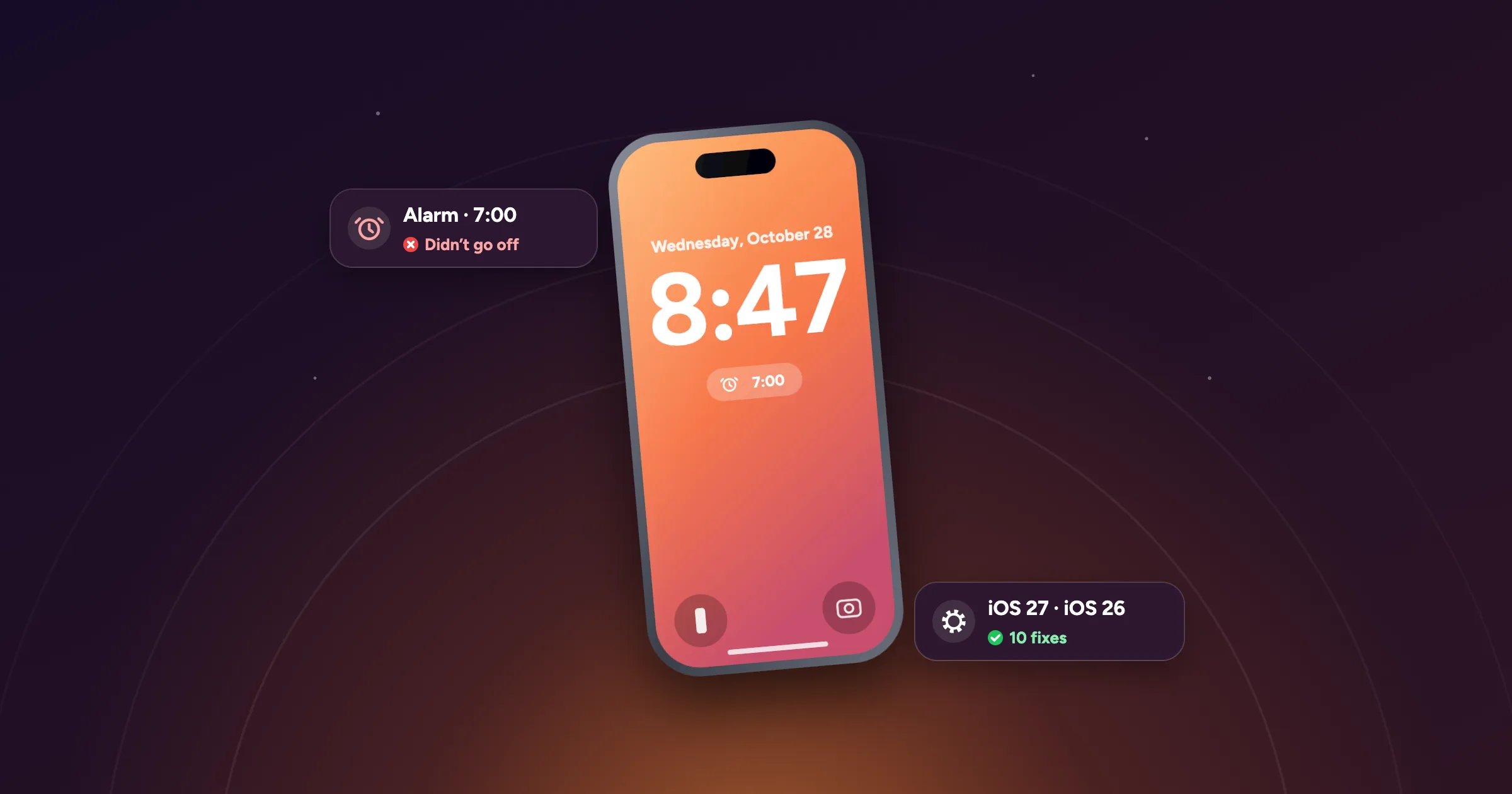
iPhone Alarm Not Going Off? 10 Fixes for iOS 27 and iOS 26
iPhone alarm not going off or not working after the iOS 27 update? 10 fixes: no sound, too quiet, only on Apple Watch, the new alarm volume and alarm apps.
Read the guide →