
Short answer: not always. Here’s what the studies say:
- In a 2023 Stockholm University lab study, 30 minutes of snoozing cost habitual snoozers about 6 minutes of sleep, didn’t change their mood, sleepiness or cortisol, and they did slightly better on some tests right after getting up.
- A small 2022 Japanese study found the opposite: after snoozing, people reacted more slowly later in the morning.
- Snoozers report more morning grogginess and shorter workday sleep, but that looks more like the reason they snooze than the result.
If you snooze a little and then get up, relax. If snoozing turns into oversleeping, set the alarm for when you really need to get up, sleep more, and use an alarm you can’t stop without getting out of bed.
On this page
How common is snoozing?
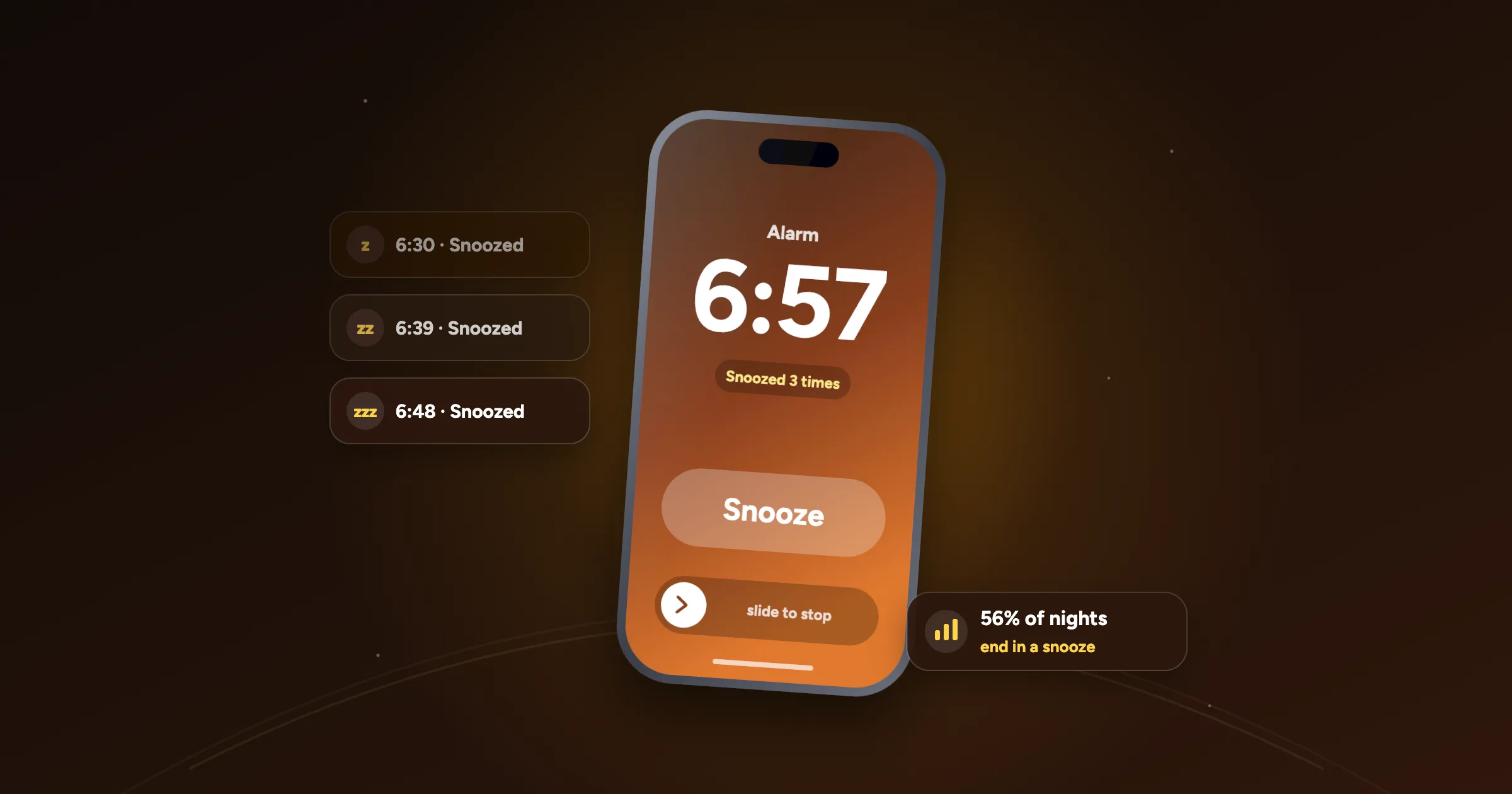
If you snooze, you’re in the majority. In 2025, researchers at Mass General Brigham looked at about 3 million nights logged by more than 21,000 users of a sleep tracking app. 56% of those nights ended with a snooze alarm. People pressed snooze 2.4 times on average and spent about 11 minutes snoozing. Around 45% of users snoozed on more than 80% of their mornings, averaging about 20 minutes.
Snoozing peaked on weekdays and dropped on weekends, when there’s no fixed time to get up. It was most common in the United States, Sweden and Germany, and least common in Japan and Australia. Surveys tell the same story: 69% of people in a Swedish study said they snooze or set several alarms at least sometimes, and 57% of full-time workers in a Notre Dame study were habitual snoozers.
What the research found
Only a handful of studies have looked at what snoozing actually does. Here are the four worth knowing, and they don’t all agree:
| Study | Who | What they found |
|---|---|---|
| Stockholm University, 2023Journal of Sleep Research | Survey of 1,732 adults, then 31 habitual snoozers in a sleep lab | 30 minutes of snoozing cost about 6 minutes of sleep, and fewer people woke out of deep sleep. No effect on cortisol, mood or sleepiness. Slightly better scores on some tests right after waking. |
| University of Notre Dame, 2022Sleep | 450 full-time workers, with wearables | 57% were habitual snoozers. They slept as long as non-snoozers and didn’t feel tired more often, but their sleep before waking was lighter and their resting heart rate higher. |
| Ogawa et al., Japan, 2022Journal of Physiological Anthropology | Survey of 293 students, then 10 in a sleep lab | Snoozing turned the last 20 minutes into light, broken sleep. Reactions were slower later in the morning and people didn’t feel more alert. Only 10 people, so treat it as a hint. |
| Mass General Brigham, 2025Scientific Reports | Over 21,000 sleep app users, about 3 million nights | 56% of nights ended in a snooze: 2.4 presses and 11 minutes on average. Heaviest on weekdays. It measures how often people snooze, not what it does to them. |
Put together: snoozing costs a few minutes of sleep and swaps the last stretch for light, broken sleep. Whether that leaves you sharper or foggier isn’t settled. The Stockholm study only tested people who snooze every day, and its authors think a short snooze helps night owls most; the Japanese one had just 10 students.
So why does snoozing feel so bad?
Because the first minutes after waking feel bad anyway. That grogginess has a name, sleep inertia, and a 2019 review found it usually fades within 15 to 30 minutes, longer after a short night. Snooze, and you go through those first minutes several times instead of once. You blame the snooze, but the fog was there at 6:30 too.
What snoozing doesn’t do is drop you back into deep sleep. In the Stockholm lab, snoozing made it less likely that people woke up out of deep (slow-wave) sleep, and the minutes between alarms were mostly light sleep and brief awakenings. The common claim that a snooze “starts a new sleep cycle” doesn’t hold up: 9 minutes is far too short.
The real cost is the sleep you trade away. Mass General Brigham’s Rebecca Robbins points out that the hours before waking are rich in REM sleep, and snoozing swaps some of it for light, broken sleep. If you set the alarm for 6:30 and get up at 7:00, you could have slept until 7:00 in one piece.
Why you keep hitting snooze
Snoozing is usually a symptom. These are the most common causes:
- You’re short on sleep. Snoozers in the Stockholm survey slept less on workdays, but not on days off. The CDC recommends at least 7 hours a night for adults.
- Your body clock runs late. Snoozers were about four times as likely to be night owls. For them, a 6:30 alarm rings in the body’s middle of the night.
- Your alarm is set early on purpose. Lots of people set the alarm 20 or 30 minutes before they need to get up and plan to snooze. That’s a habit, not a disorder, but it’s sleep you don’t get back.
- The phone makes it easy. Since iOS 26.1, a tap on the iPhone alarm snoozes it and you have to slide to stop it. That stops you from turning it off by accident, but it also makes snooze the easiest thing to hit half asleep.
If you sleep 7 to 9 hours and still can’t get up without a long snooze, or you doze off during the day, see a doctor. Our guide on why you can’t wake up to your alarm covers sleep apnea and other medical causes.
When snoozing is fine, and when it isn’t
You can stop worrying if you snooze for up to about half an hour, get up at the last alarm, and feel fine an hour later. That’s what the Stockholm volunteers did, and it didn’t hurt them.
It’s a problem if any of these sound like you:
- a snooze sometimes turns into Stop and you oversleep,
- you need more than half an hour of snoozing, or a ladder of alarms,
- you’re tired all day, not just in the first half hour,
- you turn the alarm off without remembering it.
How to stop hitting snooze
Set the alarm for when you really need to get up
This is the one Robbins recommends. If you always snooze until 7:00, set the alarm for 7:00 and take the extra half hour as real sleep. It feels risky for a few days, which is why the next steps help.
Get enough sleep
Count back from your alarm. For a 7:00 alarm and 7½ hours of sleep, be asleep by 11:30. If that’s far from your bedtime now, move it 15 minutes earlier every few nights.
Keep the same wake time every day
Sleeping in on weekends pushes your body clock later, so Monday’s alarm rings in your body’s night. The same wake time seven days a week, give or take an hour, and daylight soon after you get up move it back to your morning.
Put the phone out of reach
If you have to stand up to reach it, you’re already out of bed. Put it across the room, and make sure it’s loud enough from there: see how to turn up the alarm volume on iPhone.
Make snooze take effort
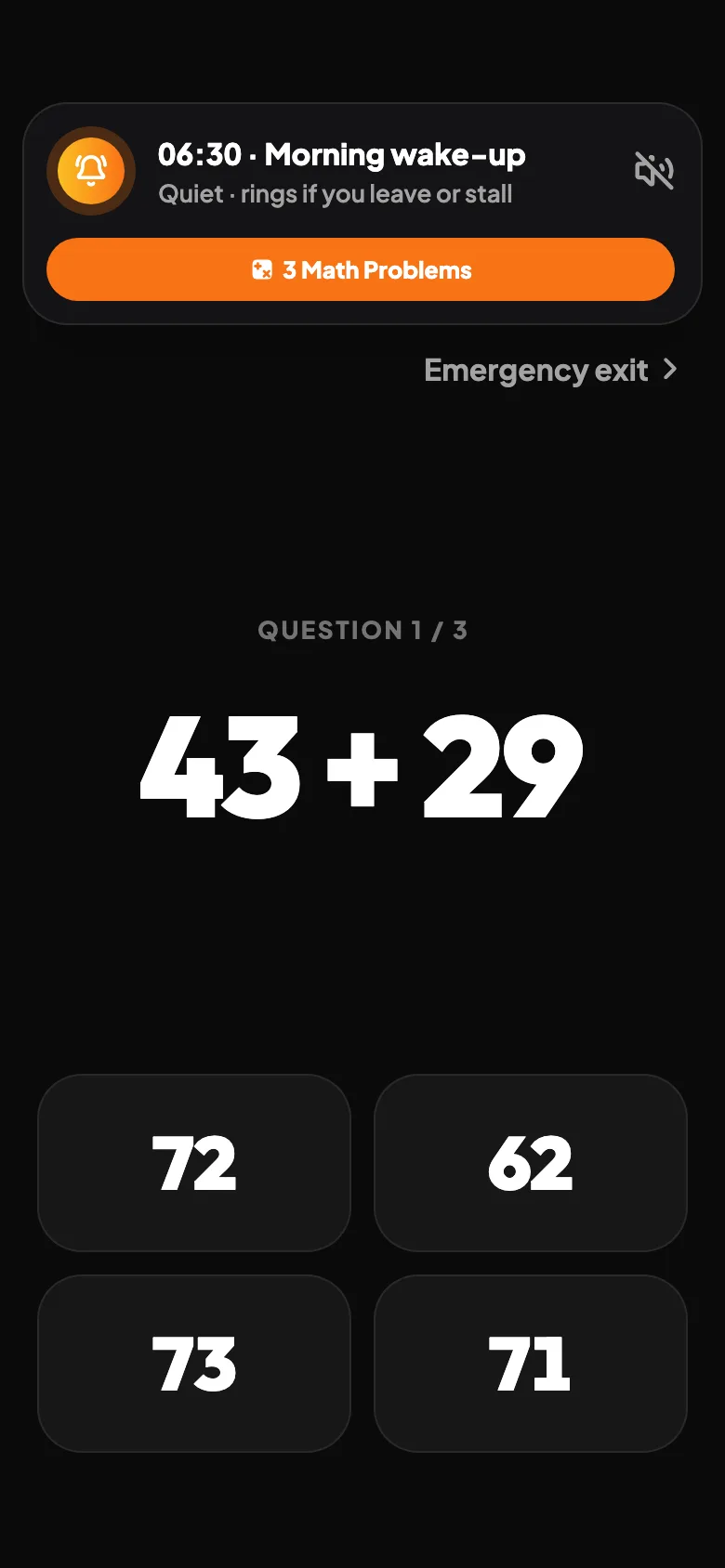
The snooze button is easy to hit because it takes no thought. An alarm that only stops, or only snoozes, after a task that needs a working brain, like a math problem or a photo of something in another room, turns the half-asleep reflex into a decision.
If you love snoozing, cap it
Allow yourself one short snooze, say 10 minutes, and then get up. On iPhone you can set the snooze length per alarm; on Android, set a short interval and a low number of repeats.
How to turn off snooze on iPhone and Android
- iPhone: open Clock › Alarms, tap the alarm, turn off Snooze and tap Save. Each alarm has its own setting. Since iOS 26 the same screen has Snooze Duration, from 1 to 15 minutes (the default is still 9).
- Samsung Galaxy: in the Clock app, tap the alarm, then Snooze. Turn it off, or set a short interval and fewer repeats.
- Google Pixel and other phones with Google’s Clock app: snooze length is one setting for every alarm, under More › Settings › Snooze length. The default is 10 minutes.
- RepeatWeekdays
- LabelAlarm
- SoundRadar
- Snooze
A snooze that still gets you up
The research suggests snoozing isn’t the enemy. Snoozing your way out of getting up is. Wakin is built around that difference:
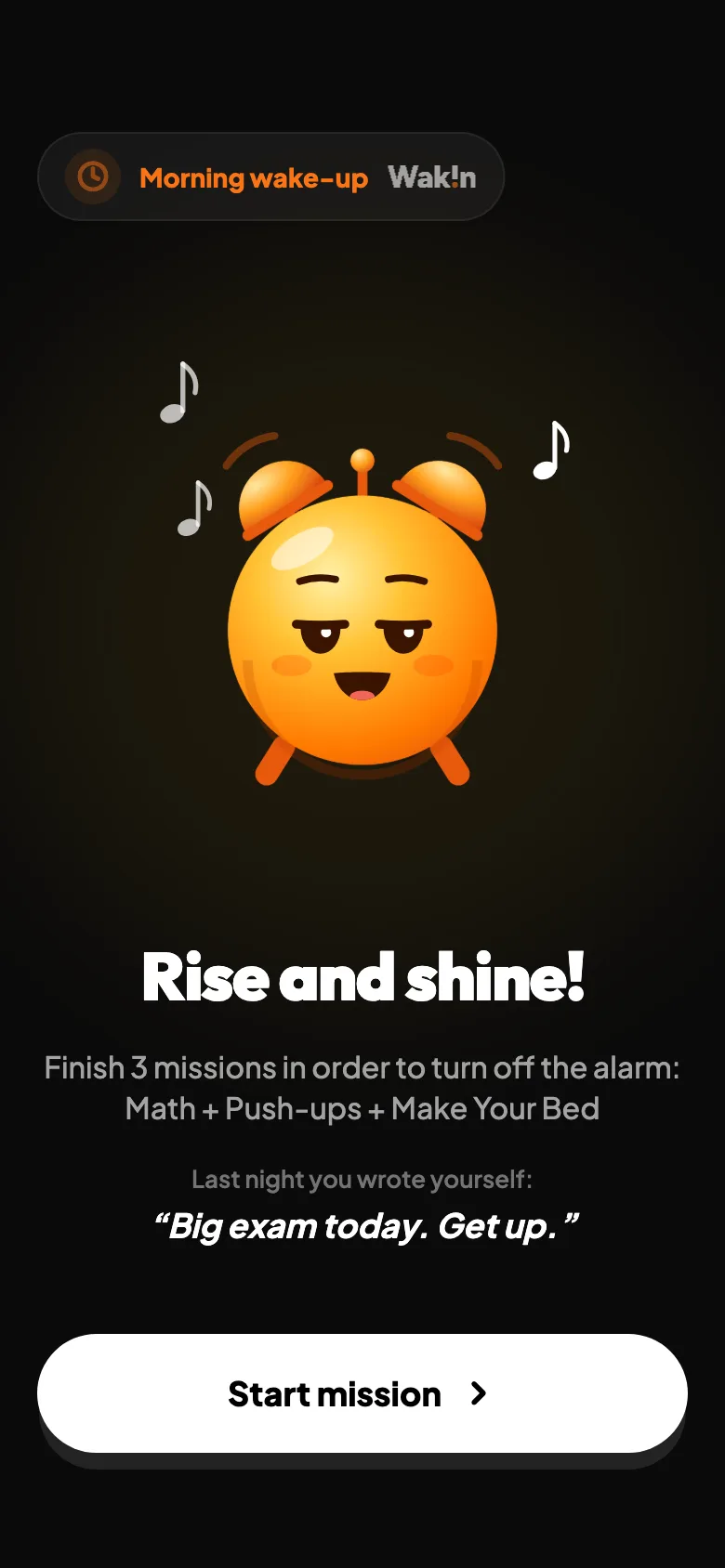
- Mission alarms come with snooze off, so there’s no half-asleep button to tap.
- If you want one, you can turn on a 5, 10 or 15-minute snooze. When the alarm rings again, the mission is still waiting, so a snooze can’t turn into Stop.
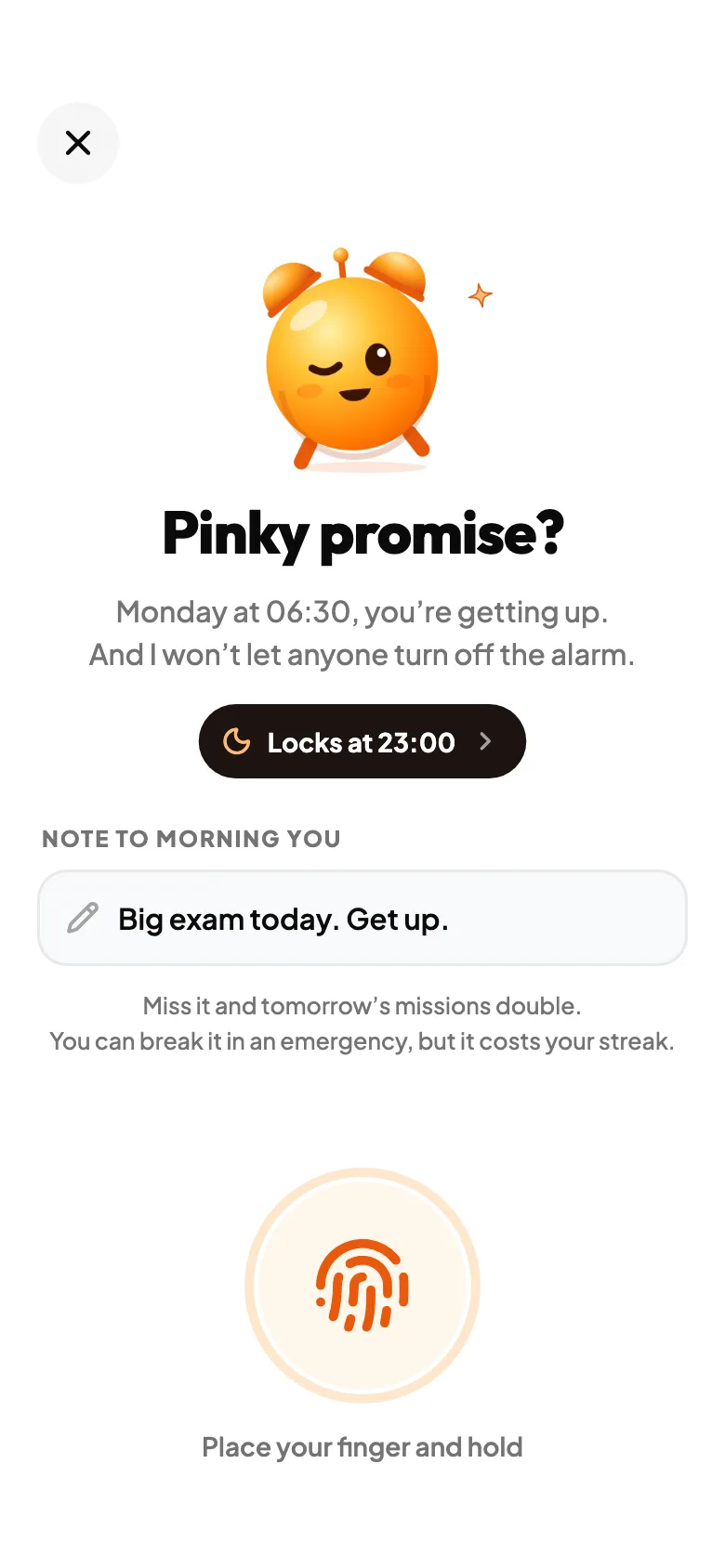
- A locked alarm, promised the night before, can’t be turned off before it rings or snoozed when it does. Breaking it in an emergency costs your streak.
Frequently asked questions
Is hitting snooze bad for you?
Not necessarily. In a 2023 Stockholm University lab study, habitual snoozers who snoozed for 30 minutes lost about 6 minutes of sleep, their mood, sleepiness and cortisol were unaffected, and they did slightly better on some tests right after getting up. A small 2022 Japanese study found snoozing left people slower later in the morning. Snoozing becomes a problem when it turns into oversleeping, or when it’s a sign you aren’t getting enough sleep.
Why does snoozing make me feel more tired?
Mostly because you were already tired. The grogginess of the first minutes after waking, called sleep inertia, happens whether you snooze or not, and people who snooze tend to sleep less on workdays and be night owls. Snoozing can also replace the last stretch of REM-rich sleep with light, broken sleep, which a 2022 study linked to slower reactions later in the morning.
Can you fall back into deep sleep while snoozing?
Rarely. In the Stockholm study, snoozing made people less likely to wake up out of deep (slow-wave) sleep, and a Japanese lab study found the minutes between alarms were mostly light sleep and short awakenings. A 9-minute snooze is too short to go through a full sleep cycle.
How long is it OK to snooze?
The lab study that found no harm used 30 minutes of snoozing in people who snooze every day, and nobody has tested longer. If you need more than about 30 minutes of snoozing to get up, set the alarm later and sleep that time in one piece instead.
How common is hitting snooze?
Very. In a 2025 analysis of about 3 million nights from more than 21,000 sleep app users, 56% of nights ended with a snooze alarm, and people pressed snooze 2.4 times on average. In a Swedish survey, 69% said they snooze or set several alarms at least sometimes.
Why do I keep hitting snooze?
The usual reasons are not enough sleep, a late body clock (snoozers are about four times as likely to be night owls), an alarm set earlier than you really need to get up, and habit. If you sleep 7 to 9 hours and still can’t get up without a long snooze, talk to a doctor.
Is it better to set multiple alarms or use snooze?
They’re the same thing to your brain: each alarm breaks up your last bit of sleep. One alarm at the time you actually need to get up, which you can’t stop without getting out of bed, works better than a ladder of alarms.
How do I turn off snooze on iPhone?
Open the Clock app, tap Alarms, tap the alarm and turn off Snooze, then tap Save. Each alarm has its own setting. Since iOS 26 you can also change the snooze length from 1 to 15 minutes (the default is 9), and since iOS 26.1 tapping the alarm snoozes it while sliding stops it.
How do I stop hitting snooze?
Set your alarm for when you really need to get up, get 7 or more hours of sleep, keep the same wake time every day, and put the phone out of reach. If you still hit snooze half asleep, use an alarm where snoozing doesn’t let you off the hook, like one that needs a task before it stops.
Sources
- Sundelin, Landry & Axelsson (2023): Is snoozing losing? Journal of Sleep Researchdoi.org
- Mattingly et al. (2022): Snoozing: an examination of a common method of waking. Sleepdoi.org
- Ogawa, Kaizuma-Ueyama & Hayashi (2022): Effects of using a snooze alarm on sleep inertia after morning awakening. Journal of Physiological Anthropologypmc.ncbi.nlm.nih.gov
- Robbins et al. (2025): Quantifying snooze behavior in a global population of smartphone users. Scientific Reportsnature.com
- Don’t hit snooze on new research about waking up each morning (Mass General Brigham)news.massgeneralbrigham.org
- Hilditch & McHill (2019): Sleep inertia, current insights. Nature and Science of Sleeppmc.ncbi.nlm.nih.gov
- About Sleep: how much sleep you need by age (CDC)cdc.gov
- Set, cancel, or snooze alarms on your Android device (Google)support.google.com
More guides
How to Get Out of Bed in the Morning When You Don’t Want To
Awake but can’t get out of bed? Why the first minutes feel so heavy, an 8-step plan for the first 10 minutes, and when it’s more than a bad morning.
Read the guide →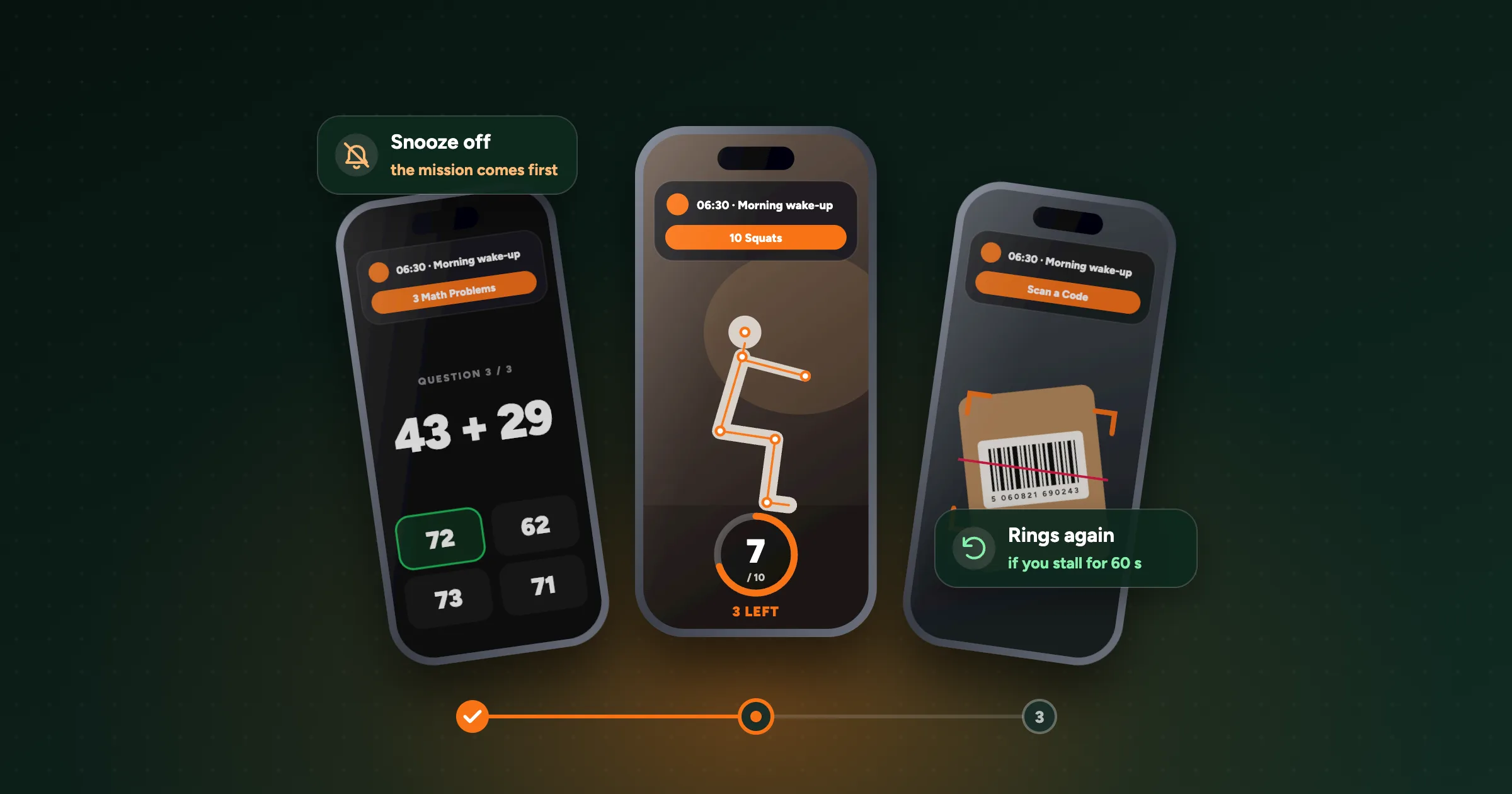
What Is a Mission Alarm? The Alarm That Won’t Stop Until You’re Up
A mission alarm won’t stop until you finish a task: math, a photo, a barcode or push-ups. Which missions really get you out of bed, and how hard to set them.
Read the guide →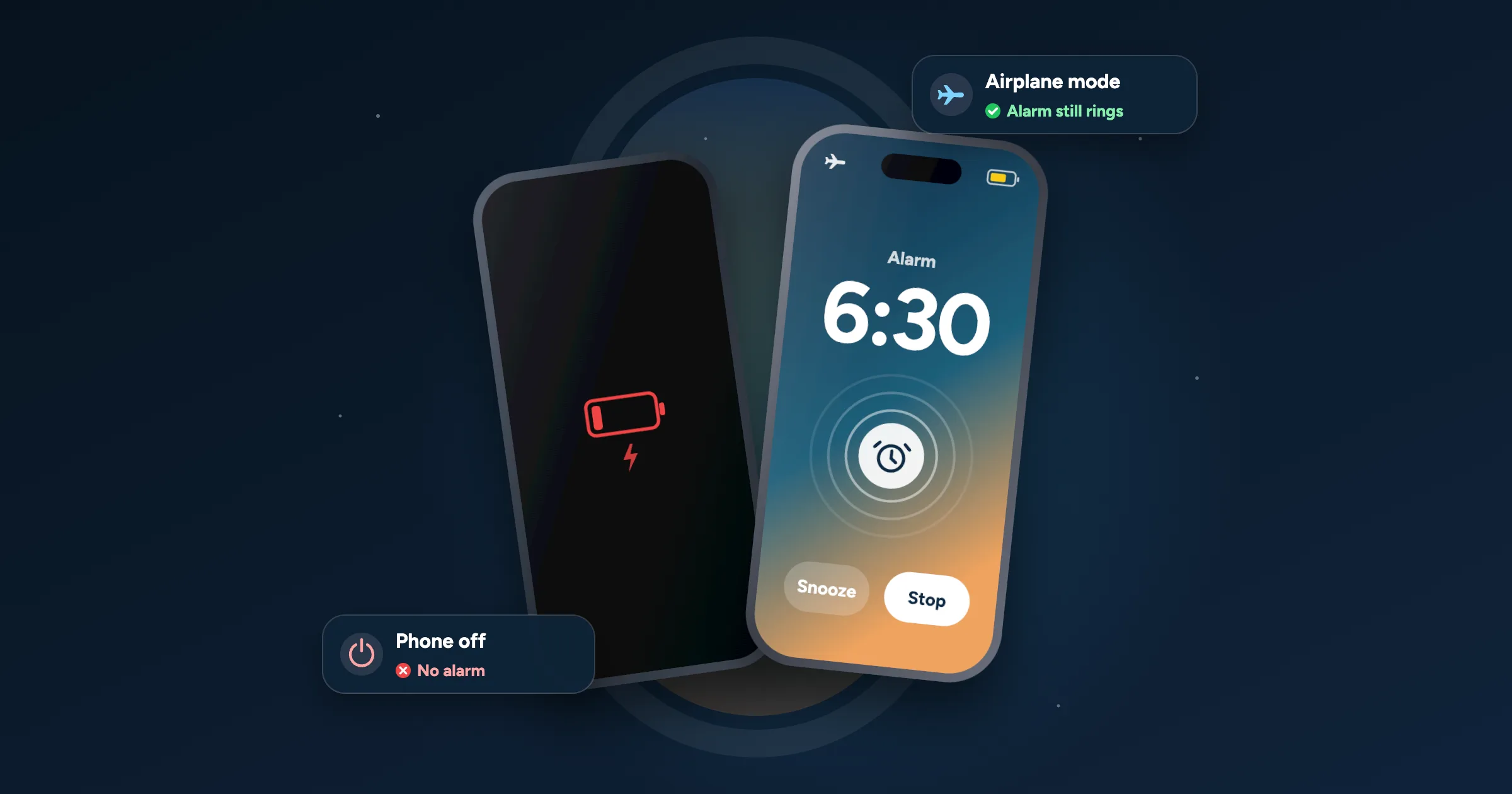
Will My Alarm Go Off If My Phone Is Off, Dead or in Airplane Mode?
Not if it’s off or dead (with two rare exceptions). Yes in airplane mode, Low Power Mode and offline. 10 situations on iPhone and Android, and 5 traps.
Read the guide →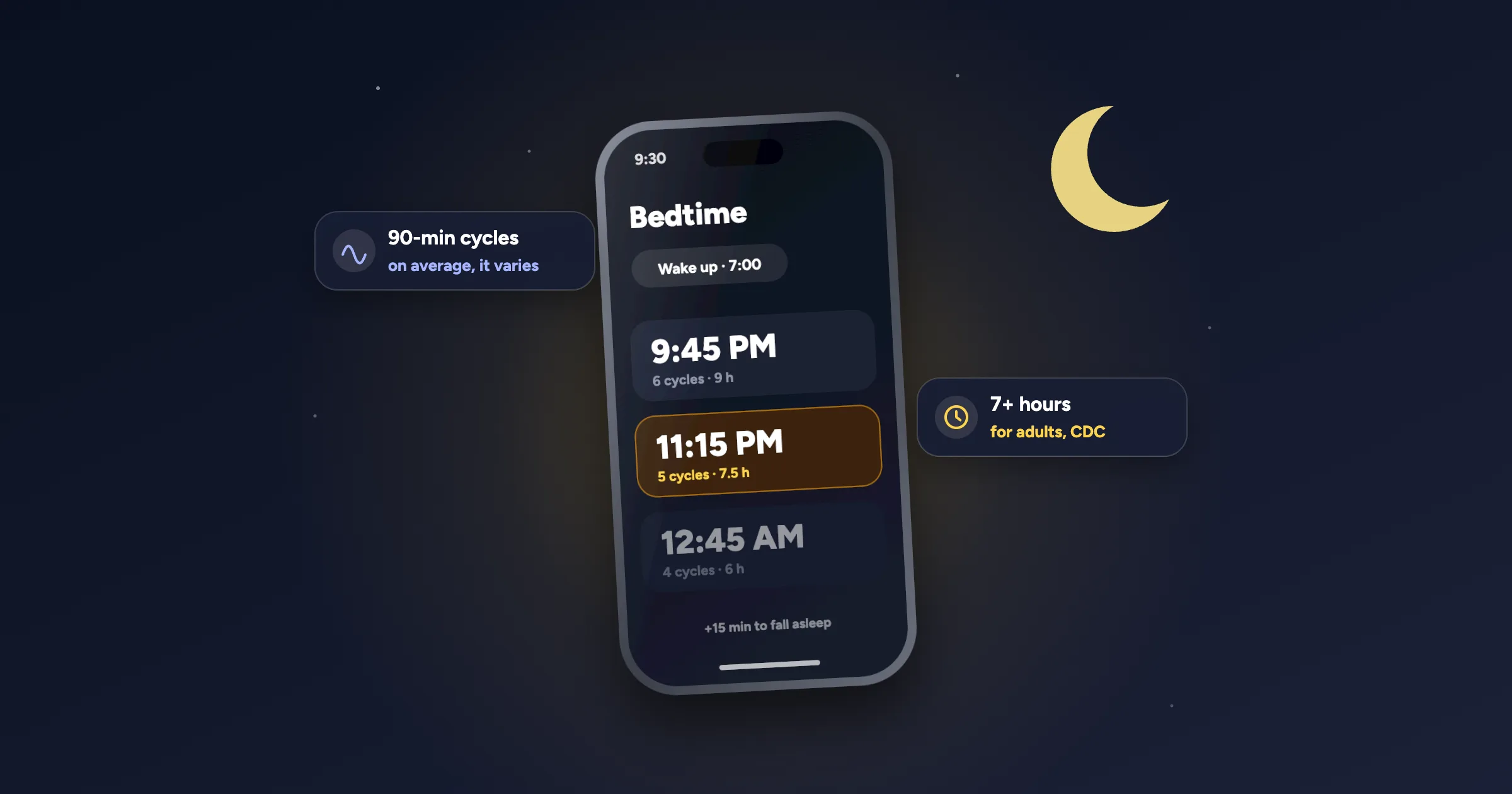
What Time Should I Go to Bed? Sleep Cycle Calculator
Enter your wake-up time and get bedtimes for 4, 5 or 6 sleep cycles. Plus how much sleep you need by age, and why 90-minute cycles are only an average.
Read the guide →
The Best Alarm for Heavy Sleepers: What Actually Wakes You Up
Sleep through every alarm? What research says about sound, vibration, light and mission alarms, how to set up your phone, and which alarm type fits you.
Read the guide →
How to Wake Up Early, Even If You’re a Night Owl: A 3-Week Plan
Night owl who wants your mornings back? The 3-week plan behind a trial that moved sleep 2 hours earlier: 15-minute steps, morning light and one weekend rule.
Read the guide →
Android Alarm Too Quiet? How to Turn Up the Alarm Volume on Samsung, Xiaomi and Pixel
Android alarm too quiet or silent? Where the alarm volume is on Samsung, Xiaomi and Pixel, why it keeps going down, and how to change the alarm sound.
Read the guide →
Why Can’t I Wake Up to My Alarm? 7 Reasons You Sleep Through It
Sleeping through your alarm, or turning it off without remembering? The 7 real reasons, from sleep inertia to your body clock, and the fixes that work.
Read the guide →
Will My Alarm Ring on Silent, Vibrate or Do Not Disturb? iPhone and Android
Usually yes, on iPhone and Android. But 6 things can still silence it, from a hidden Samsung setting to your Apple Watch.
Read the guide →
iPhone Alarm Too Quiet? How to Change the Alarm Volume on iOS 27 and iOS 26
Make your iPhone alarm louder: the new separate alarm volume in iOS 27, the right slider on iOS 26, the sleep alarm’s own volume and 6 more fixes.
Read the guide →
Android Alarm Not Going Off? 9 Fixes for Samsung, Pixel, Xiaomi and More
Android alarm didn’t ring, rang late or only showed a notification? 9 fixes with the exact settings for Samsung, Pixel, Xiaomi, TECNO, OPPO and vivo.
Read the guide →
iPhone Alarm Not Going Off? 10 Fixes for iOS 27 and iOS 26
iPhone alarm not going off or not working after the iOS 27 update? 10 fixes: no sound, too quiet, only on Apple Watch, the new alarm volume and alarm apps.
Read the guide →