
Sleep calculator
Be in bed by
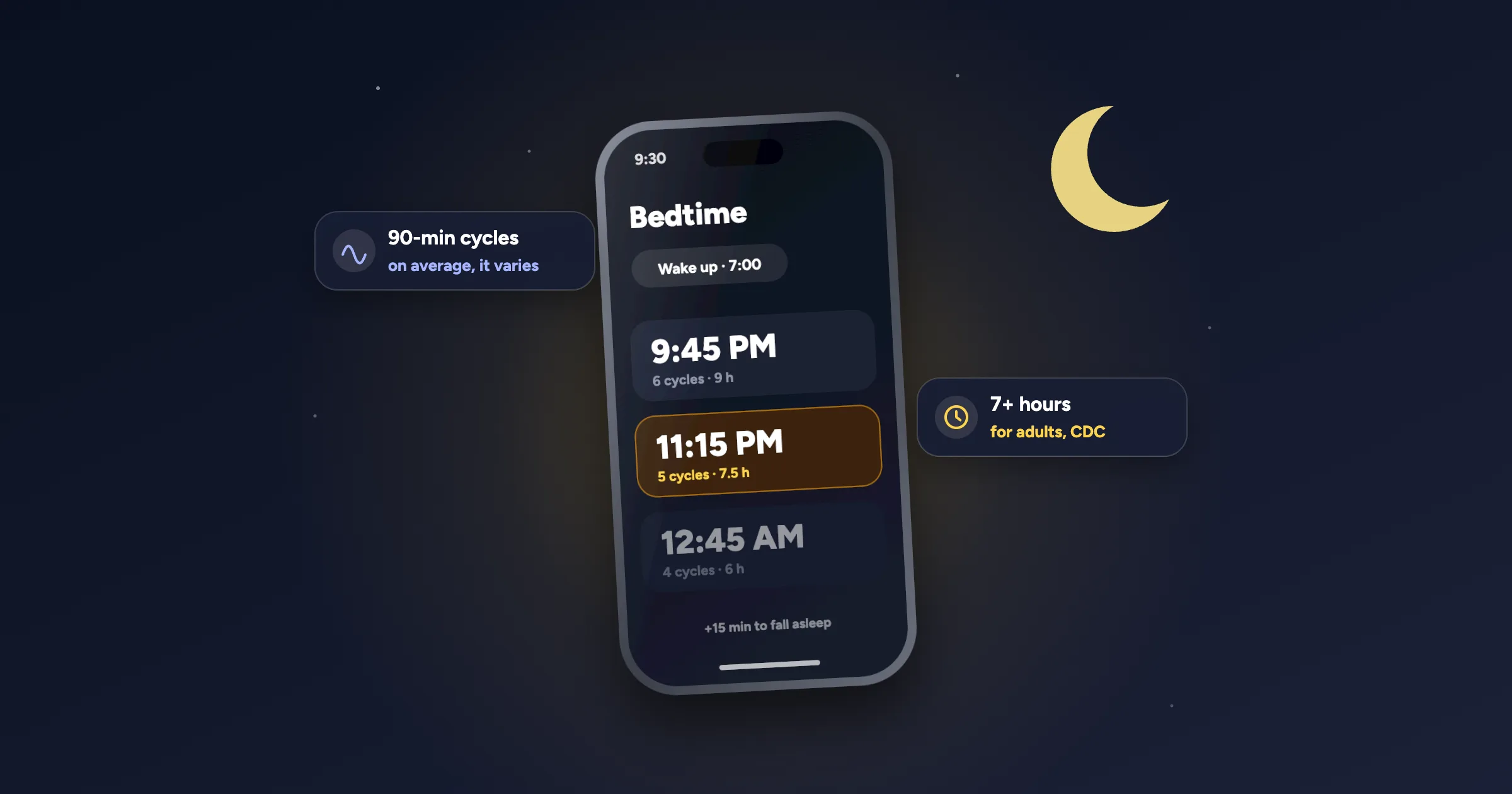
- 9:45 p.m.6 cycles · 9 h of sleepMost rest
- 11:15 p.m.5 cycles · 7.5 h of sleepEnough for most adults
- 12:45 a.m.4 cycles · 6 h of sleepToo short for most adults
Includes 15 minutes to fall asleep. Cycles average 90 minutes but vary from 70 to 120.
Count back from your wake time: 7½ or 9 hours of sleep, which is five or six cycles of about 90 minutes, plus 15 minutes to fall asleep. For a 7:00 a.m. alarm, be in bed by 11:15 p.m.
- adults need at least 7 hours a night, teens 8 to 10,
- cycles average 90 minutes but vary from about 70 to 120, so treat the times as a guide,
- getting enough sleep matters more than hitting the end of a cycle.
On this page
Bedtimes for common wake times
Each time includes 15 minutes to fall asleep.
| Wake up at | 5 cycles (7½ h) | 6 cycles (9 h) |
|---|---|---|
| 5:00 a.m. | 9:15 p.m. | 7:45 p.m. |
| 5:30 a.m. | 9:45 p.m. | 8:15 p.m. |
| 6:00 a.m. | 10:15 p.m. | 8:45 p.m. |
| 6:30 a.m. | 10:45 p.m. | 9:15 p.m. |
| 7:00 a.m. | 11:15 p.m. | 9:45 p.m. |
| 7:30 a.m. | 11:45 p.m. | 10:15 p.m. |
| 8:00 a.m. | 12:15 a.m. | 10:45 p.m. |
How the calculation works
Sleep isn’t one long, even stretch. You move through light sleep, deep sleep and REM sleep in cycles, and most adults go through four to six of them a night. According to the Sleep Foundation, a cycle lasts about 90 minutes on average: the first one of the night is often shorter, 70 to 100 minutes, and later ones run 90 to 120.
The calculator adds whole cycles to a 15-minute buffer for falling asleep, which is in the normal range of 10 to 20 minutes. The idea behind it: waking from deep sleep makes the grogginess after waking, called sleep inertia, worse, so an alarm near the end of a cycle should feel easier.
Take that with a grain of salt. Your cycles aren’t exactly 90 minutes, and they change from night to night, so no calculator can promise to land on the end of one. Two things matter more: sleeping long enough, and keeping the same wake time every day, which lets your body learn to come up into lighter sleep before the alarm.
How much sleep you need
The CDC’s recommendations by age:
| Age | Sleep per night |
|---|---|
| 6–12 years | 9 to 12 hours |
| 13–17 years | 8 to 10 hours |
| 18–60 years | 7 hours or more |
| 61–64 years | 7 to 9 hours |
| 65 and older | 7 to 8 hours |
That’s why the calculator marks four cycles as too short: six hours fits the 90-minute rule perfectly and still leaves most adults short on sleep.
If you can’t fall asleep that early
Your body clock decides when you get sleepy, and it doesn’t move just because the calculator says 10:15. If your new bedtime is an hour or more earlier than what you’re used to, move it 15 minutes every few days and get daylight soon after waking. Our 3-week plan to wake up early walks through it. And if you hear the alarm but still can’t get out of bed, see the best alarm for heavy sleepers.
Frequently asked questions
What time should I go to bed?
Count back from the time you need to get up: 7½ or 9 hours of sleep, which is five or six 90-minute cycles, plus about 15 minutes to fall asleep. For a 7:00 a.m. alarm, that’s 11:15 p.m. or 9:45 p.m. Adults need at least 7 hours, so don’t go much later than 11:45 p.m. for a 7:00 alarm.
What time should I go to bed to wake up at 6 a.m.?
Around 10:15 p.m. for five sleep cycles (7½ hours) or 8:45 p.m. for six (9 hours), counting 15 minutes to fall asleep. To get the minimum 7 hours adults need, be in bed by 10:45 p.m. at the latest.
What time should I go to bed to wake up at 5 a.m.?
Around 9:15 p.m. for five sleep cycles or 7:45 p.m. for six, counting 15 minutes to fall asleep. For at least 7 hours of sleep, be in bed by 9:45 p.m.
How long is a sleep cycle?
About 90 minutes on average, but not exactly. According to the Sleep Foundation, the first cycle of the night is often the shortest, 70 to 100 minutes, and later ones run 90 to 120 minutes. Most adults go through four to six cycles a night.
Is it better to sleep 6 hours or 7½ hours?
7½. The CDC recommends at least 7 hours for adults. Six hours lines up neatly with four cycles, but it still leaves most adults short on sleep, and a week of short nights makes mornings harder whatever time the alarm rings.
How long should it take to fall asleep?
Usually 10 to 20 minutes. Falling asleep the moment your head hits the pillow can be a sign you’re short on sleep. Regularly taking much longer than 20 to 30 minutes is worth mentioning to a doctor.
Does waking up at the end of a sleep cycle make it easier?
It can. Waking from deep sleep makes the grogginess after waking worse. But cycle lengths vary from person to person and night to night, so no calculator can promise to hit the end of one. A regular schedule does more: your body learns to come up into lighter sleep before your usual wake time.
Sources
- About Sleep: how much sleep you need by age (CDC)cdc.gov
- Stages of Sleep (Sleep Foundation)sleepfoundation.org
- Sleep Latency (Sleep Foundation)sleepfoundation.org
- Hilditch & McHill (2019): Sleep inertia, current insights. Nature and Science of Sleeppmc.ncbi.nlm.nih.gov
More guides
How to Get Out of Bed in the Morning When You Don’t Want To
Awake but can’t get out of bed? Why the first minutes feel so heavy, an 8-step plan for the first 10 minutes, and when it’s more than a bad morning.
Read the guide →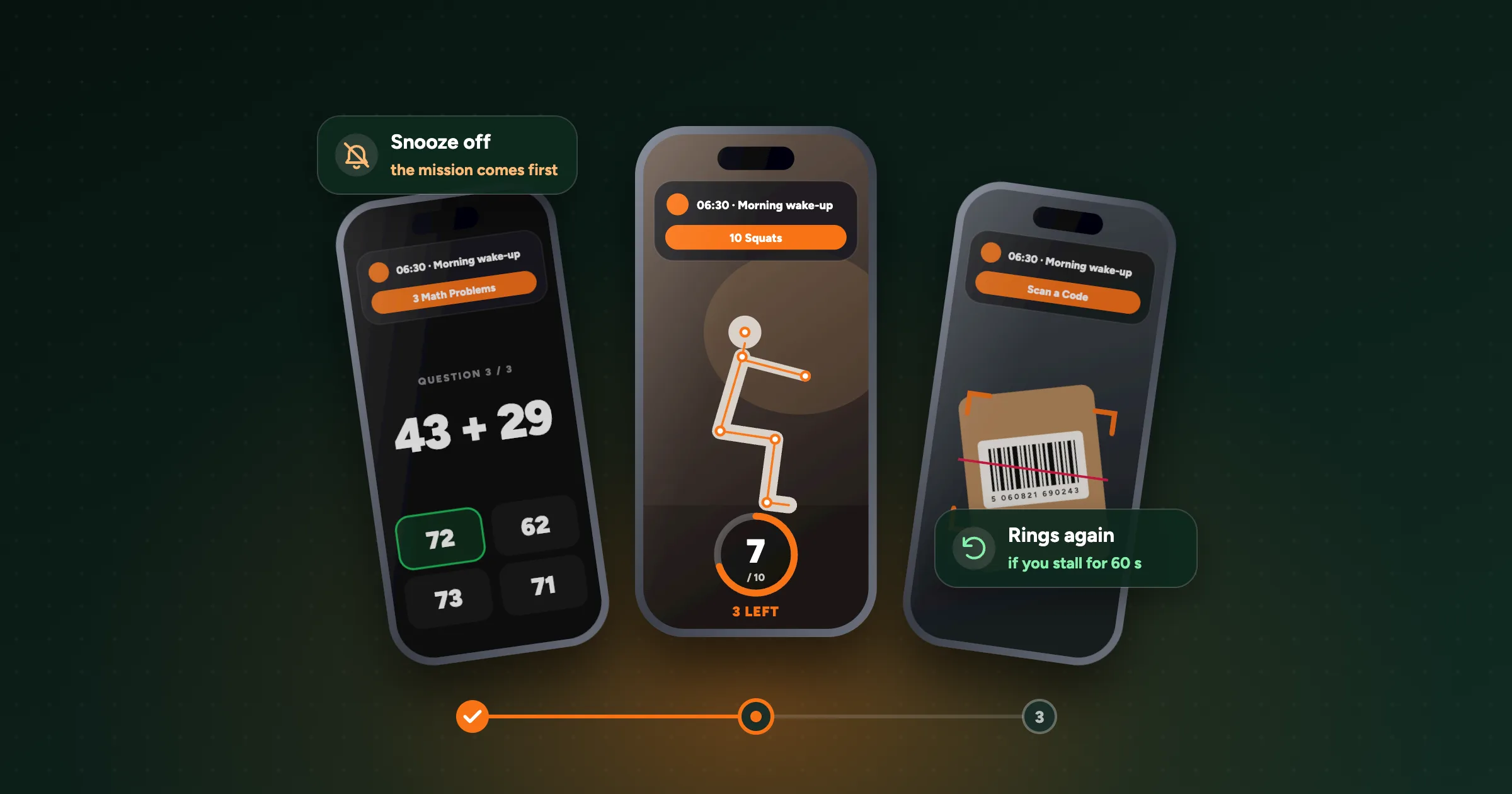
What Is a Mission Alarm? The Alarm That Won’t Stop Until You’re Up
A mission alarm won’t stop until you finish a task: math, a photo, a barcode or push-ups. Which missions really get you out of bed, and how hard to set them.
Read the guide →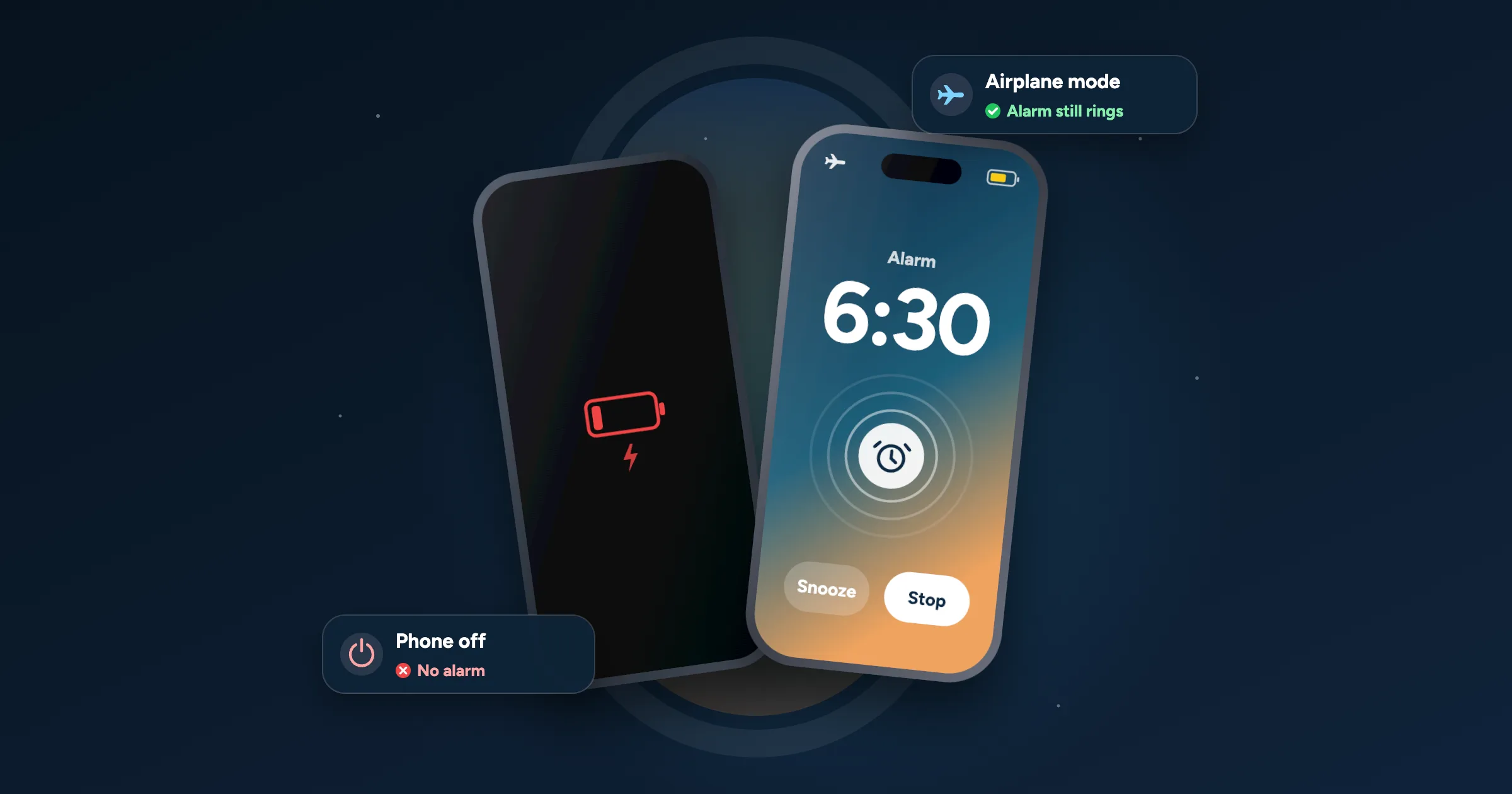
Will My Alarm Go Off If My Phone Is Off, Dead or in Airplane Mode?
Not if it’s off or dead (with two rare exceptions). Yes in airplane mode, Low Power Mode and offline. 10 situations on iPhone and Android, and 5 traps.
Read the guide →
The Best Alarm for Heavy Sleepers: What Actually Wakes You Up
Sleep through every alarm? What research says about sound, vibration, light and mission alarms, how to set up your phone, and which alarm type fits you.
Read the guide →
How to Wake Up Early, Even If You’re a Night Owl: A 3-Week Plan
Night owl who wants your mornings back? The 3-week plan behind a trial that moved sleep 2 hours earlier: 15-minute steps, morning light and one weekend rule.
Read the guide →
Android Alarm Too Quiet? How to Turn Up the Alarm Volume on Samsung, Xiaomi and Pixel
Android alarm too quiet or silent? Where the alarm volume is on Samsung, Xiaomi and Pixel, why it keeps going down, and how to change the alarm sound.
Read the guide →
Is Hitting Snooze Bad for You? What 4 Studies Actually Found
Does hitting snooze make you more tired? What four studies actually found, why you keep doing it, when it’s fine, and how to stop, plus how to turn snooze off.
Read the guide →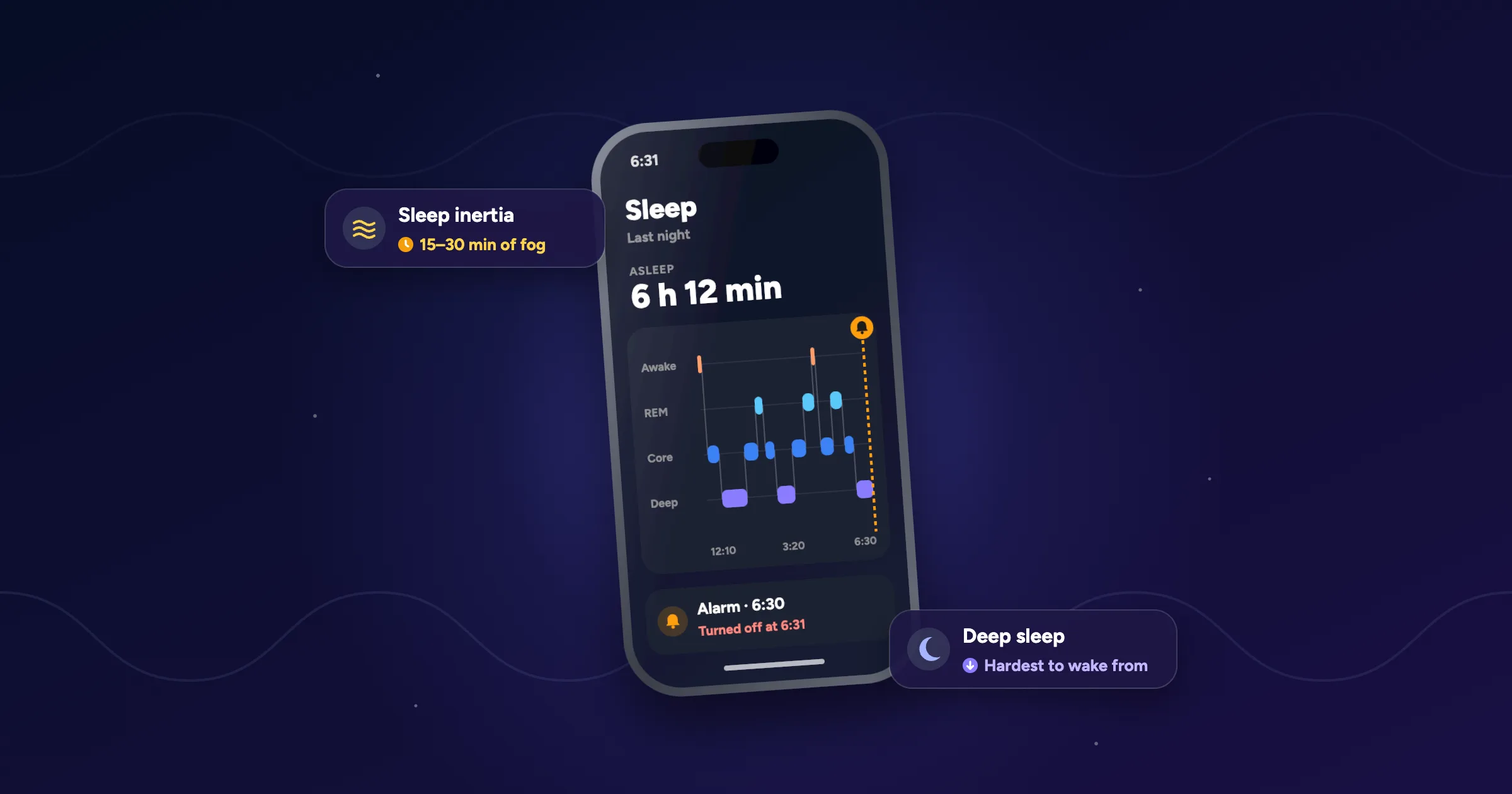
Why Can’t I Wake Up to My Alarm? 7 Reasons You Sleep Through It
Sleeping through your alarm, or turning it off without remembering? The 7 real reasons, from sleep inertia to your body clock, and the fixes that work.
Read the guide →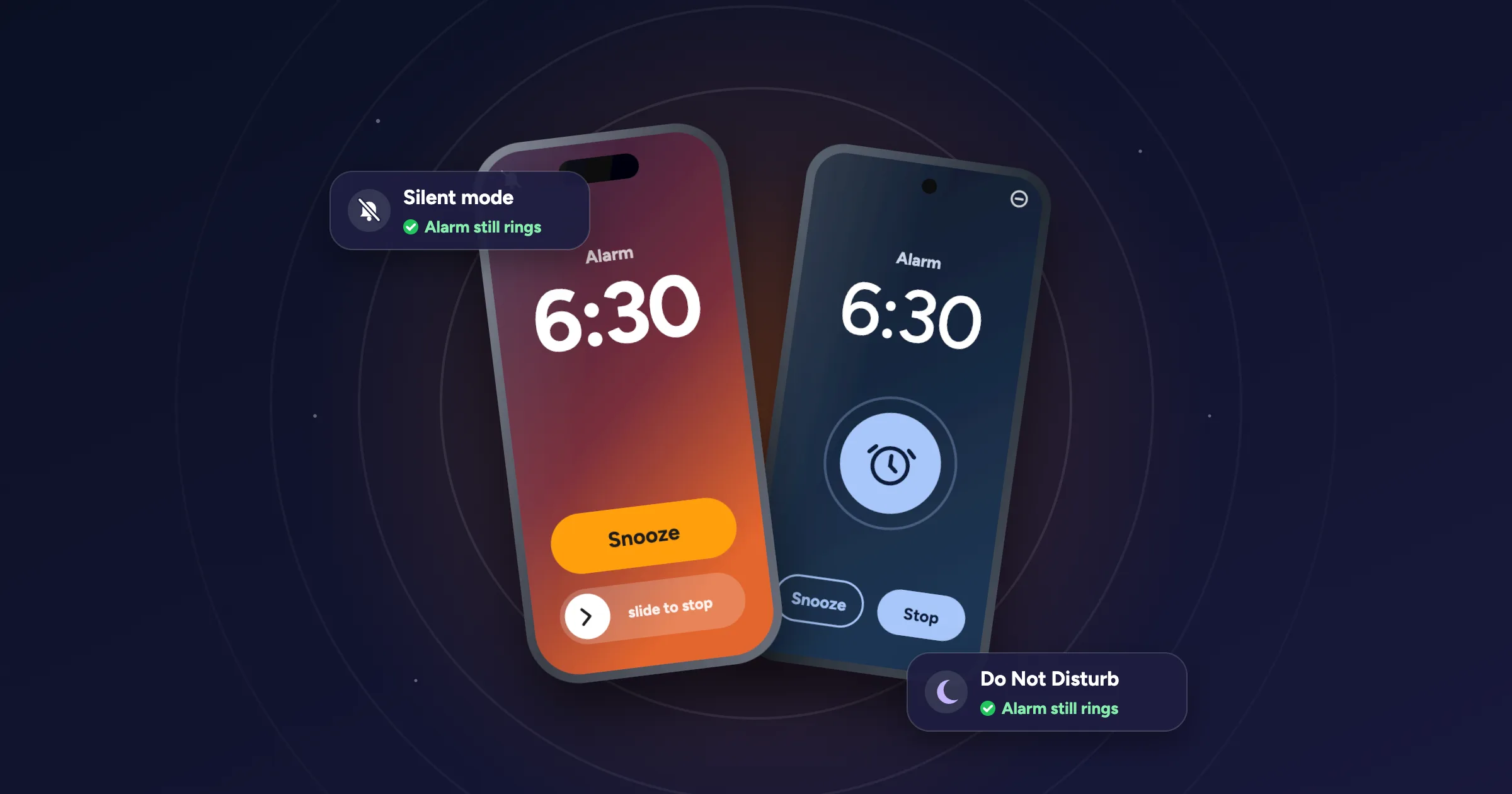
Will My Alarm Ring on Silent, Vibrate or Do Not Disturb? iPhone and Android
Usually yes, on iPhone and Android. But 6 things can still silence it, from a hidden Samsung setting to your Apple Watch.
Read the guide →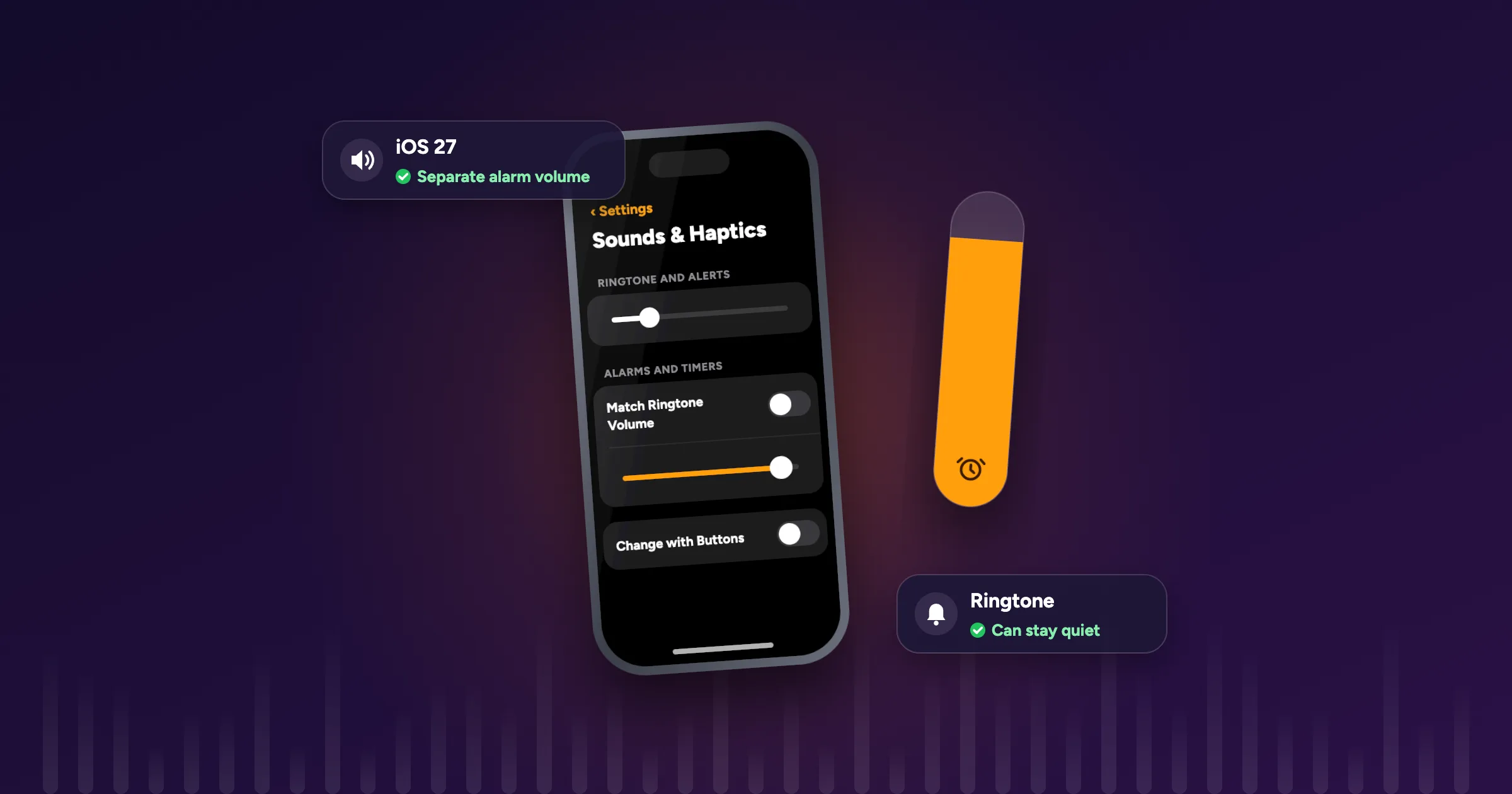
iPhone Alarm Too Quiet? How to Change the Alarm Volume on iOS 27 and iOS 26
Make your iPhone alarm louder: the new separate alarm volume in iOS 27, the right slider on iOS 26, the sleep alarm’s own volume and 6 more fixes.
Read the guide →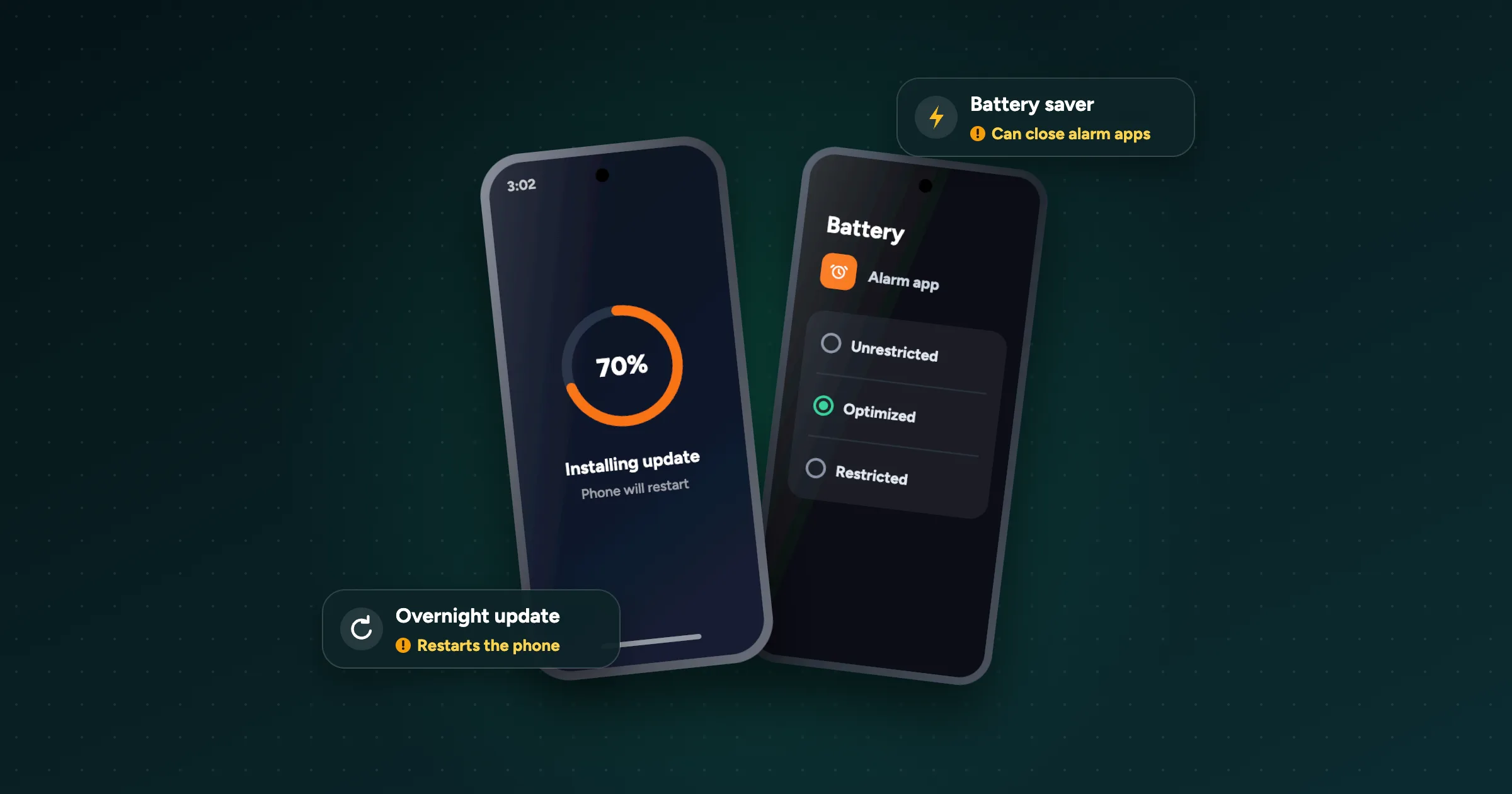
Android Alarm Not Going Off? 9 Fixes for Samsung, Pixel, Xiaomi and More
Android alarm didn’t ring, rang late or only showed a notification? 9 fixes with the exact settings for Samsung, Pixel, Xiaomi, TECNO, OPPO and vivo.
Read the guide →
iPhone Alarm Not Going Off? 10 Fixes for iOS 27 and iOS 26
iPhone alarm not going off or not working after the iOS 27 update? 10 fixes: no sound, too quiet, only on Apple Watch, the new alarm volume and alarm apps.
Read the guide →