
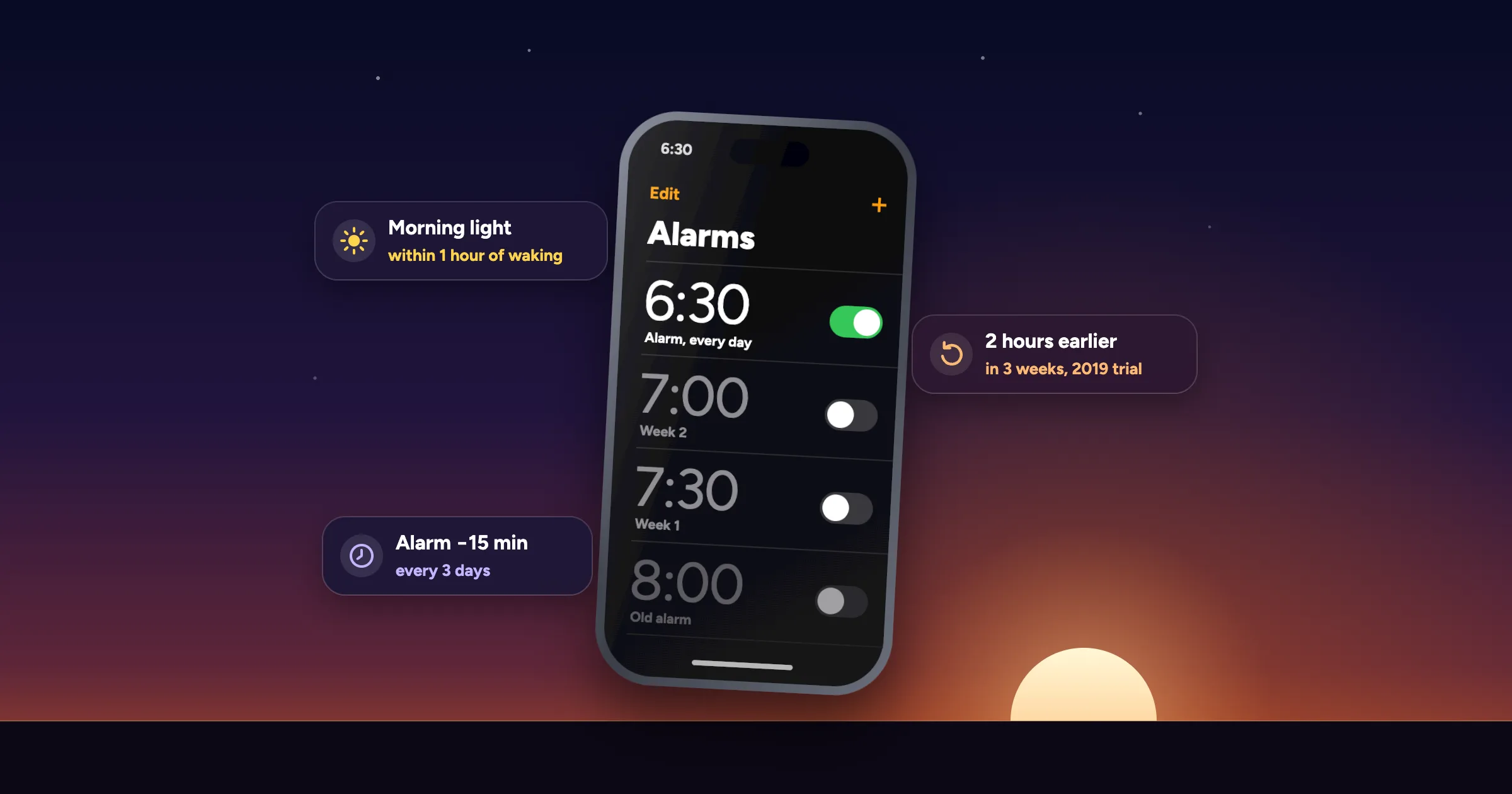
Moving the alarm an hour earlier doesn’t work; moving your whole day does. In a 2019 trial, night owls shifted their sleep about two hours earlier in three weeks, without sleeping less. The plan comes down to five things:
- bedtime and alarm 15 minutes earlier every few days, bedtime first,
- daylight within an hour of getting up,
- the same wake time on weekends, give or take an hour,
- dim light, no late coffee and no late dinner in the evening,
- an alarm you can’t turn off from bed.
On this page
Why setting the alarm earlier doesn’t work
Your body runs on an internal clock that decides when you get sleepy and when you wake up on your own. Set the alarm an hour earlier and that clock doesn’t move. You still get sleepy at the old time, fall asleep at the old time, and the alarm now rings in the middle of your body’s night. That’s when waking up feels worst, and when you’re most likely to sleep through the alarm or snooze it into the ground.
Night owls have it harder, and not because they’re lazy. A 2019 study of 697,828 people found 351 places in the genome linked to being a morning person. Your natural lean is partly inherited. What you can change is where your clock sits day to day, and that depends mostly on when you see light and how regular you are.
One more number to keep in mind: the CDC recommends at least 7 hours of sleep for adults. Waking up earlier only works if bedtime moves with it. Otherwise you’re not becoming a morning person, you’re just sleeping less.
What the night-owl trial did
In 2019, Elise Facer-Childs and colleagues at the Universities of Birmingham and Surrey and Monash University ran a randomized trial with 22 healthy night owls. On average they went to bed at 2:30 a.m. and got up at 10:15 a.m. For three weeks, the intervention group was asked to:
- get up 2 to 3 hours earlier than usual and get as much outdoor light as possible in the morning,
- go to bed 2 to 3 hours earlier than usual and limit light in the evening,
- keep the same sleep and wake times on work days and days off,
- eat breakfast soon after waking, lunch at the same time every day, and no dinner after 7 p.m.
Caffeine and exercise timing were part of the plan as well. After three weeks, their sleep and wake times had moved about two hours earlier, measured with activity trackers and with melatonin and cortisol, two hormones that follow the body clock. They didn’t sleep any less. They also reported less depression, stress and daytime sleepiness, and their morning reaction time and grip strength improved.
It was a small, short study, so treat it as a strong hint rather than a guarantee. But it’s a useful one: the change came from light, regular times and meals, not from a louder alarm.
The 3-week plan: 15 minutes at a time
The trial jumped 2 to 3 hours in one go. That works when you’re as disciplined as a study participant. For everyone else, the Sleep Foundation suggests moving bedtime and the alarm 15 minutes earlier together, with at least a few days between steps. Here’s what that looks like from 8:00 to 6:30, three days per step:
| When | In bed by | Alarm |
|---|---|---|
| Days 1–3 | 11:45 p.m. | 7:45 a.m. |
| Days 4–6 | 11:30 p.m. | 7:30 a.m. |
| Days 7–9 | 11:15 p.m. | 7:15 a.m. |
| Days 10–12 | 11:00 p.m. | 7:00 a.m. |
| Days 13–15 | 10:45 p.m. | 6:45 a.m. |
| Days 16–18 | 10:30 p.m. | 6:30 a.m. |
Eighteen days, 90 minutes earlier, and no morning that feels like a cliff. If a step goes badly, stay on it for a few more days instead of going back. Want to go further? Keep stepping until you reach your target.
Morning light: the strongest lever you have
Light is the main signal your body clock listens to, and its timing decides which way the clock moves. Sleep lab studies of single bright light pulses show that light in the early morning moves the clock earlier, while light late in the evening pushes it later. Night owls tend to get the opposite: bright screens at midnight, dark rooms in the morning.
- Get outside within an hour of waking, even for ten minutes. Overcast daylight is still far brighter than indoor light.
- Can’t go out? Have breakfast next to the brightest window you have, or use a light therapy lamp.
- Open the curtains as soon as the alarm rings.
The weekend rule
Five days of early alarms, then two late nights and long lie-ins, and Monday morning feels like a flight from another time zone. Chronobiologist Till Roenneberg calls this social jetlag. His team analyzed sleep logs from more than 65,000 Europeans: one in three had two hours or more of it every week, and more social jetlag went with a higher chance of being overweight. That’s a link, not proof of cause, but the effect on Monday mornings is easy to feel.
The rule: keep your weekend wake time within about an hour of your weekday one. Tired by Saturday? Go to bed earlier on Friday instead of sleeping until noon.
The evening before
Getting up early starts the night before. The Sleep Foundation and the trial agree on these:
- Last coffee at least six hours before bed: before about 4:30 p.m. for a 10:30 bedtime.
- Finish dinner early. The trial’s cutoff was 7 p.m.
- Dim the lights in the last hour and keep screens out of your bedtime routine.
- Skip afternoon and evening naps; they take the edge off your sleepiness at bedtime.
- Charge the phone away from the bed. If it’s the alarm, that’s a bonus: you’ll have to stand up to stop it.
An alarm that holds the line
Every plan to wake up early fails at the same two moments: at midnight, when moving the alarm back to 8:00 feels reasonable, and at 6:30, when the snooze button is right there. Wakin is built for both.
- Gradual plan: the alarm moves 15 minutes earlier every three days, so the table above runs itself.
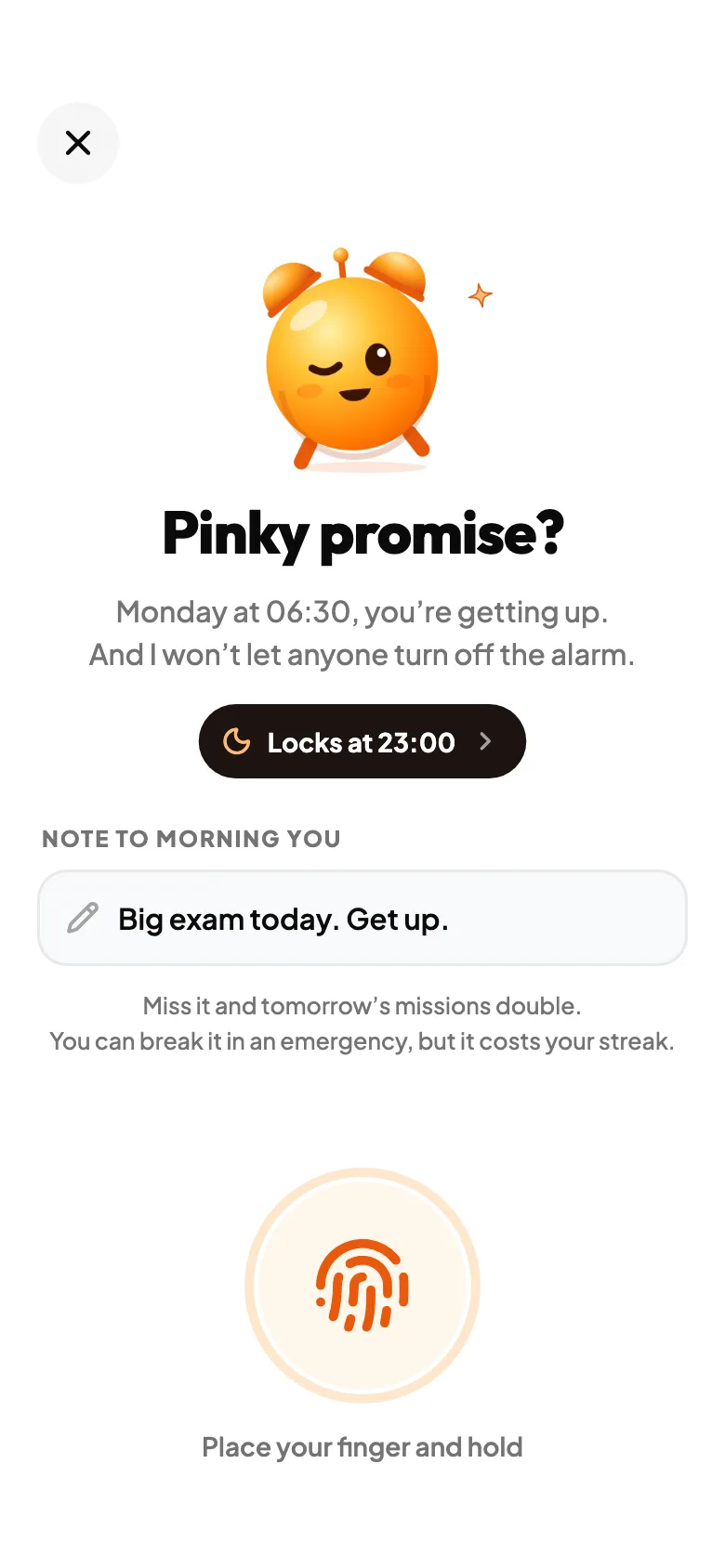
- Locked alarm: make a pinky promise at night and the alarm locks at bedtime. You can’t turn it off or move it before it rings.
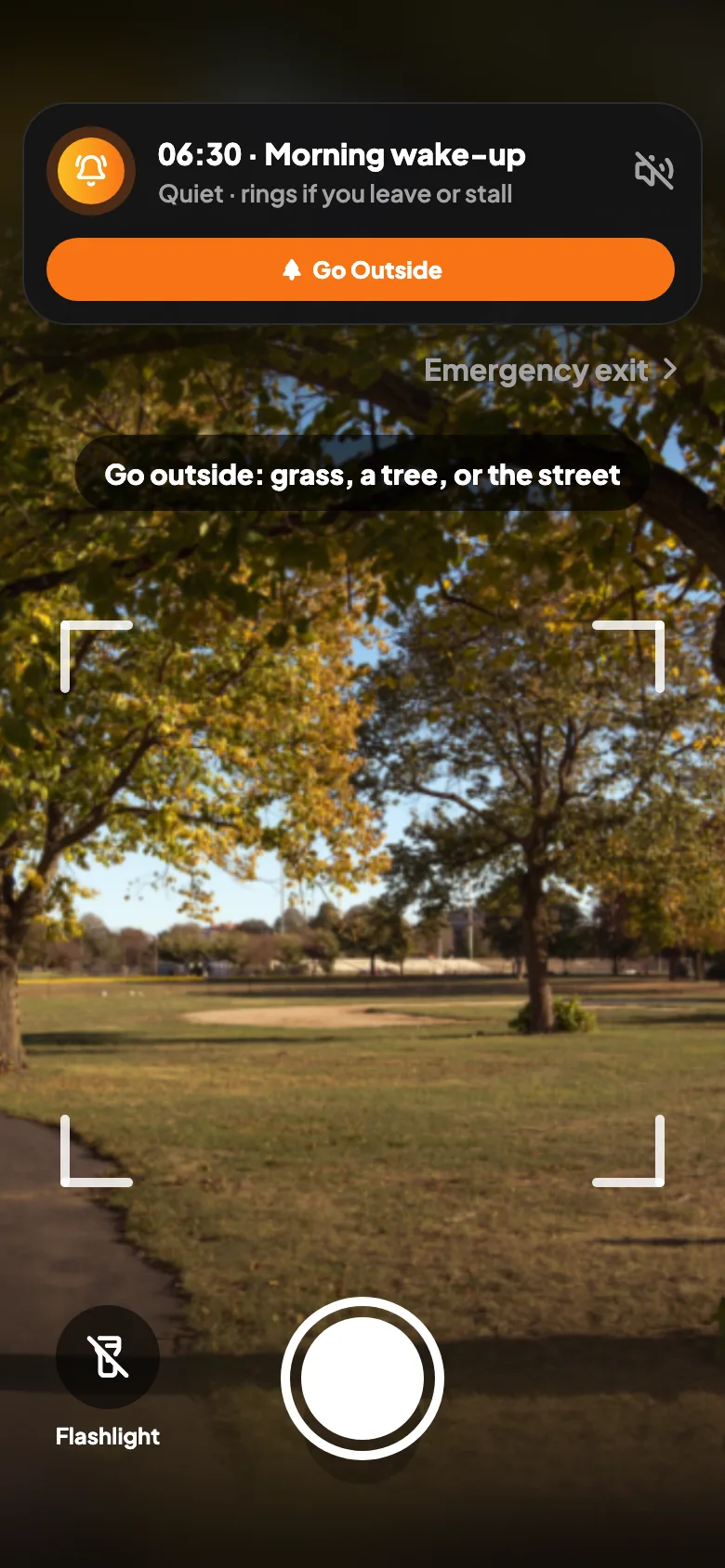
- Light missions: Sky Photo has you snap daylight through the window, and Go Outside has you step out and take a photo. The alarm stops once you’ve done it, so the morning light from the plan comes built in.
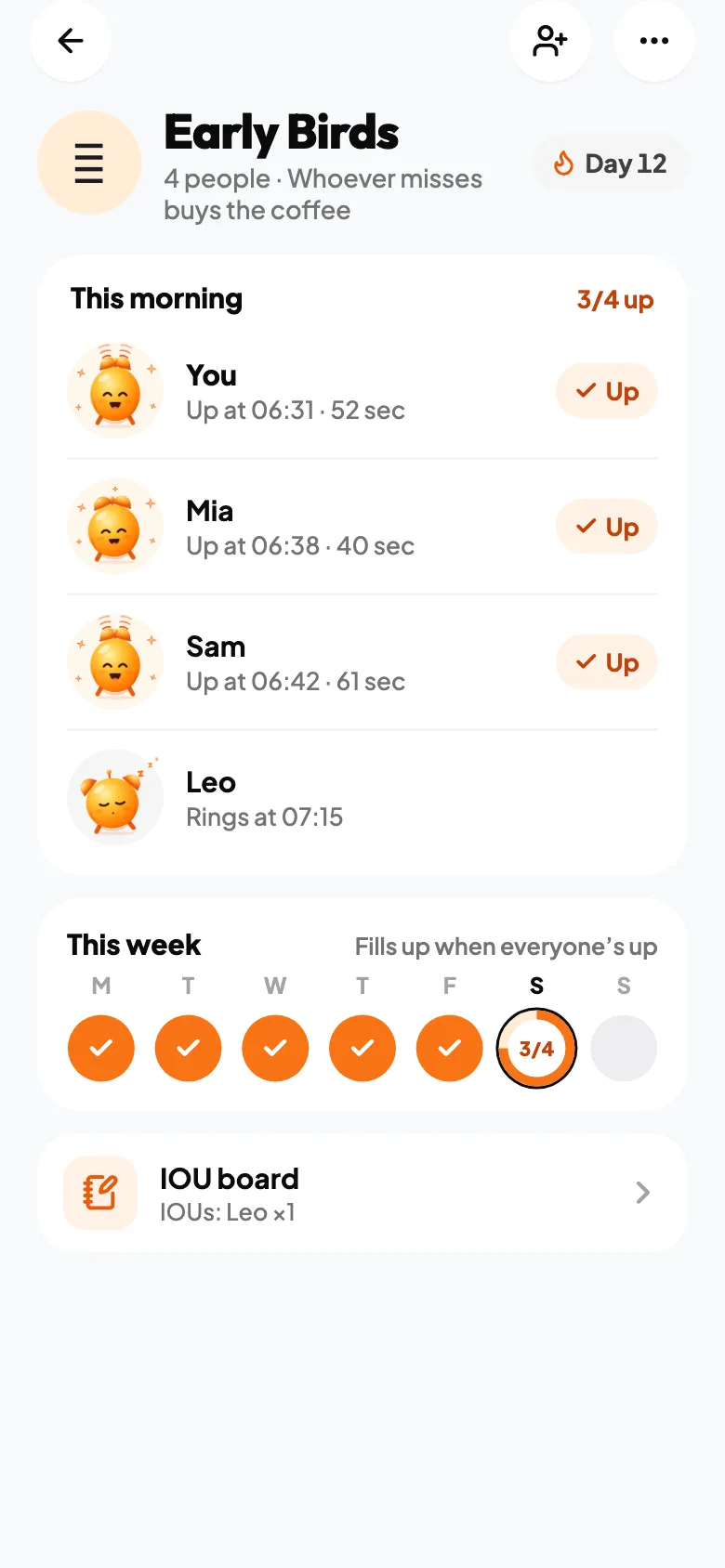
- Friend groups: up to six people see who’s up. Whoever sleeps in pays the bet.
Still sleepy every morning after weeks of 7 to 9 hours in bed, or dozing off during the day? That’s worth a talk with a doctor, and our guide on why you can’t wake up to your alarm covers the warning signs.
Frequently asked questions
How can I wake up early if I’m a night owl?
Move your whole day, not just the alarm. Wake up 15 minutes earlier every few days and go to bed 15 minutes earlier with it, keep the same wake time on weekends, get outdoor light soon after you get up and dim the lights in the evening. In a 2019 trial, night owls who did this kind of plan for three weeks moved their sleep about two hours earlier without sleeping less.
How long does it take to become a morning person?
About two to three weeks for a shift of an hour or two. In the 2019 Facer-Childs trial, night owls moved their sleep and wake times about two hours earlier in three weeks. With 15-minute steps every three days, going from 8:00 to 6:30 takes 18 days. Your chronotype stays the same, so the new schedule only holds as long as you keep it.
What time should I go to bed to wake up at 6 a.m.?
Adults need at least 7 hours of sleep, so for a 6:00 alarm you want to be asleep by 11:00 p.m. at the latest. Aim to be in bed around 10:30, which leaves time to fall asleep and room for a little more sleep. For 5:00, shift everything an hour earlier.
Should I just set my alarm earlier?
Not by itself. An earlier alarm with the same bedtime only cuts your sleep, and after a few short nights you’ll sleep through it or give up. Move the bedtime first, then the alarm, in 15-minute steps.
What if I go to bed earlier but can’t fall asleep?
That’s normal in the first days, because your body clock hasn’t moved yet. Don’t jump an hour at once: shift 15 minutes at a time, dim lights and screens in the last hour, and get up at the new time anyway. Morning light and a fixed wake time are what pull sleepiness earlier over the following nights.
Is it OK to sleep in on weekends?
Not if you’re trying to wake up early. Sleeping in pushes your body clock later, so Monday feels like jet lag. Researchers call it social jetlag. Keep your weekend wake time within about an hour of your weekday one.
Does morning light really help you wake up earlier?
Yes. Light in the morning moves the body clock earlier, and light late in the evening moves it later. Get outside within an hour of waking, even on a cloudy day. If you can’t, sit by a bright window.
Is being a night owl genetic?
Partly. A 2019 study of 697,828 people found 351 places in the genome linked to being a morning person. You can move your schedule, but your natural lean stays, which is why consistency matters more than willpower.
When should I stop caffeine to wake up early?
At least six hours before bed, according to the Sleep Foundation. For a 10:30 p.m. bedtime, that’s no coffee after about 4:30 in the afternoon.
Sources
- Facer-Childs et al. (2019): Resetting the late timing of ‘night owls’ has a positive impact on mental health and performance. Sleep Medicinedoi.org
- Night owls can ‘retrain’ their body clocks to improve mental well-being and performance (University of Surrey)surrey.ac.uk
- How to Become a Morning Person (Sleep Foundation)sleepfoundation.org
- Roenneberg et al. (2012): Social jetlag and obesity. Current Biologydoi.org
- Jones et al. (2019): Genome-wide association analyses of chronotype in 697,828 individuals. Nature Communicationsdoi.org
- Khalsa et al. (2003): A phase response curve to single bright light pulses in human subjects. The Journal of Physiologydoi.org
- About Sleep: how much sleep you need by age (CDC)cdc.gov
More guides
How to Get Out of Bed in the Morning When You Don’t Want To
Awake but can’t get out of bed? Why the first minutes feel so heavy, an 8-step plan for the first 10 minutes, and when it’s more than a bad morning.
Read the guide →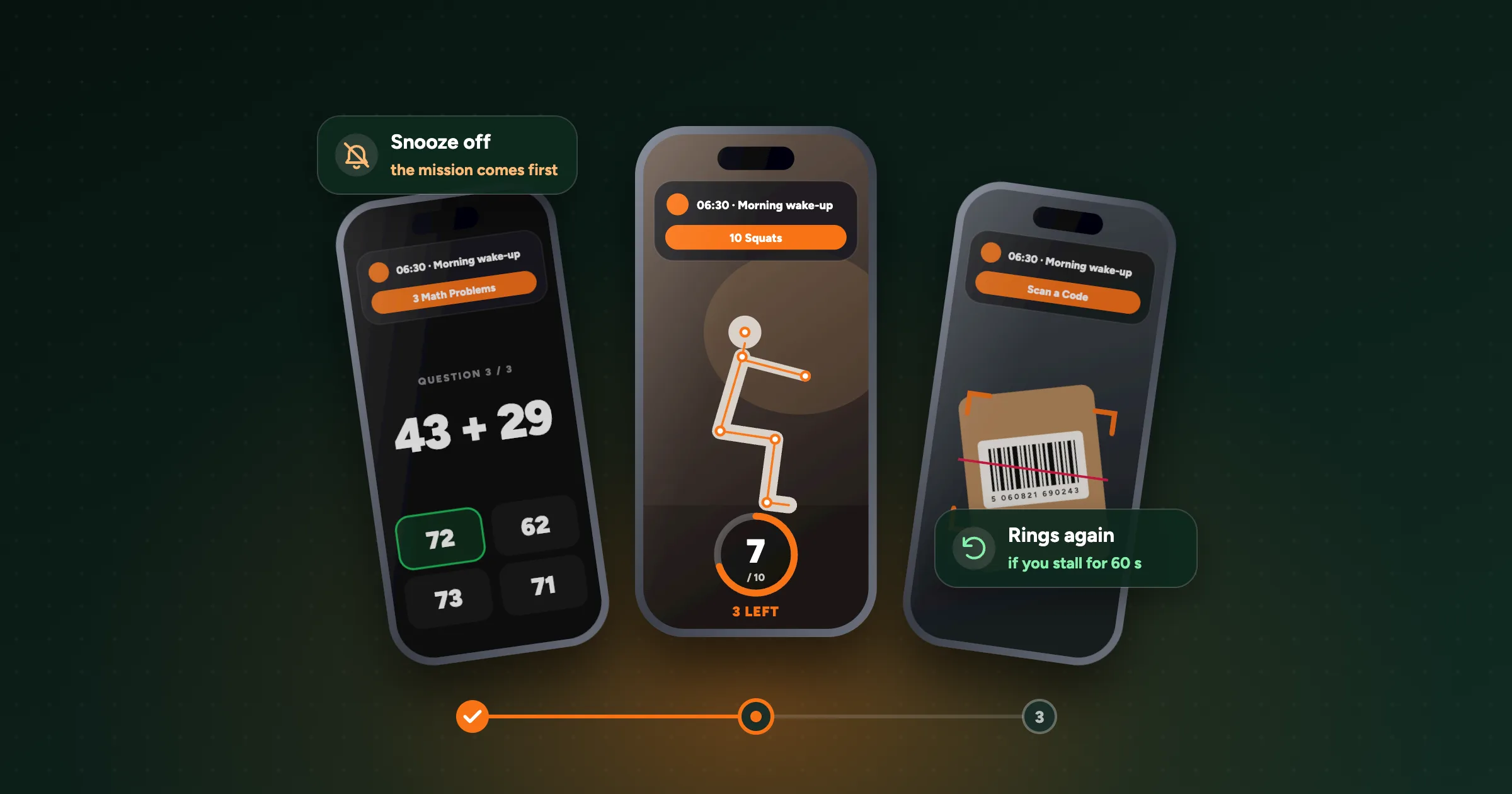
What Is a Mission Alarm? The Alarm That Won’t Stop Until You’re Up
A mission alarm won’t stop until you finish a task: math, a photo, a barcode or push-ups. Which missions really get you out of bed, and how hard to set them.
Read the guide →
Will My Alarm Go Off If My Phone Is Off, Dead or in Airplane Mode?
Not if it’s off or dead (with two rare exceptions). Yes in airplane mode, Low Power Mode and offline. 10 situations on iPhone and Android, and 5 traps.
Read the guide →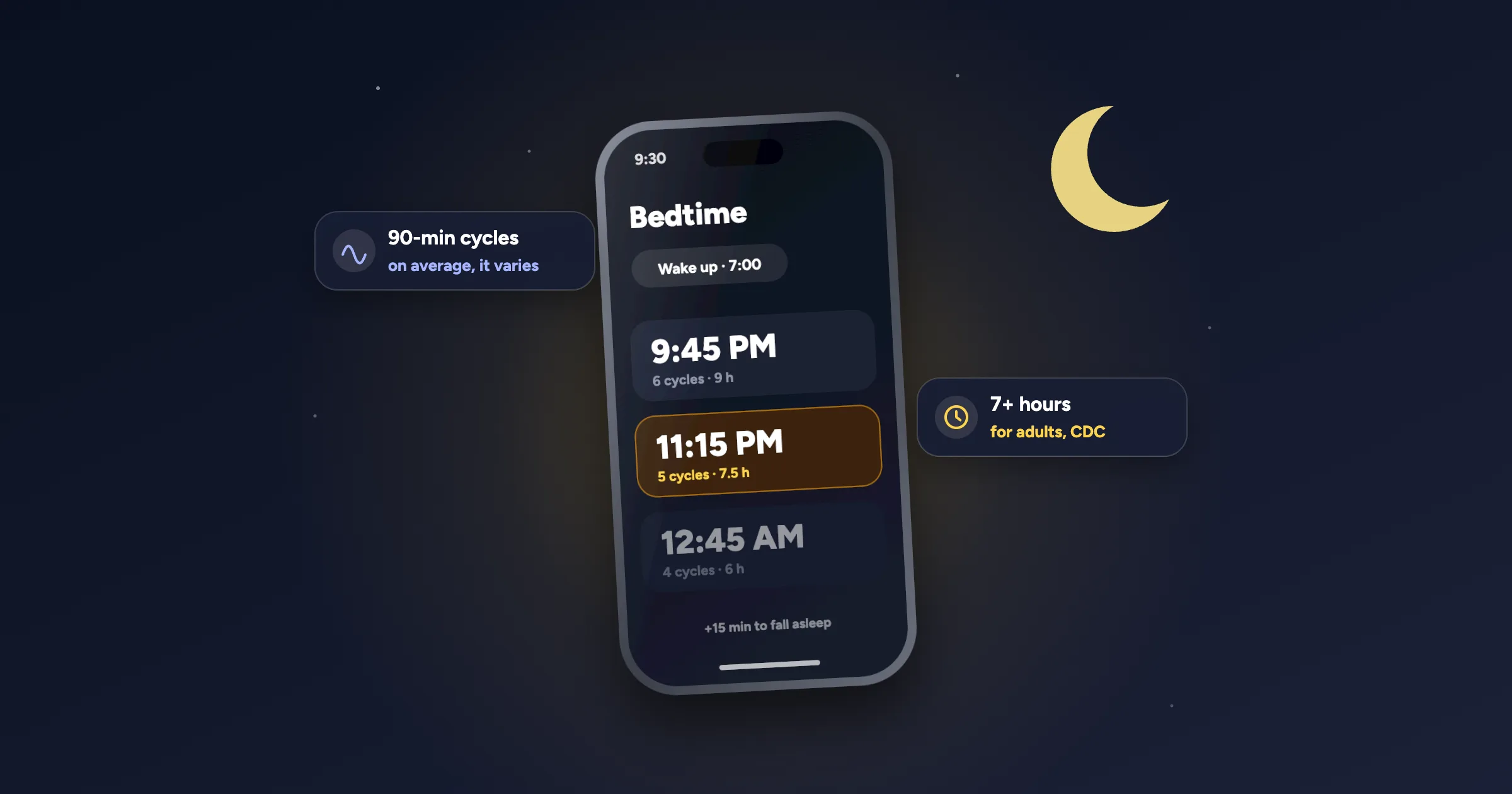
What Time Should I Go to Bed? Sleep Cycle Calculator
Enter your wake-up time and get bedtimes for 4, 5 or 6 sleep cycles. Plus how much sleep you need by age, and why 90-minute cycles are only an average.
Read the guide →
The Best Alarm for Heavy Sleepers: What Actually Wakes You Up
Sleep through every alarm? What research says about sound, vibration, light and mission alarms, how to set up your phone, and which alarm type fits you.
Read the guide →
Android Alarm Too Quiet? How to Turn Up the Alarm Volume on Samsung, Xiaomi and Pixel
Android alarm too quiet or silent? Where the alarm volume is on Samsung, Xiaomi and Pixel, why it keeps going down, and how to change the alarm sound.
Read the guide →
Is Hitting Snooze Bad for You? What 4 Studies Actually Found
Does hitting snooze make you more tired? What four studies actually found, why you keep doing it, when it’s fine, and how to stop, plus how to turn snooze off.
Read the guide →
Why Can’t I Wake Up to My Alarm? 7 Reasons You Sleep Through It
Sleeping through your alarm, or turning it off without remembering? The 7 real reasons, from sleep inertia to your body clock, and the fixes that work.
Read the guide →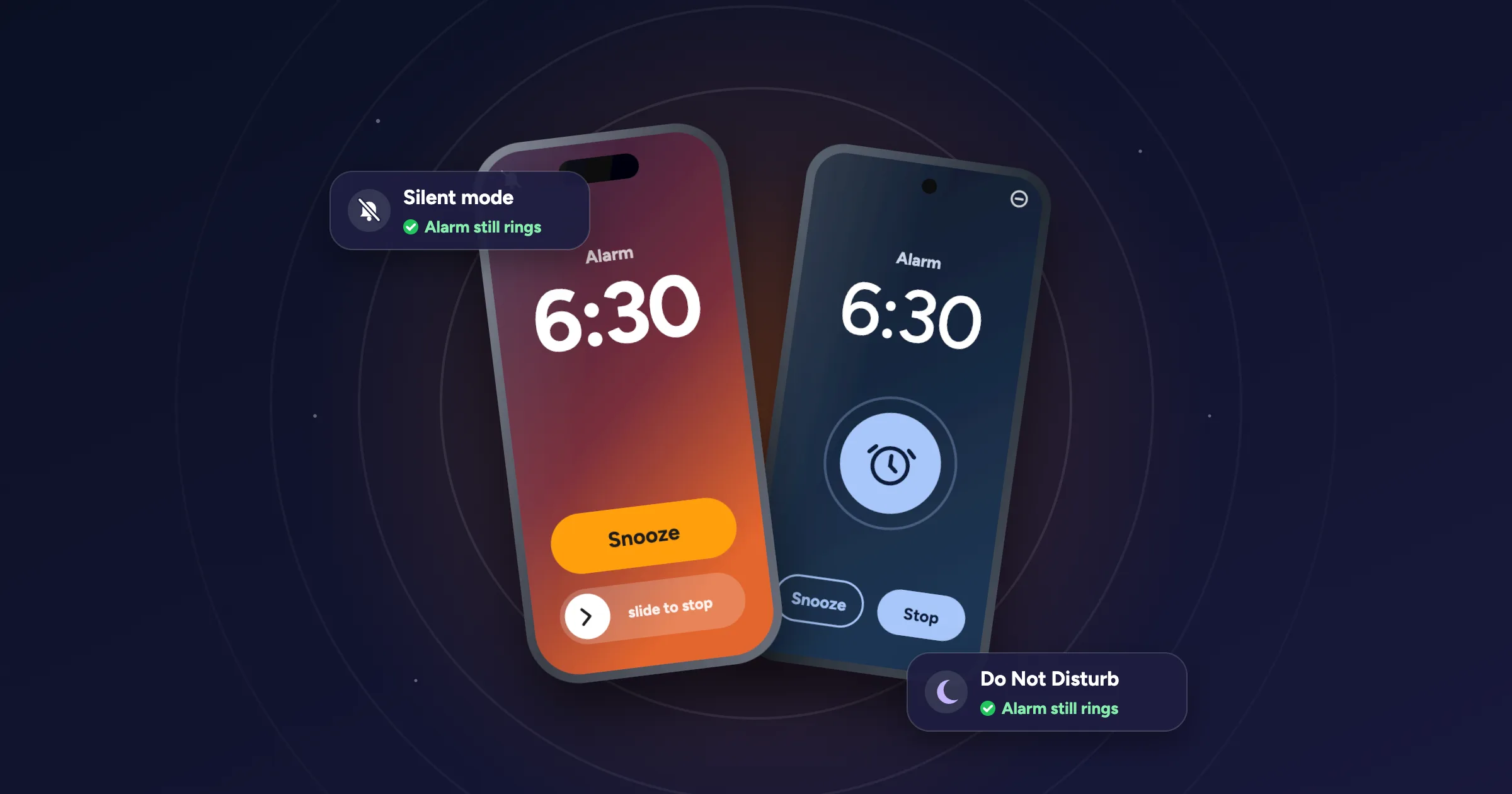
Will My Alarm Ring on Silent, Vibrate or Do Not Disturb? iPhone and Android
Usually yes, on iPhone and Android. But 6 things can still silence it, from a hidden Samsung setting to your Apple Watch.
Read the guide →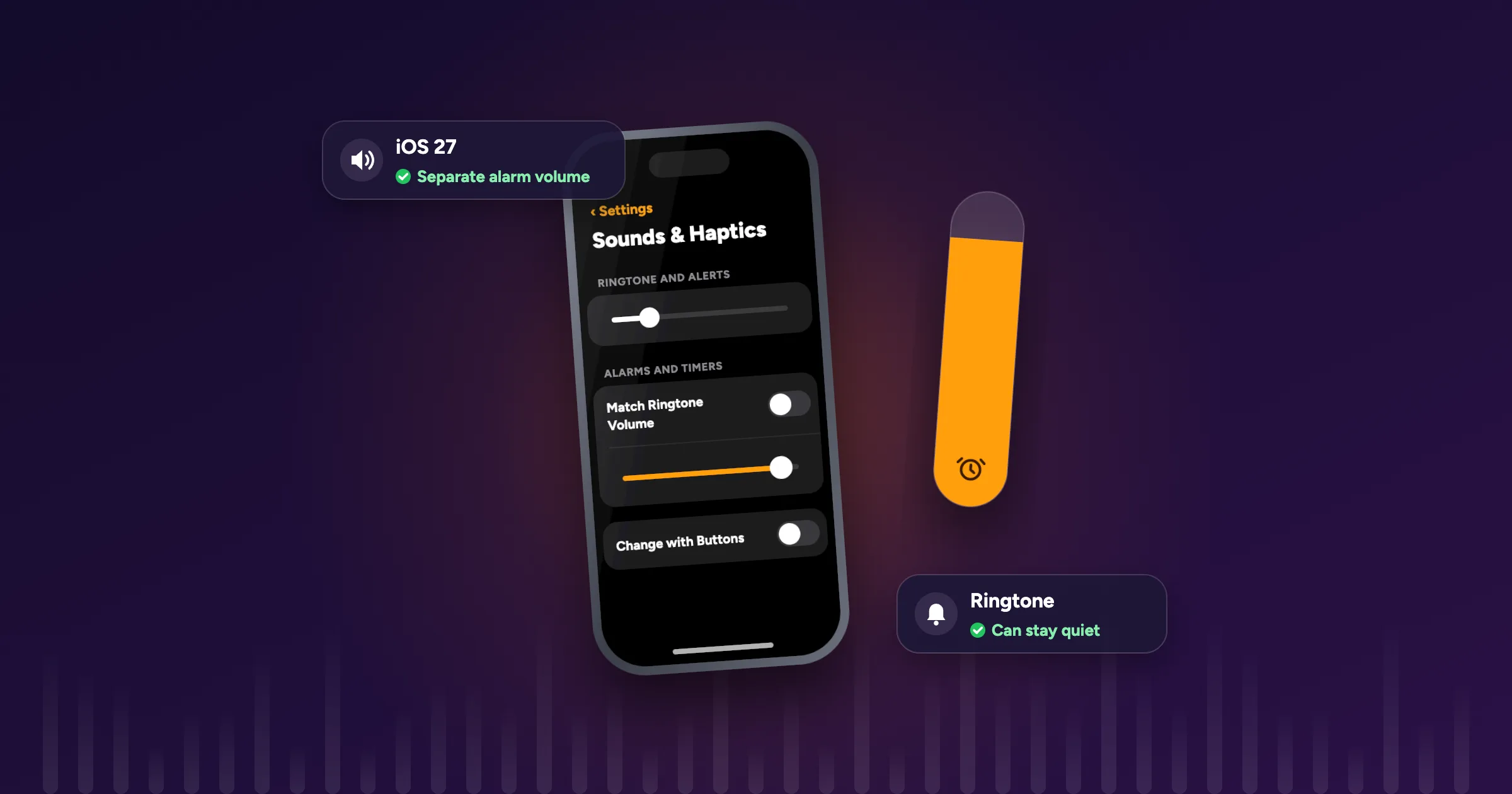
iPhone Alarm Too Quiet? How to Change the Alarm Volume on iOS 27 and iOS 26
Make your iPhone alarm louder: the new separate alarm volume in iOS 27, the right slider on iOS 26, the sleep alarm’s own volume and 6 more fixes.
Read the guide →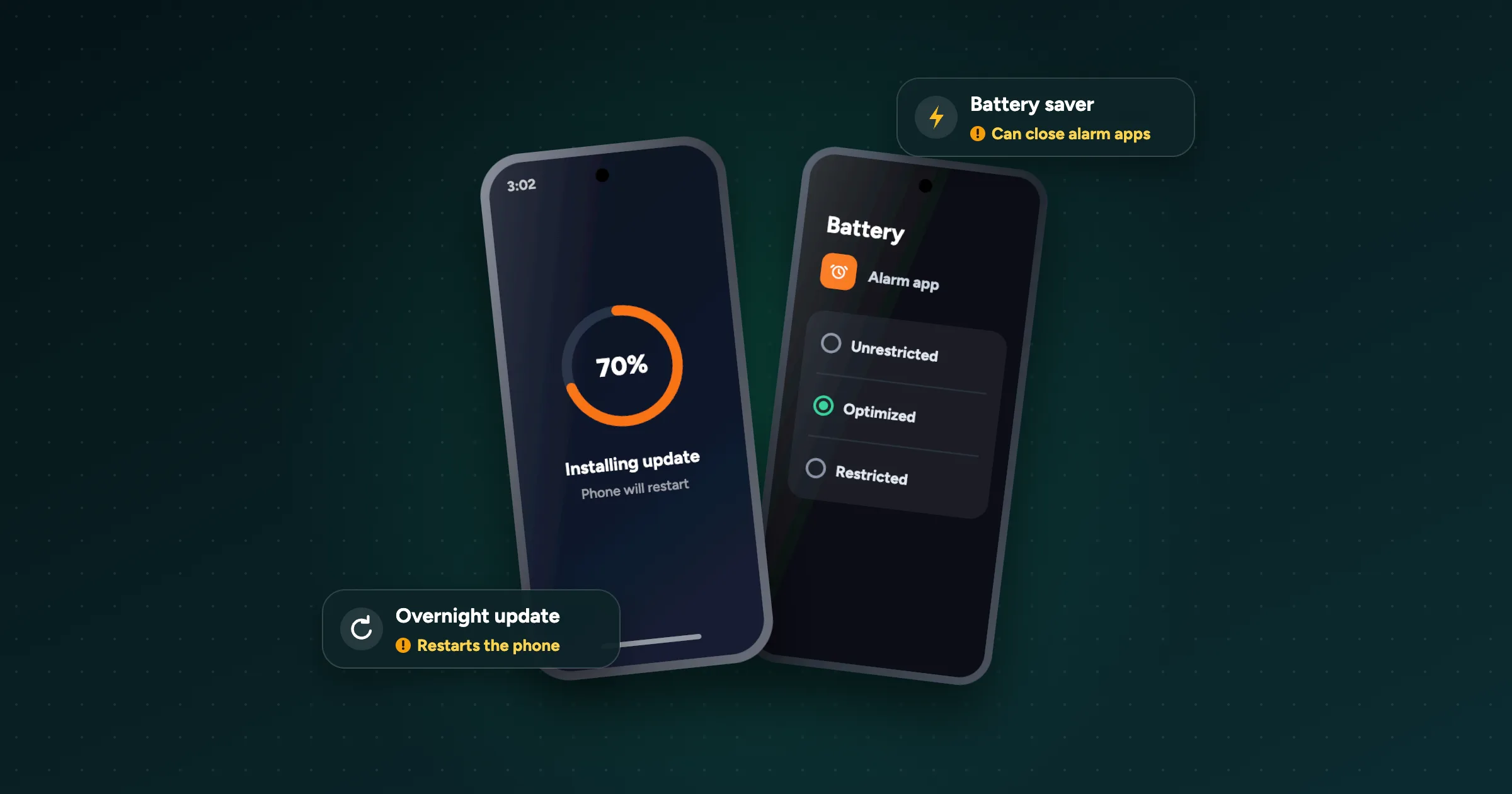
Android Alarm Not Going Off? 9 Fixes for Samsung, Pixel, Xiaomi and More
Android alarm didn’t ring, rang late or only showed a notification? 9 fixes with the exact settings for Samsung, Pixel, Xiaomi, TECNO, OPPO and vivo.
Read the guide →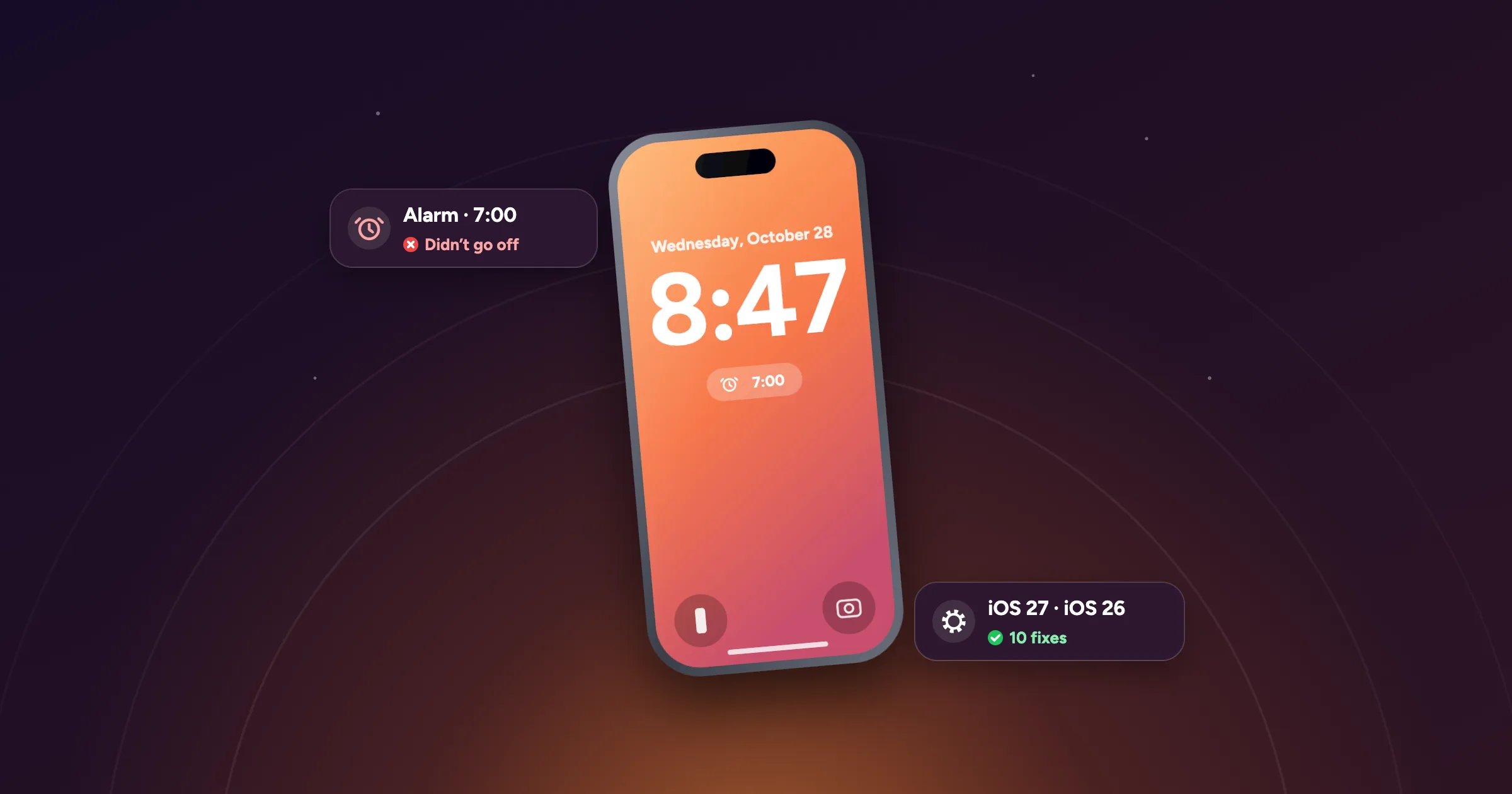
iPhone Alarm Not Going Off? 10 Fixes for iOS 27 and iOS 26
iPhone alarm not going off or not working after the iOS 27 update? 10 fixes: no sound, too quiet, only on Apple Watch, the new alarm volume and alarm apps.
Read the guide →