
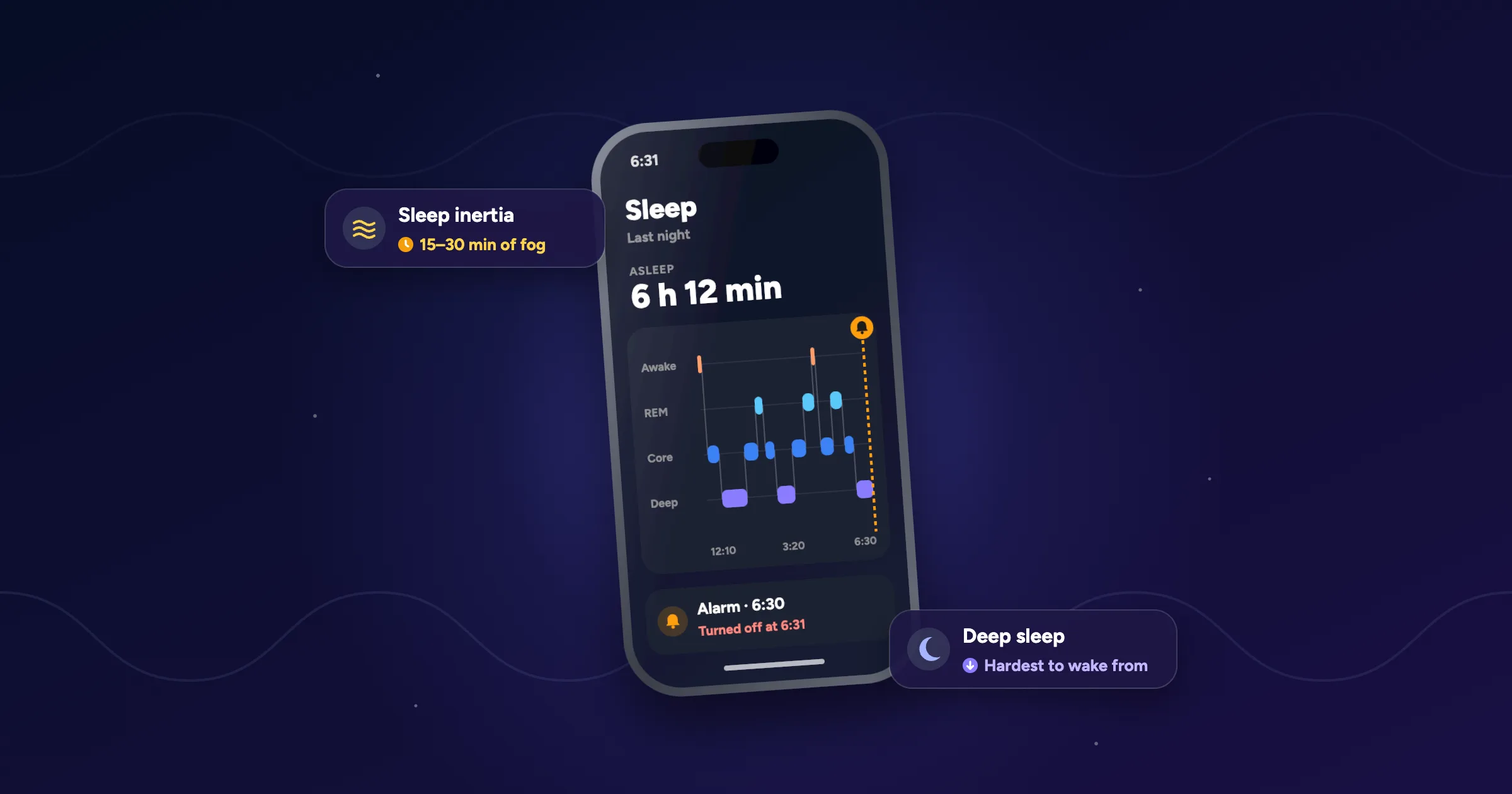
Most people who sleep through their alarm aren’t broken. Usually one of these is going on:
- they’re short on sleep (adults need at least 7 hours, teens 8 to 10), so the brain fights to stay asleep,
- the alarm lands in deep sleep or in the body clock’s night, when waking is hardest,
- they stop it in the groggy first minutes after waking, called sleep inertia, and don’t remember,
- or the alarm tone has turned into background noise.
What works: one fixed wake time, enough sleep, a lower and rougher tone, and an alarm you can’t turn off half asleep. If you sleep 7 to 9 hours and still can’t wake up, see a doctor.
On this page
Which one sounds like you?
Pick the line that matches your mornings and jump to its fix.
First, rule out the phone
Before blaming your brain, make sure the alarm really rang, and loudly. These are the usual phone-side culprits, each with its own guide:
- The alarm volume is low. On iOS 27 alarms have their own volume slider, separate from the ringer. See how to change the alarm volume on iPhone.
- It played somewhere else. Alarms can play through Bluetooth earbuds, and a sleep alarm only taps your wrist when your Apple Watch is in Silent Mode. See will my alarm go off on silent.
- It didn’t go off at all. See iPhone alarm not going off or Android alarm not going off, where battery settings are the usual suspect.
A quick test: set an alarm two minutes ahead, put the phone in its night spot, lie down and close your eyes. If it doesn’t make you jump while you’re awake, it won’t pull you out of deep sleep.
The 7 reasons you sleep through your alarm
You turn it off in sleep inertia
You stop it and don’t remember
Waking up isn’t a switch. For the first minutes your brain runs at reduced capacity, a state called sleep inertia. A 2019 review of the research found that performance usually gets back close to normal within 15 to 30 minutes, and full recovery takes an hour or more. In that window you can find the phone, hit Stop and fall back asleep on autopilot, and the memory never sticks.
Fix: make stopping the alarm take a working brain and a standing body. Put the phone across the room, or use an alarm that only stops after a task: push-ups, a math problem, a photo of something in another room. Then add a check a few minutes later that rings again if you don’t answer.
You’re not getting enough sleep
You’re tired every single morning
The CDC recommends at least 7 hours a night for adults and 8 to 10 for teens. Sleep less and sleep pressure builds: the brain guards sleep harder, and the same review found sleep inertia is worse after sleep loss. A week of 6-hour nights against a 6:30 alarm is a fight you’ll lose some mornings, whatever the ringtone.
Fix: count back from your alarm. For 6:30 and 7 hours of sleep, you need to be asleep by 11:30, so in bed a little before. If that’s far from your bedtime now, move it 15 minutes earlier every few nights instead of an hour at once.
The alarm lands in deep sleep
You don’t hear it at all
Sleep runs in cycles of roughly 90 minutes. The deepest stage, slow-wave or N3 sleep, takes the most to wake from, and most of it comes in the first half of the night. Waking out of it is also linked to worse grogginess, though studies don’t all agree. That’s why a 4 a.m. airport alarm after a 1 a.m. bedtime feels impossible, and why short nights make things worse: after sleep loss, the body catches up with more deep sleep.
Fix: keep your wake time the same every day so your body learns to come up into lighter sleep before the alarm. When you need an unusually early alarm, go to bed earlier that night instead of counting on the alarm alone, and set a second one out of reach.
Your body clock still says it’s night
Weekdays are brutal, weekends are fine
Grogginess is strongest when you wake during your biological night, near the low point of your body temperature. Stay up late and sleep in on weekends, and Monday’s alarm goes off in your body’s middle of the night. Teens have it hardest: the American Academy of Sleep Medicine notes that changes in their circadian rhythm make it hard for them to fall asleep before 11 p.m.
Fix: the same wake time seven days a week, give or take an hour. Get daylight within an hour of getting up. Light doesn’t do much for the grogginess in the moment, but morning light pulls your body clock earlier over the next days. Dim screens and lamps in the last hour before bed.
Your alarm sound stopped working on you
It used to wake you
The brain learns to tune out a sound it hears every day with nothing happening after it. And many phone tones are high-pitched beeps, which may be the wrong pitch for deep sleep. In a 2009 sleep lab study, Bruck and colleagues played signals to 39 young adults in the deepest stage of sleep. Low-pitched square waves at 400 and 520 Hz woke them at lower volumes than pure tones, whoops, white noise or the high-pitched (3,000+ Hz) beep of a standard smoke alarm.
There’s a twist. A small 2020 survey from RMIT University linked melodic alarm tones with less reported grogginess after waking, and plain beeps with more. The sound that wakes you best and the one that wakes you nicest aren’t the same.
Fix: if you don’t hear the alarm, pick a lower, buzzier, rougher tone and turn the alarm volume up. If you hear it but wake up wrecked, try something melodic with a clear rhythm. Either way, switch tones every few weeks so yours stays new.
Snooze turned into sleeping in
You snooze until you’re late
Snoozing itself isn’t the villain. In a 2023 Stockholm University study, regular snoozers who snoozed for 30 minutes didn’t sleep worse or feel worse, and did slightly better on some tests right after getting up; nobody slipped back into deep sleep during the snooze. But these were people who do get up in the end. If your snooze tends to become Stop, it’s the door you sleep through.
Fix: set the alarm for when you actually need to get up, not half an hour before. If you keep snoozing past it, turn snooze off, or use an alarm where snoozing also takes a task.
Something medical, or something you took
Exhausted even after 9 hours
Sleeping pills and sedating antihistamines can leave you foggy and hard to wake the next morning; in 2013 the FDA lowered the recommended dose of zolpidem (Ambien) because of next-morning impairment. Alcohol in the evening also breaks up the second half of the night. And some sleep disorders show up as “I can’t wake up”:
- Sleep apnea: breathing stops and starts during sleep. Signs include loud snoring, gasping and daytime sleepiness.
- Idiopathic hypersomnia: long sleep and severe sleep inertia, sometimes called sleep drunkenness. People with it often need several loud alarms and can still sleep through them.
See a doctor or a sleep clinic if you regularly sleep 7 to 9 hours and still can’t wake up, you doze off during the day or while driving, someone has heard you snore loudly or stop breathing, or the grogginess lasts for hours. Don’t stop or change a prescribed medicine without talking to your doctor first.
Your plan for tonight
Seven small steps, most of them free:
- Pick one wake time and keep it all week, weekends included.
- Count back 7½ to 8 hours from it and be in bed by then.
- Test the alarm: two minutes ahead, phone in its night spot, listen from the pillow.
- Change the tone: low and rough if you don’t hear it, melodic if you wake up wrecked.
- Put the phone out of reach, or use an alarm that only stops once you’re up.
- Get daylight within an hour of getting up.
- Judge it after a week, not a morning. Your body clock moves slowly.
An alarm you can’t stop half asleep
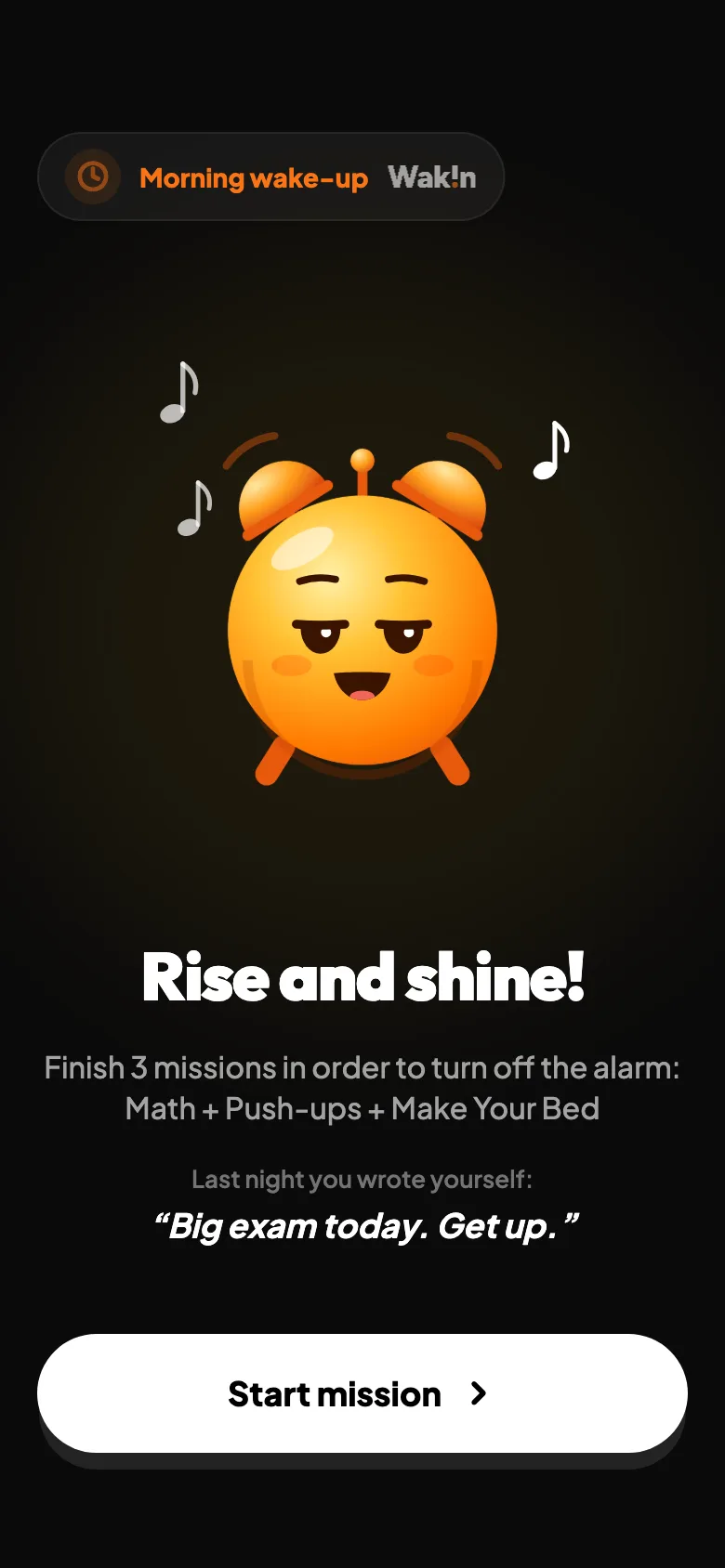
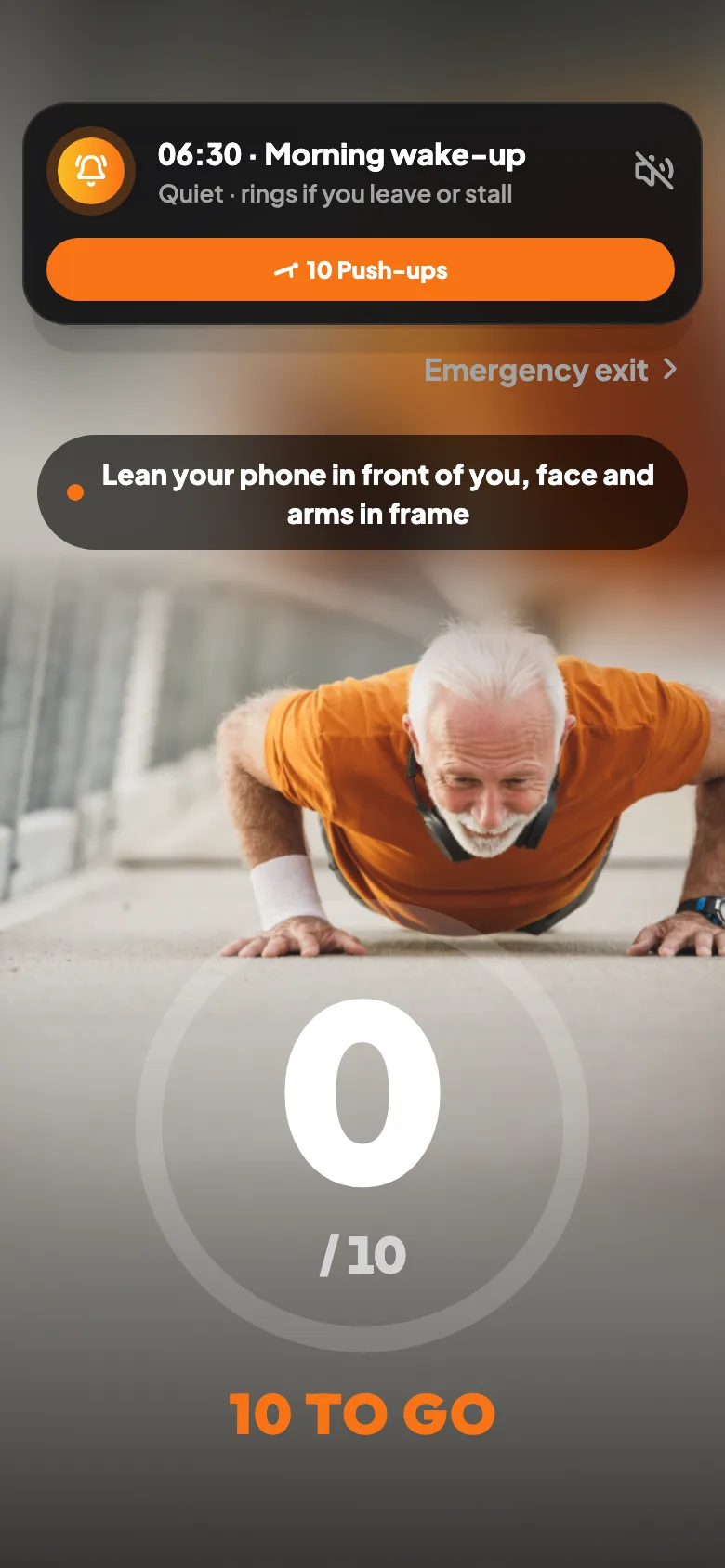
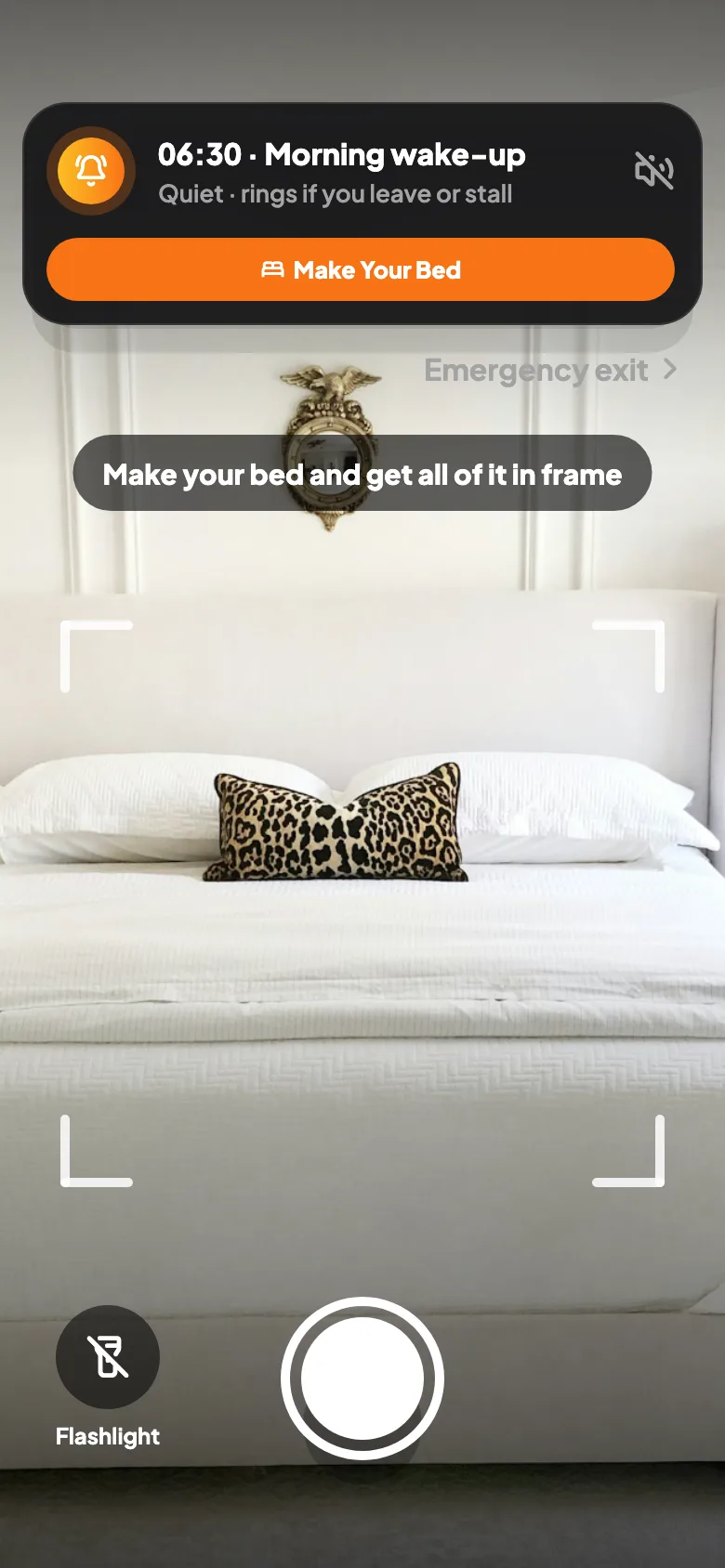
Volume answers “did I hear it?” A mission answers “am I awake?” If you’re one of the people who stop the alarm without remembering, the second question is the one that matters. A mission alarm keeps ringing until you finish a task that takes a working brain and usually a standing body, so by the time it’s quiet, the worst of the sleep inertia is behind you.
- Snooze is off, so there’s no half-asleep button to press.
- The mission checks itself: the camera counts push-ups, a photo has to show your made bed, a barcode has to be a real one in another room.
- An optional “You up?” check a few minutes later rings the alarm again if you don’t tap within 100 seconds.
Frequently asked questions
Why can’t I wake up to my alarm?
Usually because you’re short on sleep, the alarm goes off in deep sleep or during your body clock’s night, or you turn it off in the groggy first minutes after waking (sleep inertia) and don’t remember doing it. Less often the alarm was too quiet, your brain has tuned out a tone you hear every day, or a sleep disorder or sedating medicine is involved.
Why do I turn off my alarm and not remember?
That’s sleep inertia. For the first 15 to 30 minutes after waking, the brain works at reduced capacity, so you can find the phone, stop the alarm and fall back asleep on autopilot before a memory forms. An alarm that only stops after a task that needs a working brain, or a phone across the room, breaks the loop.
Is it normal to sleep through alarms?
Now and then, yes, especially after a short night or a late weekend. If you sleep 7 to 9 hours and still regularly sleep through alarms, feel sleepy all day or stay groggy for hours, talk to a doctor: sleep apnea and idiopathic hypersomnia can both show up as “I can’t wake up.”
What is the best alarm sound for heavy sleepers?
In a sleep lab study by Bruck and colleagues, low-pitched square waves at 400 and 520 Hz woke young adults from deep sleep at lower volumes than pure tones, white noise or the high-pitched beep of a smoke alarm. So if you don’t hear your alarm, pick a low, buzzy, rough tone and raise the alarm volume. If you hear it but wake up groggy, a melodic tone may feel better. Change the tone every few weeks so it stays new.
Does snoozing make it harder to wake up?
Not necessarily. A 2023 Stockholm University study found that regular snoozers who snoozed for 30 minutes didn’t sleep worse or feel worse, and nobody slipped back into deep sleep. The problem is when snoozing turns into switching the alarm off half asleep. If that’s you, set the alarm for when you actually need to get up and turn snooze off.
Why is waking up hardest on Monday mornings?
Staying up late and sleeping in on the weekend pushes your body clock later, so Monday’s alarm rings in your body’s night, when grogginess is strongest. Keeping the same wake time every day, give or take an hour, and getting daylight soon after waking keeps Monday from feeling like jet lag.
Can a sleep disorder make you sleep through your alarm?
Yes. Sleep apnea breaks up sleep during the night and causes daytime sleepiness, often with loud snoring. Idiopathic hypersomnia causes long sleep and severe sleep inertia, sometimes called sleep drunkenness, and people with it often need several loud alarms. Sleeping pills and sedating antihistamines can also leave you hard to wake the next morning.
How do I stop turning off my alarm in my sleep?
Make turning it off impossible while you’re half asleep. Put the phone across the room so you have to stand up, or use a mission alarm that only stops after push-ups, a math problem or a photo of something in another room. Add a wake-up check a few minutes later that rings the alarm again if you don’t answer.
Is setting multiple alarms bad?
It won’t harm you, but it rarely helps a heavy sleeper. Every alarm you stop half asleep is practice at stopping alarms half asleep, and a string of them breaks up your last hour of sleep. One alarm at the time you really need to get up, which you can’t stop without getting out of bed, works better.
When should I see a doctor about sleeping through alarms?
See a doctor or a sleep clinic if you regularly sleep 7 to 9 hours and still can’t wake up, you doze off during the day or while driving, someone has heard you snore loudly or stop breathing in your sleep, or you stay confused and groggy for hours after waking.
Sources
- Hilditch & McHill (2019): Sleep inertia, current insights. Nature and Science of Sleeppmc.ncbi.nlm.nih.gov
- About Sleep: how much sleep you need by age (CDC)cdc.gov
- Teen Sleep Duration Health Advisory (American Academy of Sleep Medicine)aasm.org
- Bruck, Thomas & Rouillard (2009): How does the pitch and pattern of a signal affect auditory arousal thresholds? Journal of Sleep Researchdoi.org
- McFarlane et al. (2020): Alarm tones, music and their elements. PLOS ONEjournals.plos.org
- Sundelin, Landry & Axelsson (2023): Is snoozing losing? Journal of Sleep Researchdoi.org
- FDA Drug Safety Communication: lower recommended doses for zolpidem (2013)fda.gov
- Sleep apnea: symptoms (NHLBI, NIH)nhlbi.nih.gov
- Idiopathic hypersomnia (Hypersomnia Foundation)hypersomniafoundation.org
More guides
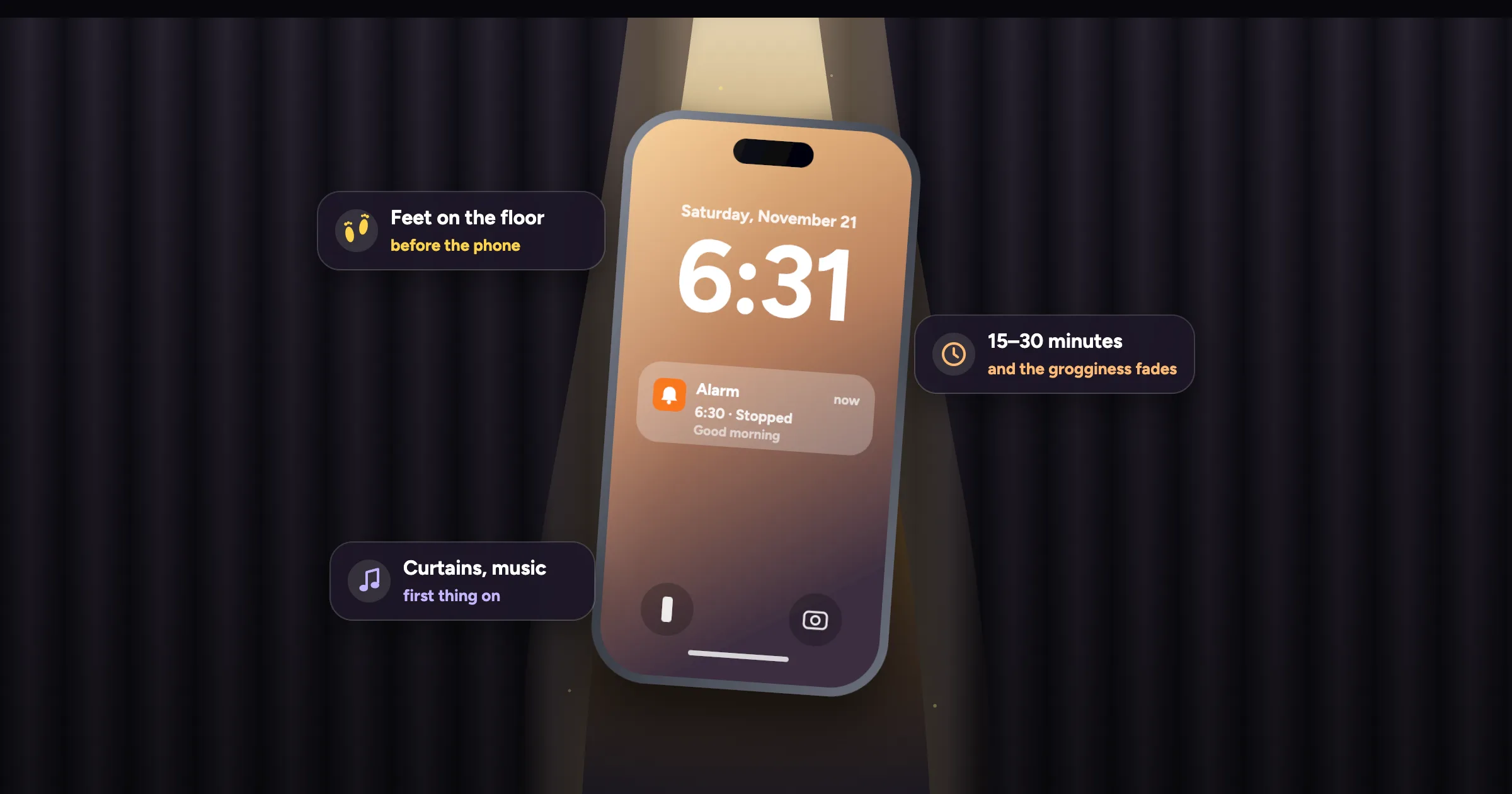
How to Get Out of Bed in the Morning When You Don’t Want To
Awake but can’t get out of bed? Why the first minutes feel so heavy, an 8-step plan for the first 10 minutes, and when it’s more than a bad morning.
Read the guide →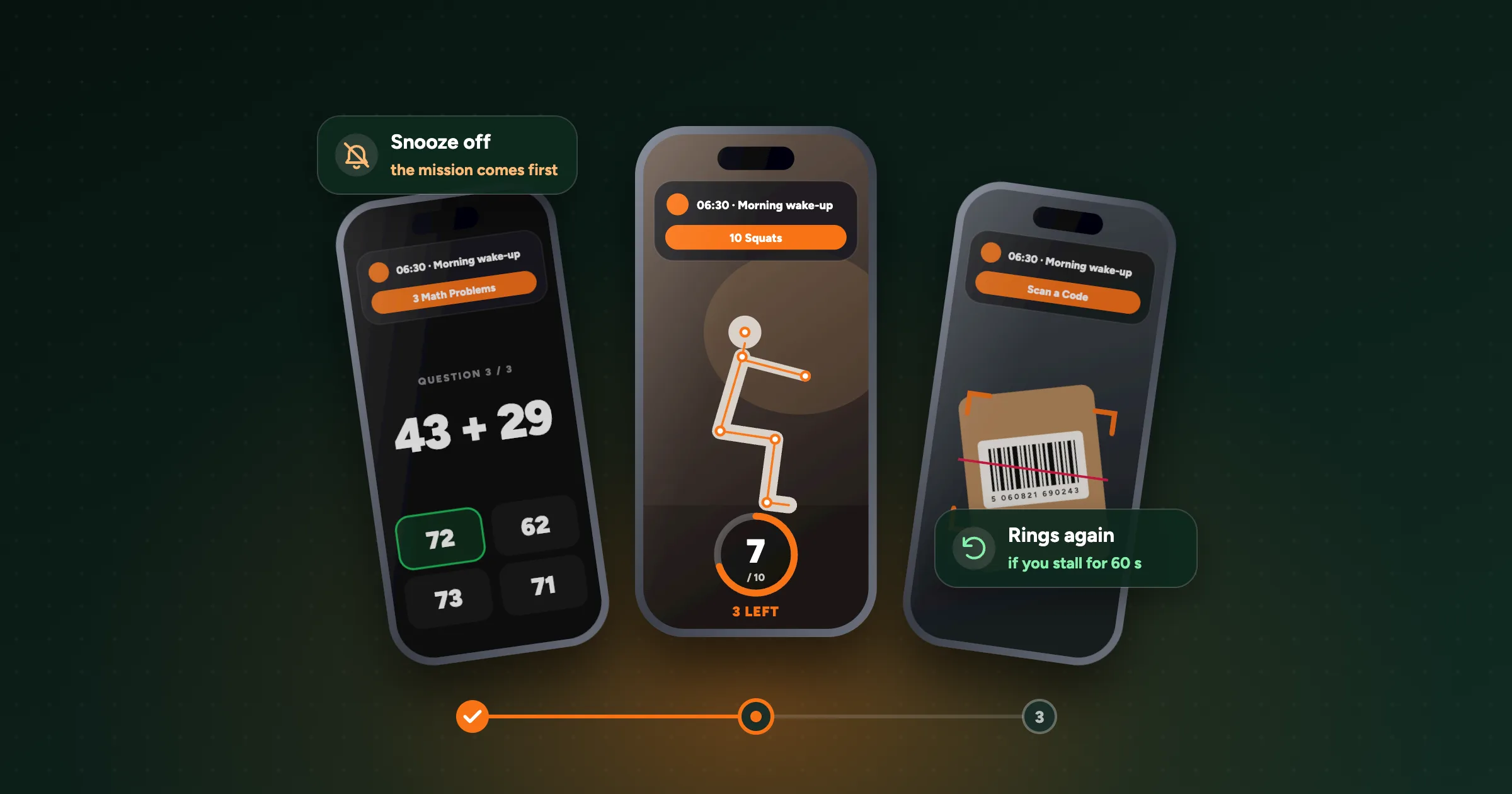
What Is a Mission Alarm? The Alarm That Won’t Stop Until You’re Up
A mission alarm won’t stop until you finish a task: math, a photo, a barcode or push-ups. Which missions really get you out of bed, and how hard to set them.
Read the guide →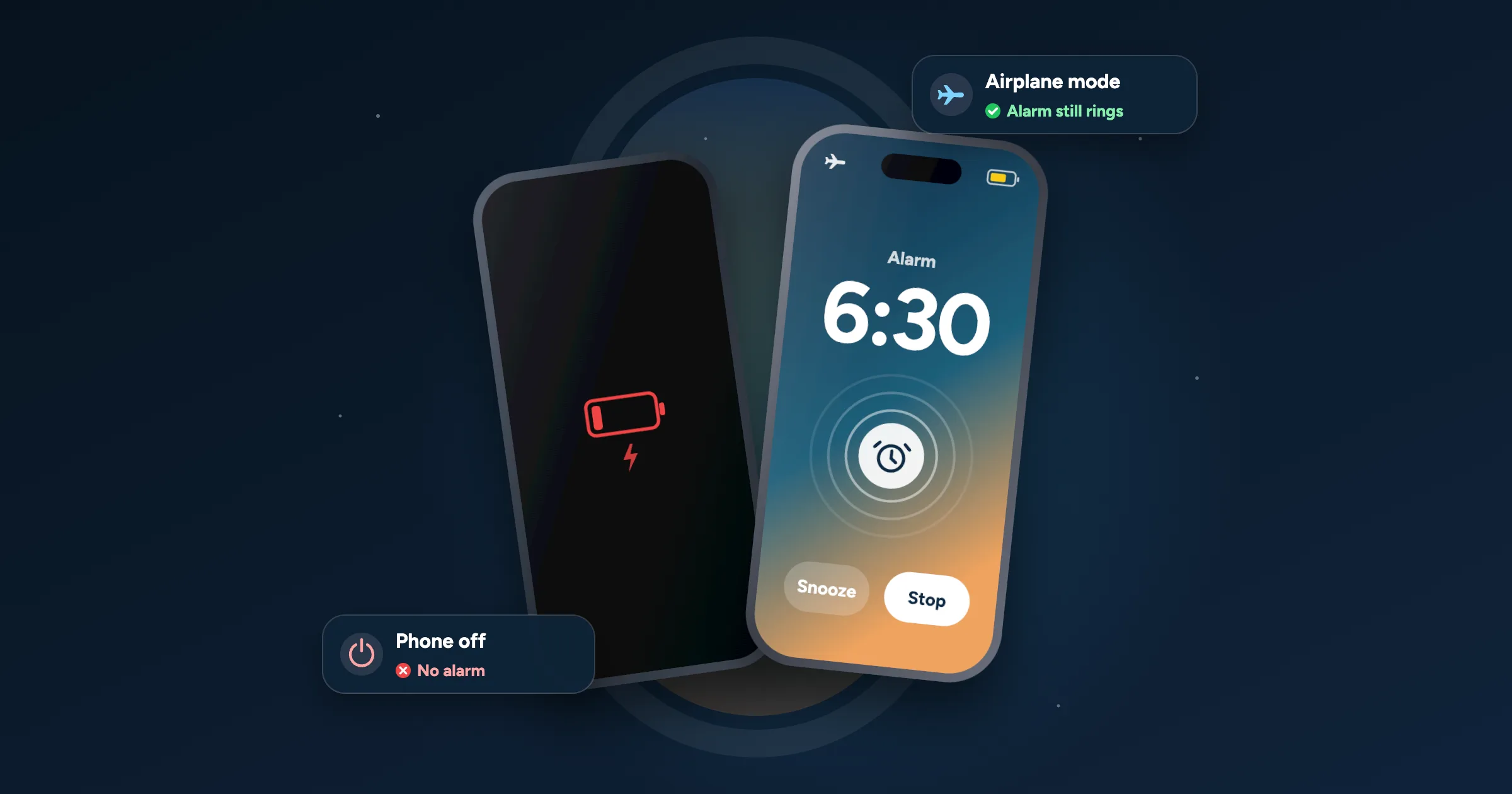
Will My Alarm Go Off If My Phone Is Off, Dead or in Airplane Mode?
Not if it’s off or dead (with two rare exceptions). Yes in airplane mode, Low Power Mode and offline. 10 situations on iPhone and Android, and 5 traps.
Read the guide →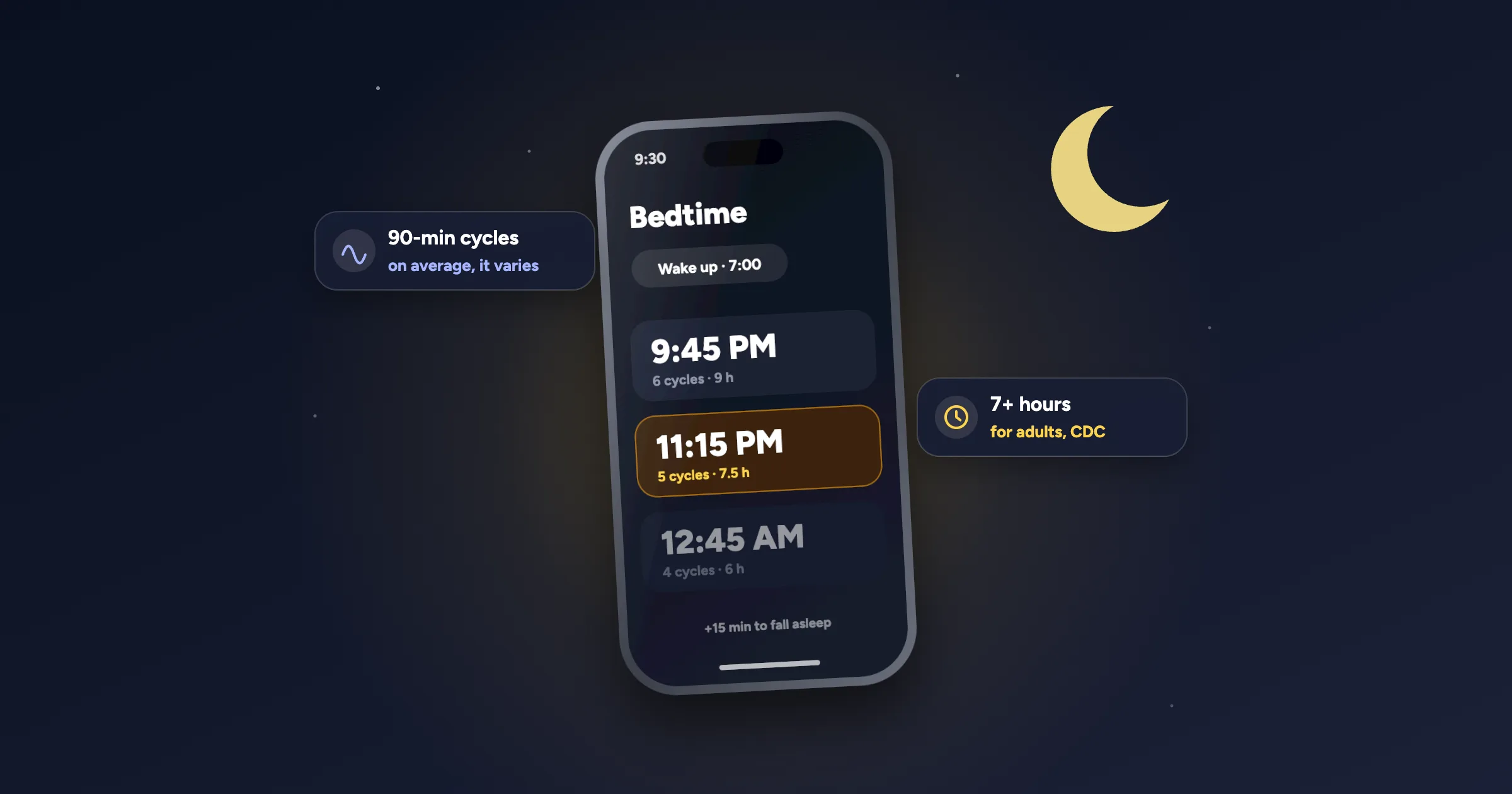
What Time Should I Go to Bed? Sleep Cycle Calculator
Enter your wake-up time and get bedtimes for 4, 5 or 6 sleep cycles. Plus how much sleep you need by age, and why 90-minute cycles are only an average.
Read the guide →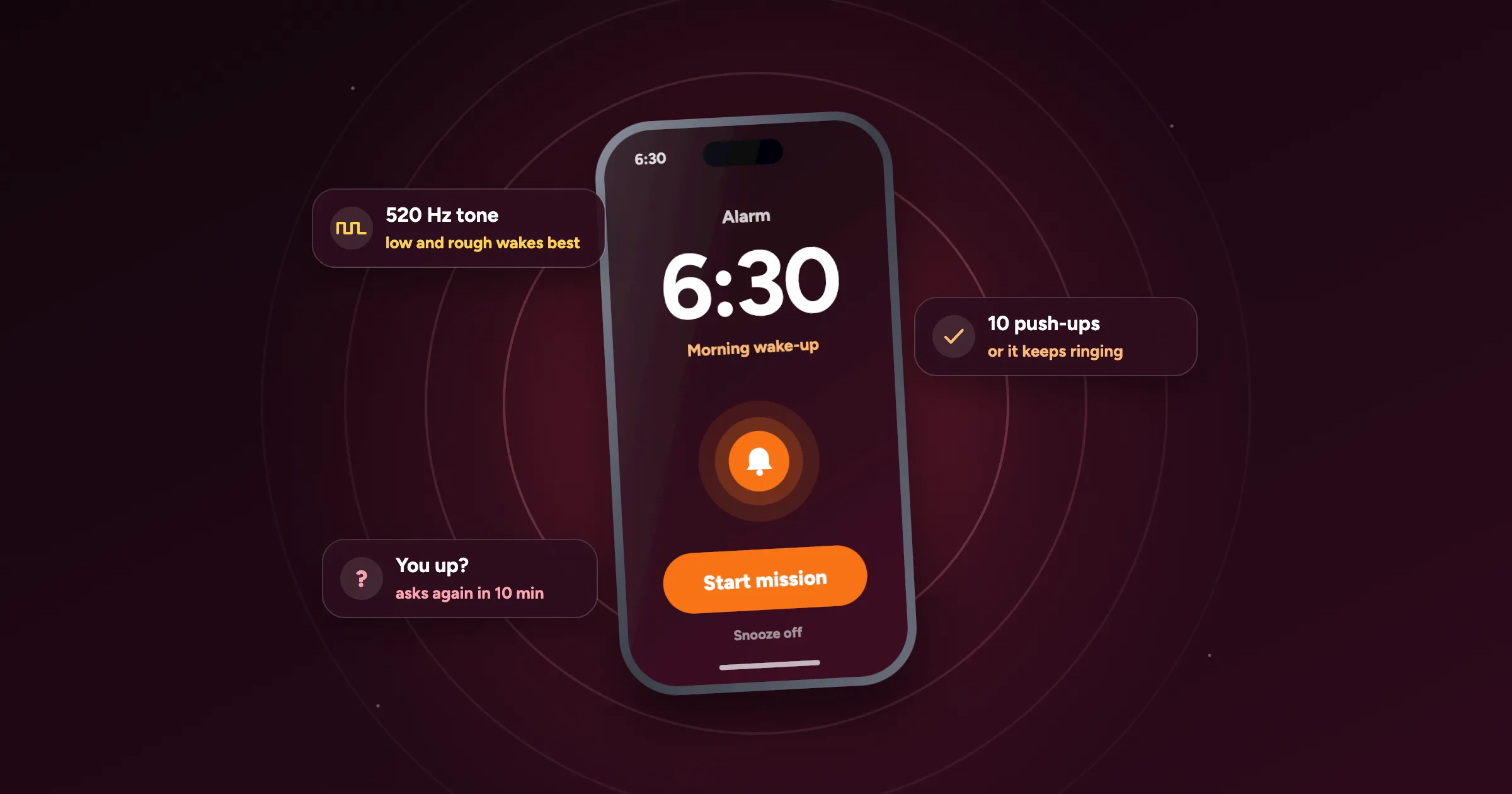
The Best Alarm for Heavy Sleepers: What Actually Wakes You Up
Sleep through every alarm? What research says about sound, vibration, light and mission alarms, how to set up your phone, and which alarm type fits you.
Read the guide →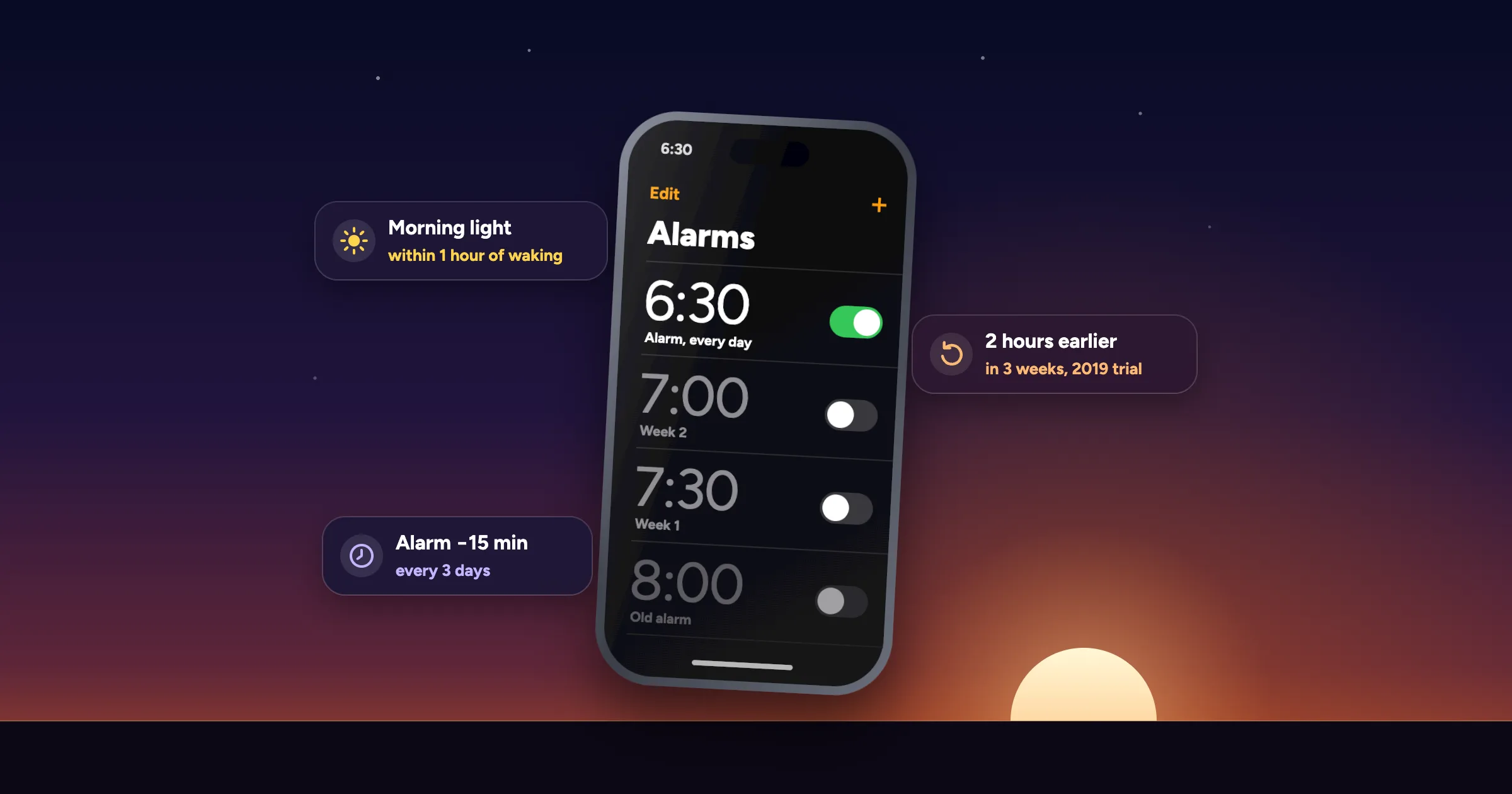
How to Wake Up Early, Even If You’re a Night Owl: A 3-Week Plan
Night owl who wants your mornings back? The 3-week plan behind a trial that moved sleep 2 hours earlier: 15-minute steps, morning light and one weekend rule.
Read the guide →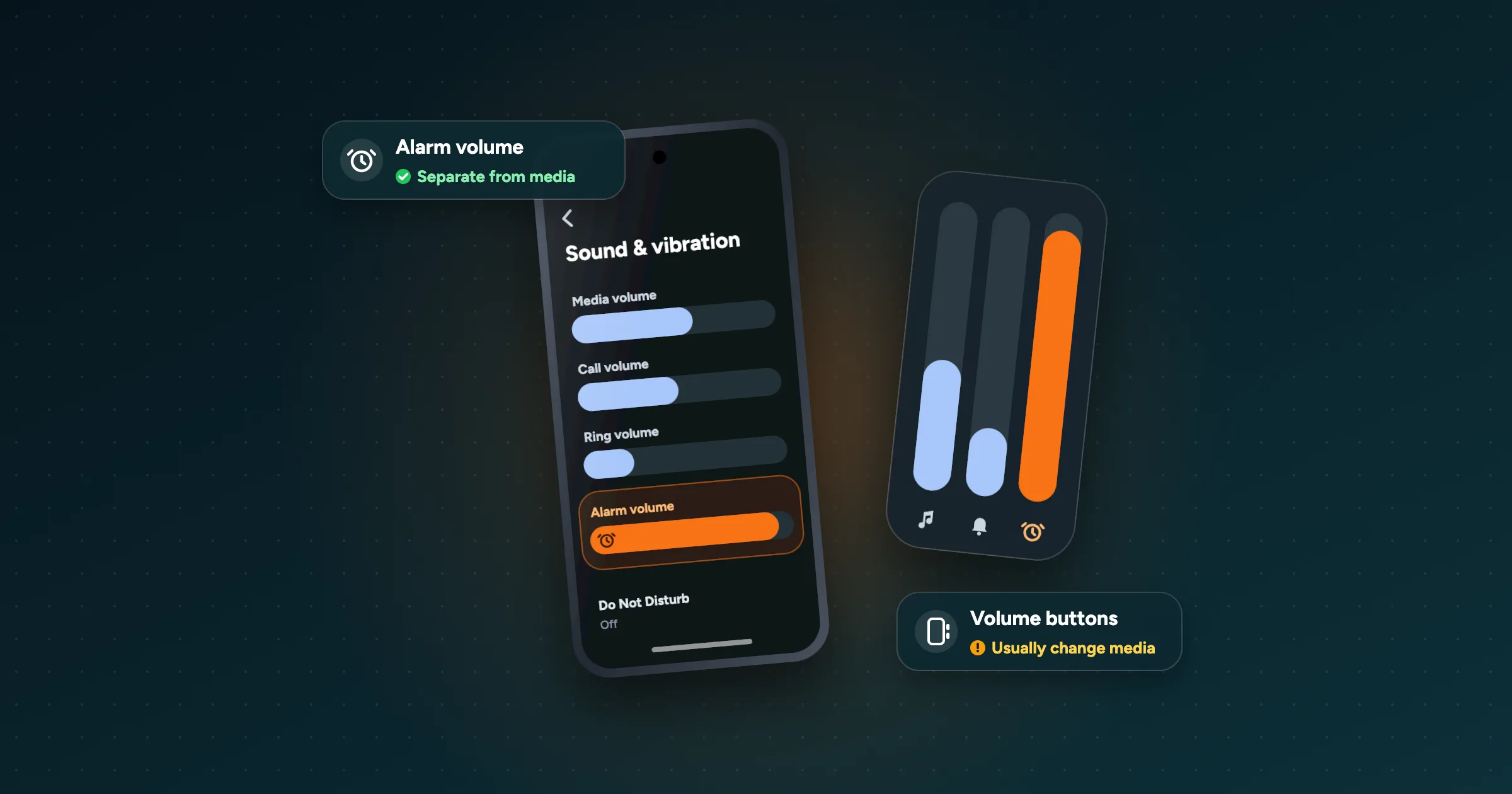
Android Alarm Too Quiet? How to Turn Up the Alarm Volume on Samsung, Xiaomi and Pixel
Android alarm too quiet or silent? Where the alarm volume is on Samsung, Xiaomi and Pixel, why it keeps going down, and how to change the alarm sound.
Read the guide →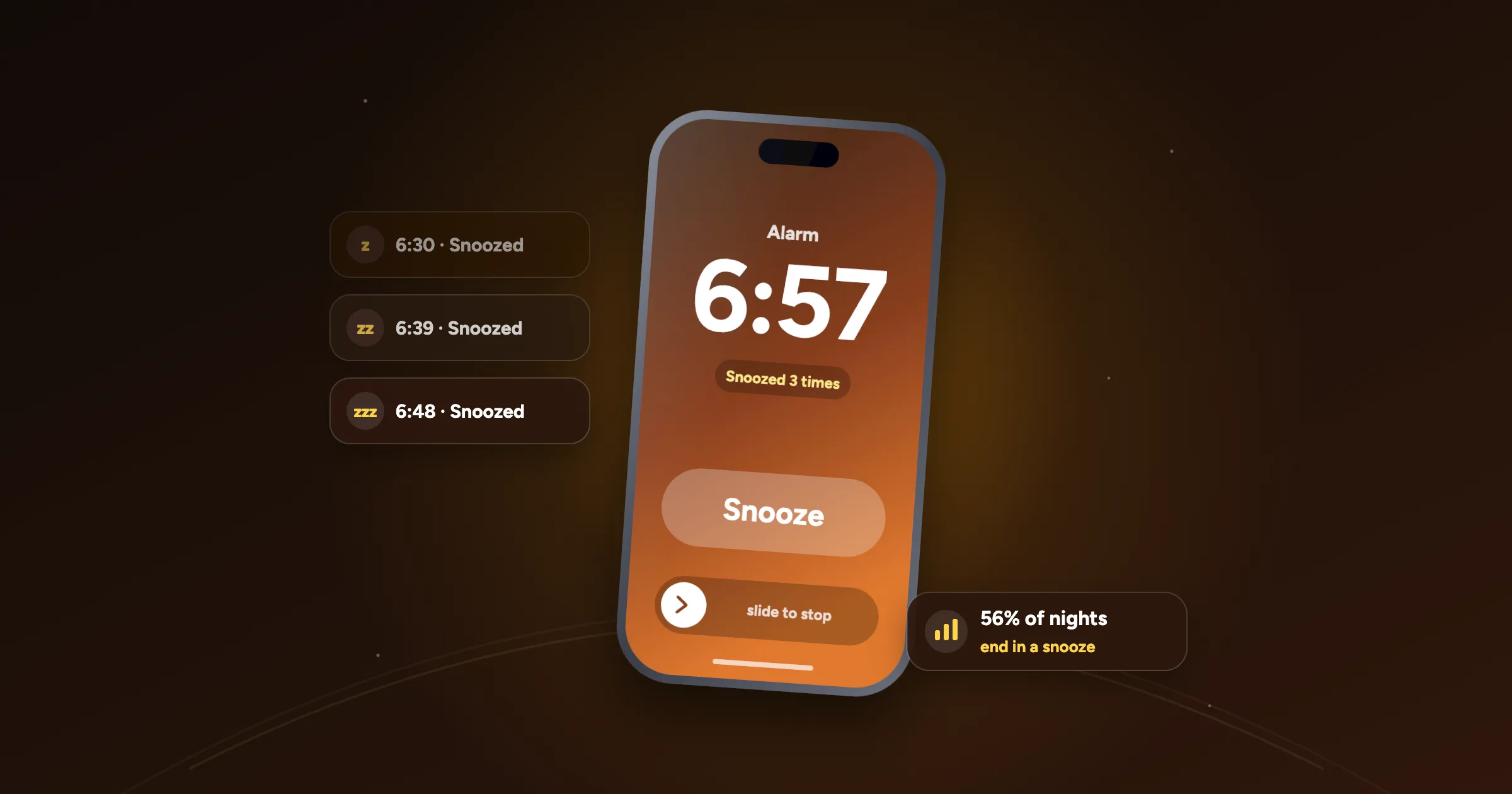
Is Hitting Snooze Bad for You? What 4 Studies Actually Found
Does hitting snooze make you more tired? What four studies actually found, why you keep doing it, when it’s fine, and how to stop, plus how to turn snooze off.
Read the guide →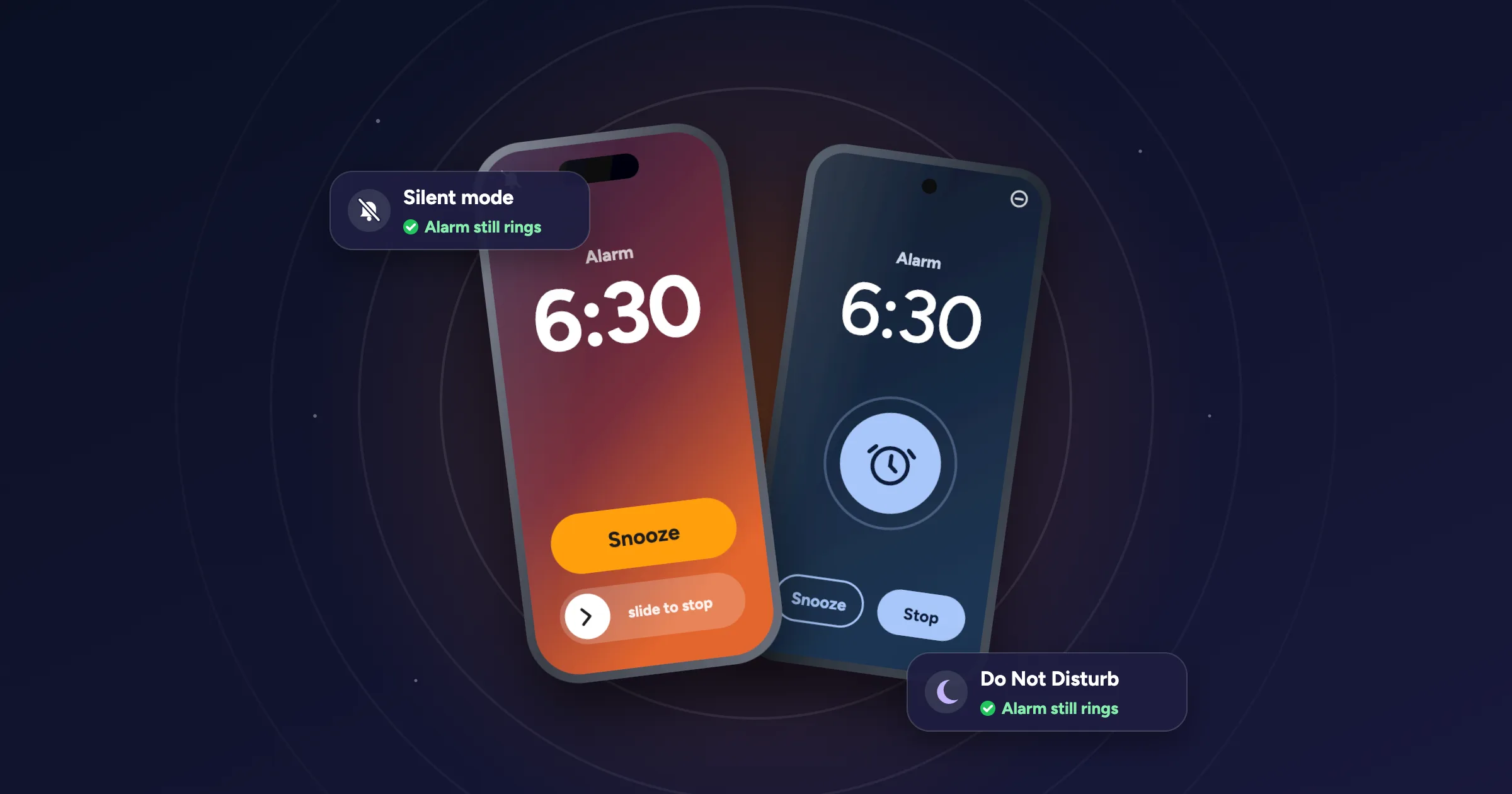
Will My Alarm Ring on Silent, Vibrate or Do Not Disturb? iPhone and Android
Usually yes, on iPhone and Android. But 6 things can still silence it, from a hidden Samsung setting to your Apple Watch.
Read the guide →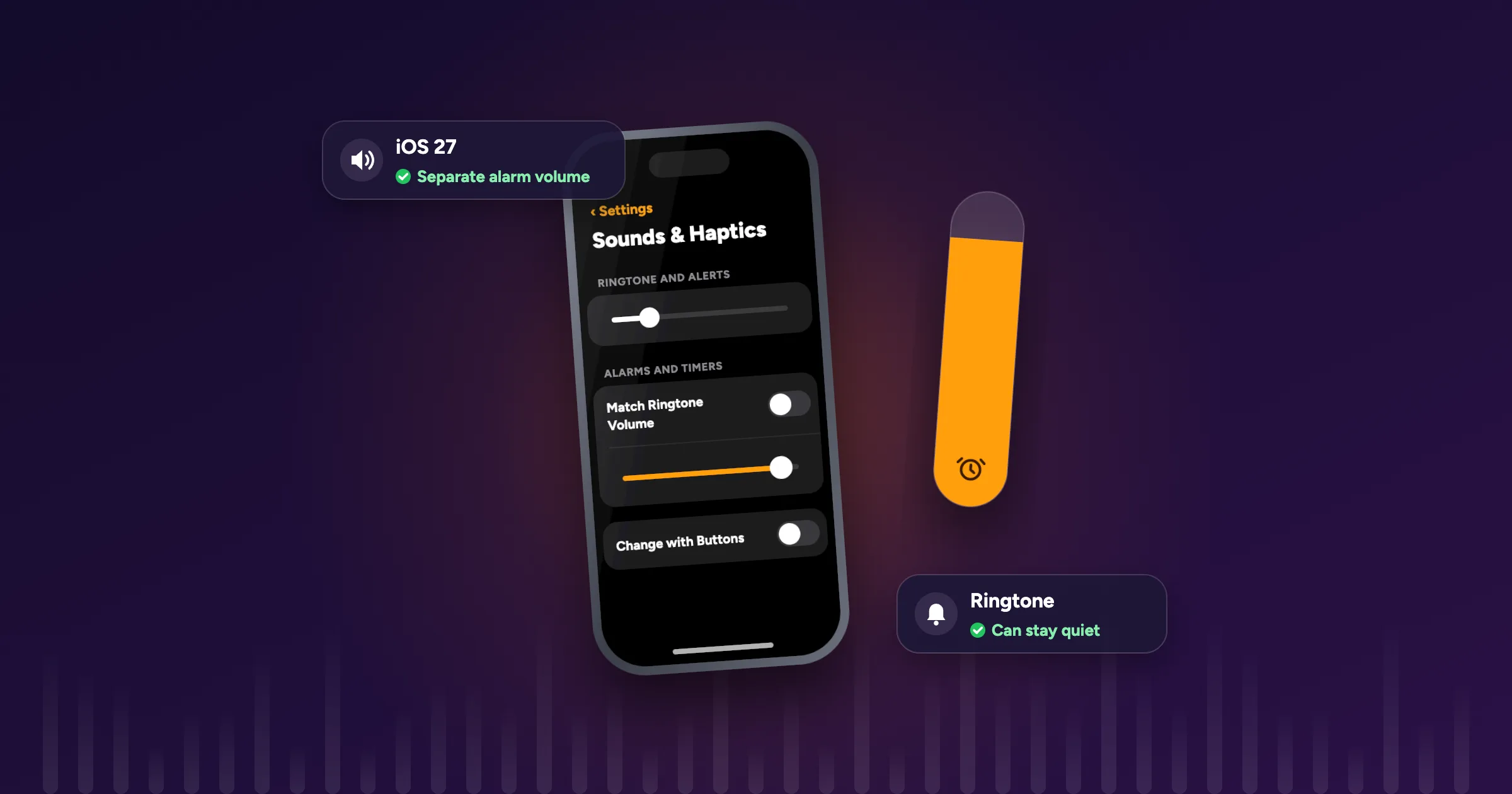
iPhone Alarm Too Quiet? How to Change the Alarm Volume on iOS 27 and iOS 26
Make your iPhone alarm louder: the new separate alarm volume in iOS 27, the right slider on iOS 26, the sleep alarm’s own volume and 6 more fixes.
Read the guide →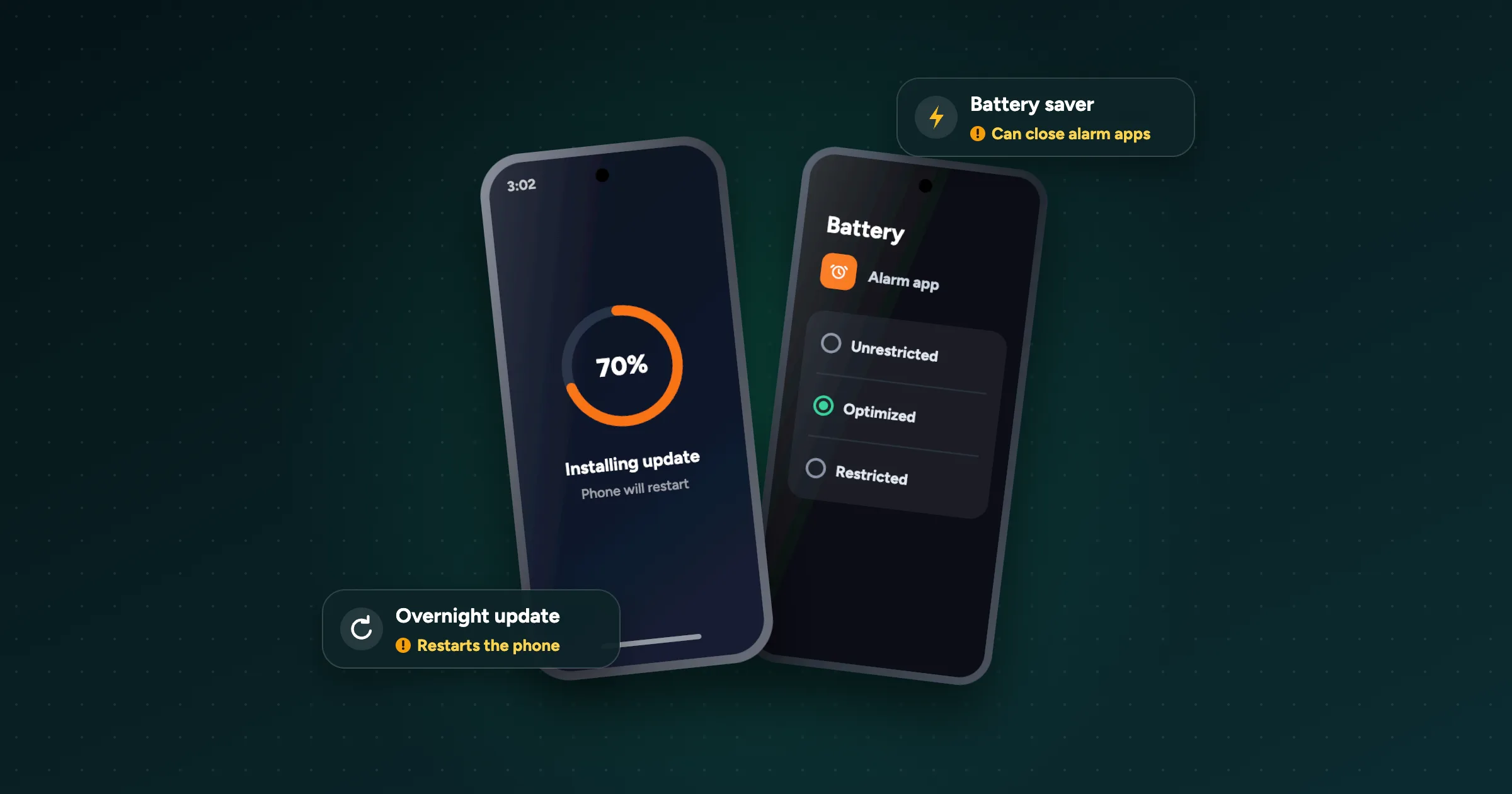
Android Alarm Not Going Off? 9 Fixes for Samsung, Pixel, Xiaomi and More
Android alarm didn’t ring, rang late or only showed a notification? 9 fixes with the exact settings for Samsung, Pixel, Xiaomi, TECNO, OPPO and vivo.
Read the guide →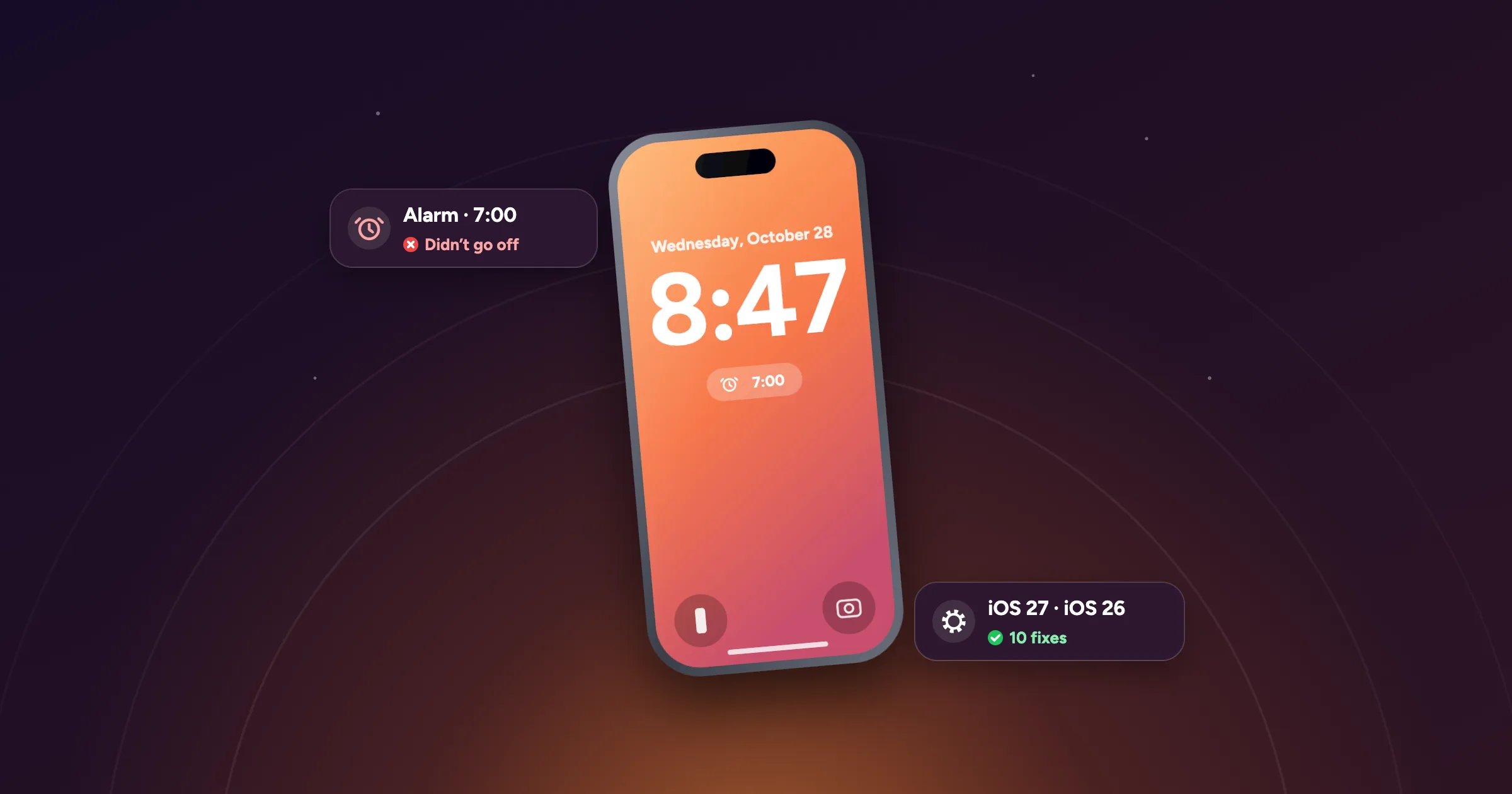
iPhone Alarm Not Going Off? 10 Fixes for iOS 27 and iOS 26
iPhone alarm not going off or not working after the iOS 27 update? 10 fixes: no sound, too quiet, only on Apple Watch, the new alarm volume and alarm apps.
Read the guide →